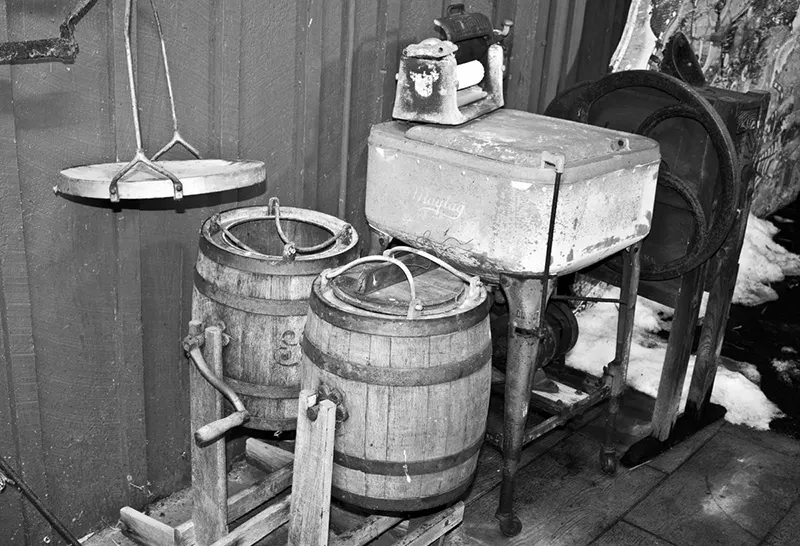
Wooden tubs, metal lids, and a squat washer on sturdy legs crowd together in this scene, reminding us that “doing the laundry” once meant wrestling with heavy, wet fabric and equally heavy equipment. The photograph pairs older barrel-style vessels with a more industrial-looking washing machine, hinting at a moment when home life was being reshaped by practical inventions rather than sudden miracles. Every surface looks built for work: thick staves, iron bands, and fittings meant to survive years of scrubbing, wringing, and rinsing.
Along the wall, the clustered setup reads like a small workshop dedicated to clean clothes, where water had to be hauled, heated, and managed before a single garment could be finished. Hand-powered motions—agitation, draining, and wringing—are implied by the mix of containers and hardware, showing how incremental improvements reduced backbreaking steps one by one. For anyone interested in the history of washing machines, it’s a vivid reminder that innovation often arrived as hybrid solutions, with new mechanisms living beside familiar tools.
Between the 1880s and the 1950s, laundry technology evolved from tubs and washboards toward compact machines that promised more speed, more control, and less physical strain. This post’s photographic journey highlights those transitional decades when inventors experimented with materials, drive systems, and add-on attachments to tame an everyday chore. If you’re searching for early washing machine designs, vintage laundry equipment, or the story of household inventions, this image offers a grounded, workaday glimpse of progress in motion.