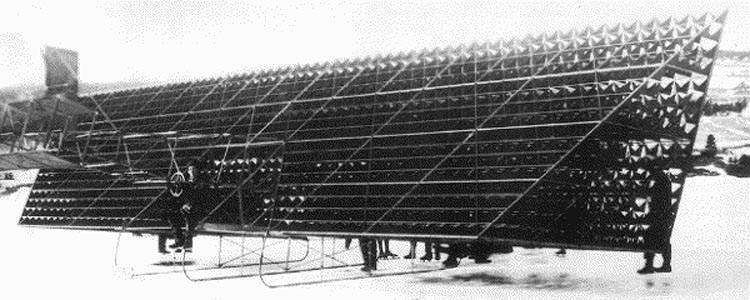
A wide, lattice-like wing stretches across the frame, its surface built from a grid of struts and countless small, triangular cells that give the craft a striking, almost woven texture. Beneath that enormous span sit delicate skids and a light framework, with several figures standing nearby to emphasize the machine’s scale. The title, “Bell Cygnet 1907,” points to an era when flight was still experimental and every extra brace, rib, and wire felt like a wager against gravity.
What stands out is the engineering mindset on display: structure first, skin second, and stability achieved through repetition and careful geometry. The wing’s patterned construction suggests an attempt to combine strength and lightness, a hallmark of early aviation design, while the exposed undercarriage hints at the practical realities of testing and handling. Even in a static photograph, the craft reads like a laboratory idea made real—part kite, part glider, and wholly a product of inventive ambition.
For readers interested in inventions and the history of aviation, this image offers a window into the hands-on problem solving that defined the 1900s race toward controlled flight. It’s the kind of scene where breakthroughs were measured not by sleek finishes but by whether the framework held, the air caught, and the next trial could begin. As a WordPress post feature, “Bell Cygnet 1907” invites a closer look at early aircraft construction, experimental wings, and the bold improvisation that pushed aeronautical engineering forward.