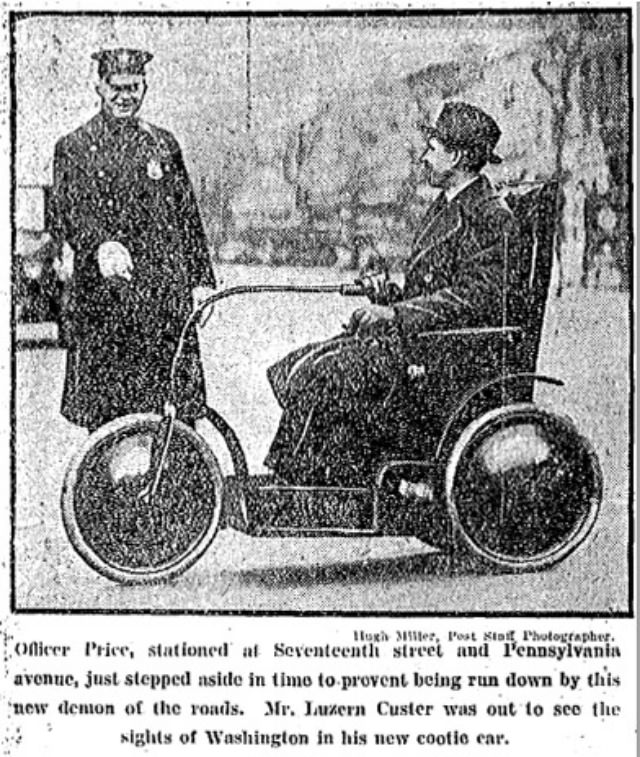
Rolling along the street in this newspaper-style photograph, the so-called Custer Chair Car looks like a cross between a wheelchair and a compact runabout, with a seated rider at the controls and a standing policeman nearby. The machine’s low profile, exposed wheels, and upright chair-like seating hint at an era when inventors were still negotiating what “personal transportation” should look like. Even in grainy print, the scene carries the tension of novelty meeting traffic—an invention sharing space with pedestrians, officers, and the everyday bustle of a growing city.
The title’s promise of a “beacon of hope” fits the Roaring ’20s appetite for clever devices that might make modern life easier, faster, or more independent. A chair car suggests mobility tailored to the individual rather than the crowd, inviting thoughts of accessibility and self-directed travel at a time when streets were rapidly filling with new machines. Yet the nearby authority figure and the candid, on-the-spot feel of the shot also underline a familiar pattern in transportation history: excitement, uncertainty, and the question of safety arriving together.
Beneath the photo, the printed caption adds period flavor and anchors the image in the language of contemporary reporting, framing the vehicle as both curiosity and potential hazard. That blend of optimism and caution is exactly what makes forgotten inventions like the Custer Chair Car so searchable and so compelling for historians of early 20th-century technology. For readers exploring Roaring ’20s inventions, vintage mobility devices, or the evolution of traffic culture, this snapshot offers a vivid window into a moment when tomorrow’s solutions were still being tested on today’s streets.