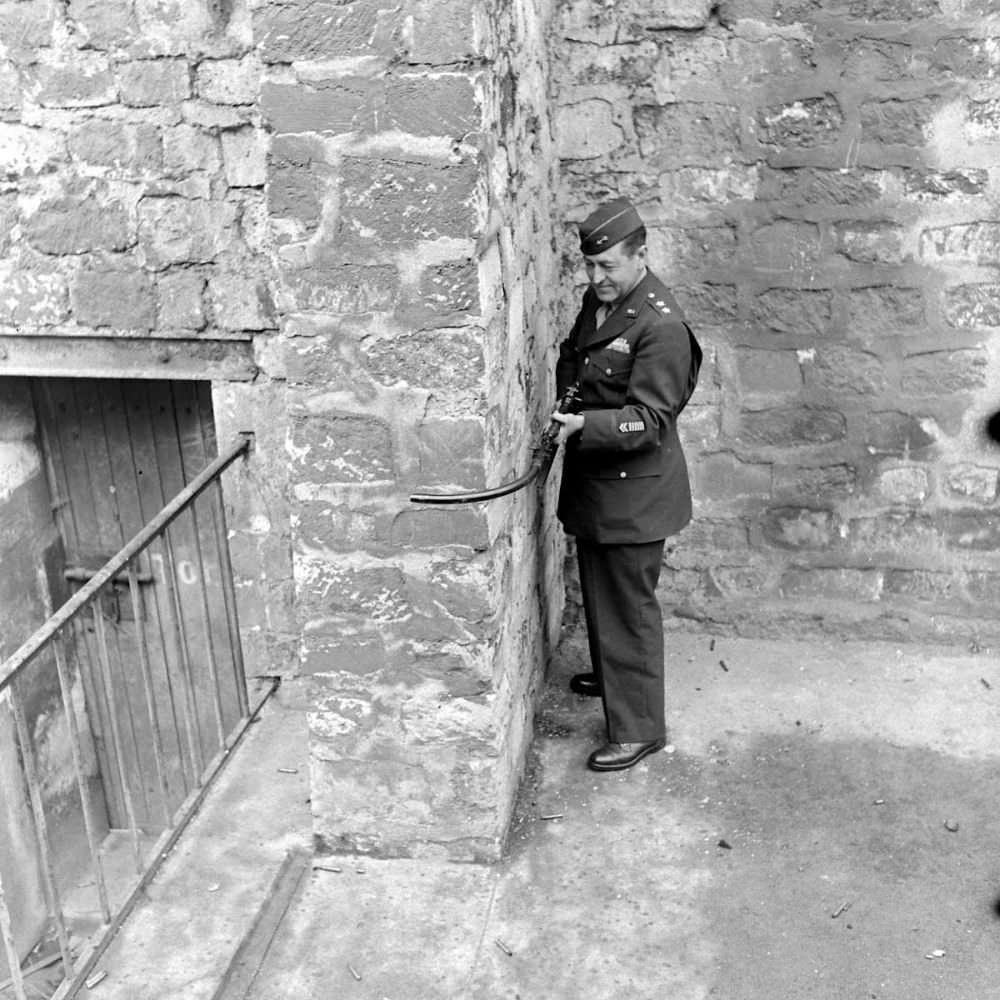
Tucked against a rough stone wall, a uniformed soldier demonstrates a rifle fitted with an oddly bent barrel, its muzzle curling outward as if defying common sense. The setting feels improvised and close-quarters—stairs, a doorway, and hard masonry—exactly the kind of environment where seeing and shooting around a corner could mean survival. Even without context, the visual punch is immediate: wartime practicality colliding with almost surreal engineering.
Known as the Krummlauf, this WWII-era firearm attachment was designed to redirect a bullet’s path when a straight line of fire was impossible. The photograph hints at the concept in the simplest way—hold position behind cover, angle the weapon, and attempt to send rounds into spaces an enemy might assume were safe. It’s an invention story rooted in urban combat fears and trench-like constraints, where the geometry of walls and windows dictated tactics as much as training did.
Yet the same curve that made the device famous also points to its limitations, because bending a barrel meant punishing stresses, rapid wear, and unpredictable performance. That tension—between brilliant idea and harsh reality—makes Krummlauf a compelling footnote in World War II technology history. If you’re drawn to strange military inventions, experimental weapons, or the ingenuity that emerges under pressure, this post digs into why “bending bullets” was attempted at all, and what that reveals about the era’s battlefield imagination.