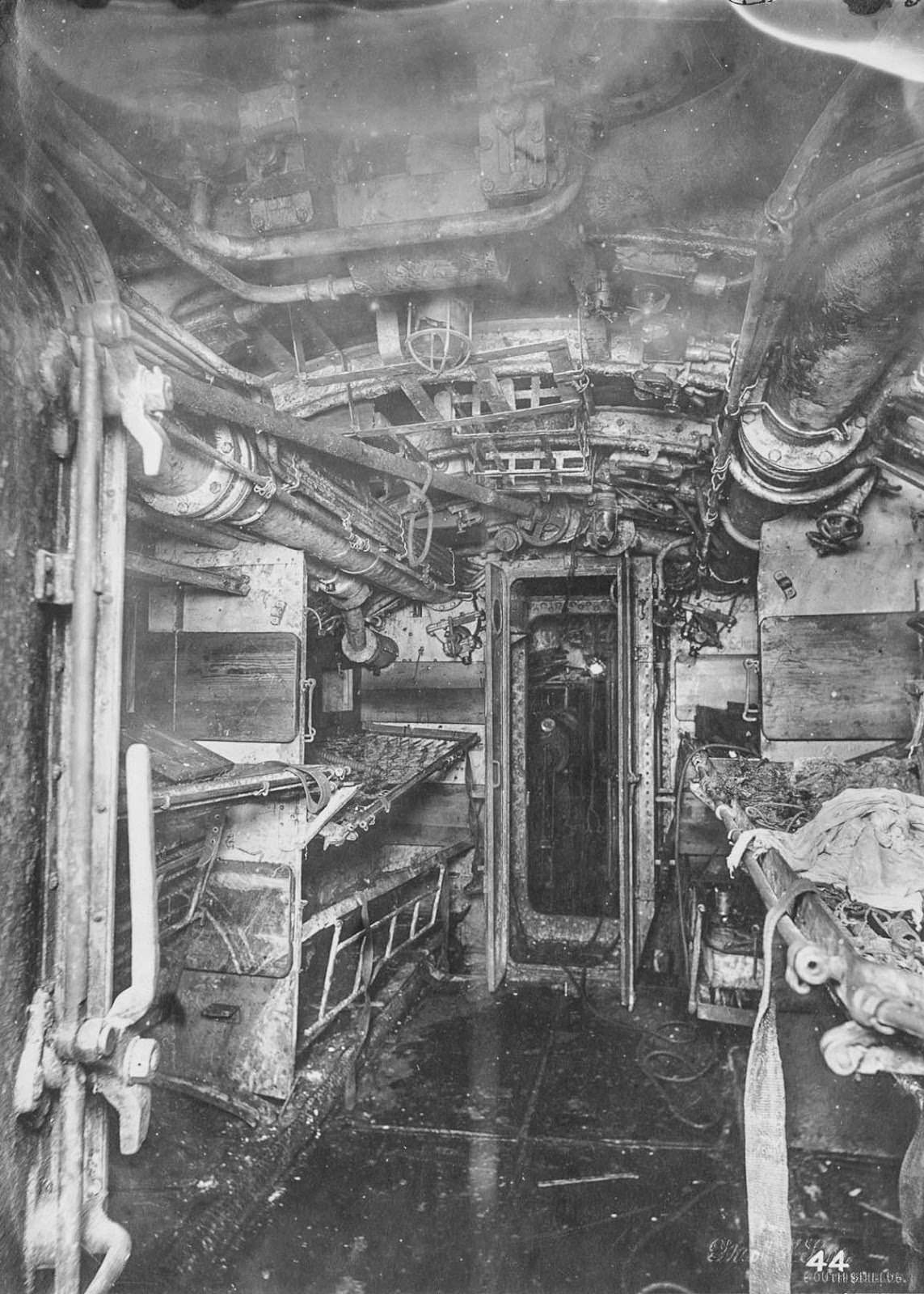
Deep inside a numbered compartment, the sleeping berths are wedged into a narrow passage where every inch has a job to do. Metal frames and folded bedding sit close to the walls, while the center aisle leads toward a small doorway that hints at more rooms beyond. Overhead, pipes, valves, and cabling crowd the ceiling, turning the space into a living cross‑section of industrial design.
The title, “Number 6 compartment with sleeping berths,” reads like a label from an engineering report, and the photograph supports that impression with its unromantic honesty. Nothing here is decorative; the bunks, storage, and fittings are arranged for efficiency in a confined working environment, likely tied to transport or machinery where crews needed rest without leaving their station. Grease-dark surfaces and hard edges suggest long use, routine maintenance, and the constant presence of heat, noise, or vibration.
As a post in the theme of inventions, the scene points to a quieter kind of innovation: not a single dramatic gadget, but the practical systems that made modern travel and labor possible. Compartment layouts like this balanced human needs—sleep, storage, movement—against the demands of engines, plumbing, and safety hardware, all packed into tight quarters. For readers interested in industrial history and vintage engineering interiors, this image offers a vivid look at how designers carved out livable space inside complex machines.