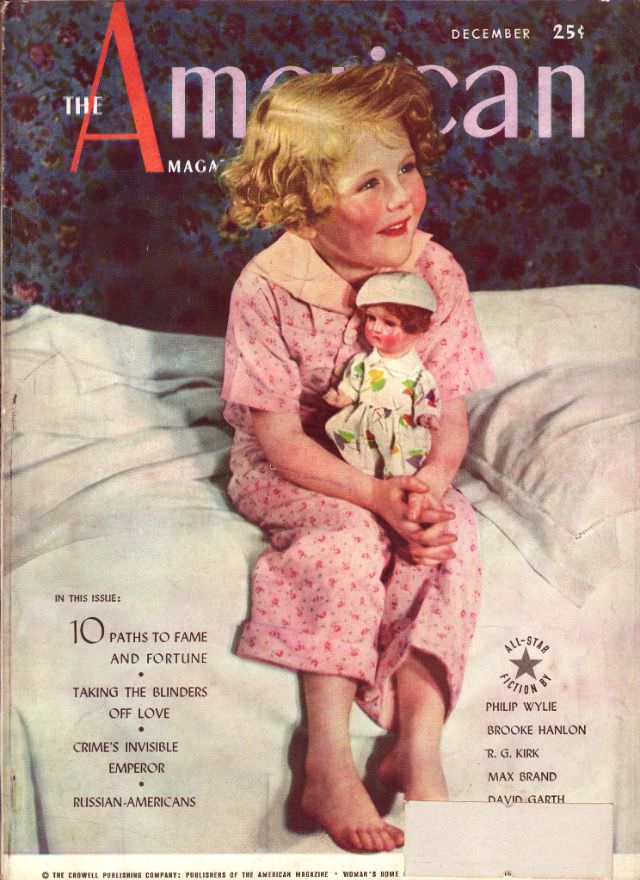
Warm color and quiet domesticity set the tone on *The American Magazine* cover for December 1937, where a curly‑haired child in pink pajamas sits on a rumpled white bed, cradling a small doll. The oversized red “A” of the masthead frames the scene, while “December” and the price “25¢” hover at the top like a neat period punctuation mark. Against a dark patterned backdrop, the rosy cheeks and soft lighting sell a comforting, home‑centered mood that feels designed to brighten a winter issue.
Details on the bedding and the child’s relaxed posture do a lot of storytelling, hinting at bedtime rituals and the everyday world of families in the late 1930s. The doll—dressed in a printed outfit and little cap—echoes the era’s fascination with miniature versions of adult life, and the illustration’s gentle realism reflects the magazine‑cover art style that dominated newsstands before photography became the default. Even without a specific byline on the artwork, the composition functions as an invitation: step inside, linger, and read.
Text along the lower portion points to the issue’s mix of ambition, romance, and intrigue, with readable cover lines including “10 Paths to Fame and Fortune,” “Taking the Blinders Off Love,” “Crime’s Invisible Emperor,” and “Russian-Americans.” An “All-Star Fiction” badge and a roster of contributing writers reinforce the magazine’s promise of big entertainment alongside timely topics. For collectors and history enthusiasts, this December 1937 cover is a vivid artifact of American print culture, holiday-season marketing, and the storytelling power of illustrated magazine design.