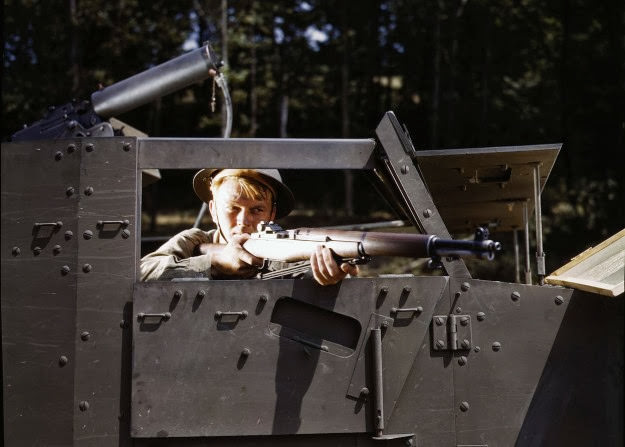
Sunlit color brings an immediacy to the WWII home front that black-and-white often smooths over, and this scene leans into that effect: a helmeted figure peers over the rim of a metal shield, rifle shouldered, surrounded by rivets, brackets, and the hard geometry of protective plating. The contrast between the warm face tones and the cool industrial surfaces hints at a world where civilians and trainees alike learned to handle wartime tools as part of everyday life, whether in preparation, instruction, or local defense.
Beyond the battlefield headlines, the war years demanded factories running at full tilt, women stepping into skilled roles, and communities adjusting to drills and new responsibilities. Images like this—carefully colorized or captured in early color—help document the material culture of the era: the utilitarian finishes, the outdoor glare, and the practical engineering that shaped everything from production lines to training grounds. For readers searching WWII color pictures, home front history, and wartime industry, these details offer a tactile entry point into the period.
What lingers most is the tension between ordinary surroundings and extraordinary purpose, a reminder that “home front” could still feel close to danger even far from combat zones. The guarded posture, the enclosed metal frame, and the crisp daylight suggest a moment of instruction or readiness rather than spectacle, emphasizing how wartime effort threaded through civilian spaces. Paired with the broader theme of factories, women at work, and civilian contributions, the photograph adds another facet to the story of mobilization—how preparation, labor, and daily life became inseparable during World War II.