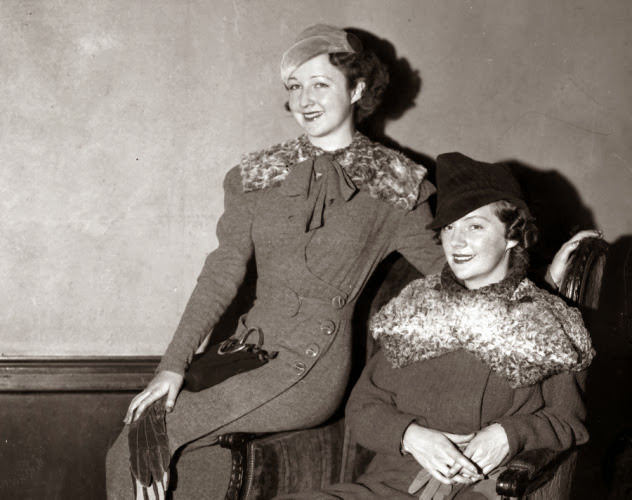
Against a plain studio backdrop, two runway models pause in composed, camera-ready poses that let the tailoring do the talking. The setting is a 1933 fashion show at Hotel Pennsylvania, where designers relied on line, texture, and clever details to make an impression. Even without the movement of the catwalk, the photograph preserves the polished confidence that defined interwar style.
On the left, Mona Mora wears a gray woolen coat dress whose removable sailor collar adds a crisp, nautical note to an otherwise sleek silhouette. The cut emphasizes long vertical lines and a neat buttoned front, suggesting practicality without sacrificing elegance—an ideal balance for fall wardrobes. Accessories stay restrained and refined, reinforcing the era’s preference for coordinated, well-finished ensembles.
At right, Lee Sherman models a bright green tweed suit, paired with a matching gray krimmer fur high-crown fabric hat that frames the face and signals cold-weather glamour. The interplay of tweed and fur highlights a 1930s love of contrast—matte against plush, structure against softness—while still reading as wearable day-to-evening fashion. For readers interested in 1930s fashion history, bias-era elegance, and New York hotel runway culture, this image offers a vivid glimpse of how style was presented, sold, and admired during the decade.