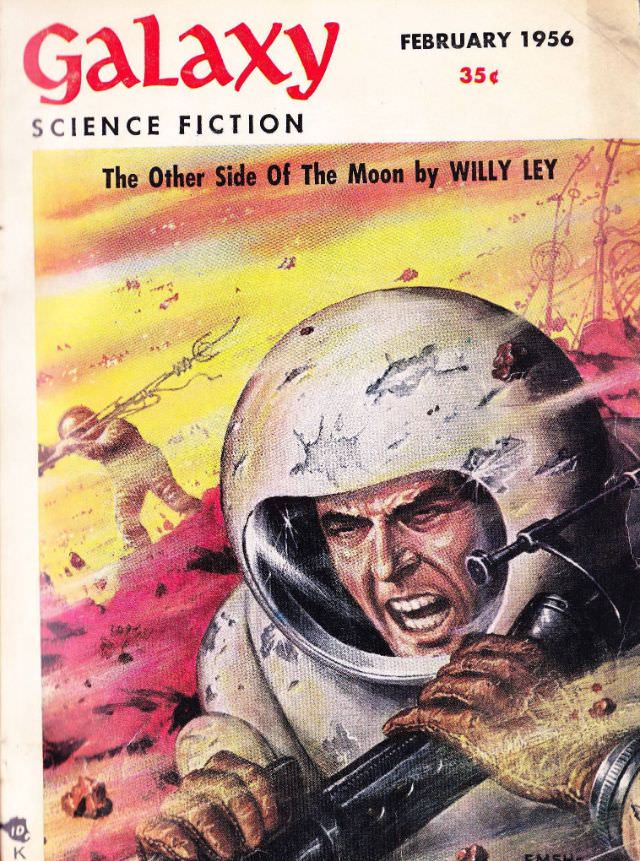
Galaxy Science Fiction for February 1956 hits the newsstand with a burst of mid-century pulp energy: bold red masthead, a 35¢ price tag, and an illustration that throws the reader straight into danger. The foreground astronaut—helmet scuffed and face tense—clutches a piece of equipment as gritty debris and streaks of light cut across a harsh, alien-looking landscape. Even at thumbnail size, the cover art sells motion, peril, and the promise of hard-won survival beyond Earth.
Across the top, the cover copy highlights “The Other Side Of The Moon” by Willy Ley, anchoring the drama to the era’s fascination with spaceflight and lunar mystery. The palette leans into hot yellows and reds, giving the scene a fiery, high-stakes atmosphere while smaller figures and distant shapes suggest a broader expedition unfolding behind the main character. It’s a classic example of how 1950s science fiction magazines blended scientific curiosity with cinematic suspense to pull readers in from the rack.
For collectors, designers, and genre historians, this Galaxy cover is also a time capsule of Cold War–era imagination—where astronauts look more like rugged explorers than sleek technicians, and space is portrayed as both frontier and battlefield. The worn textures, dynamic brushwork, and emphatic typography make it instantly recognizable as vintage science fiction cover art, ideal for anyone researching Galaxy Science Fiction magazine history, 1956 pulp illustration, or the visual language of early space-age storytelling.