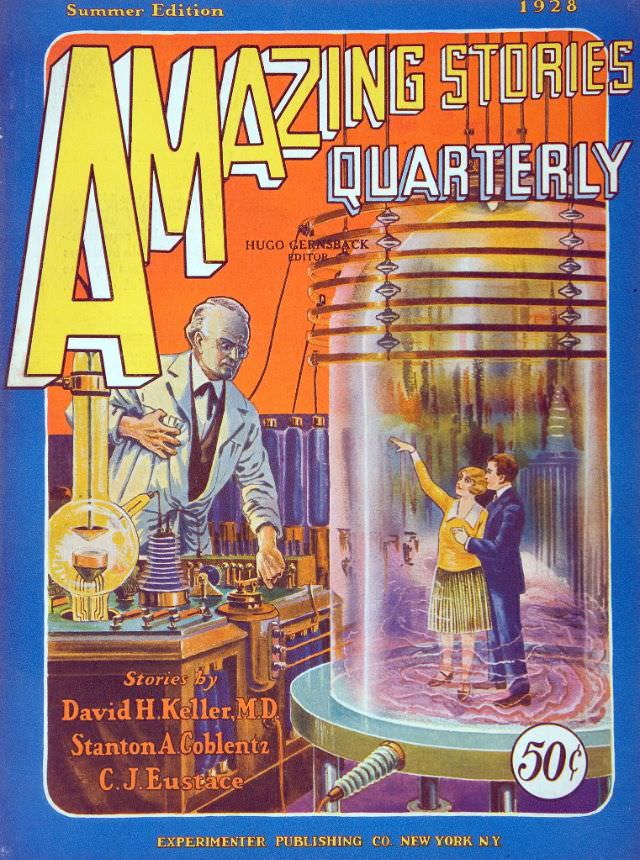
Blazing orange and electric blues pull you straight into the Summer Edition of 1928, where the bold “AMAZING STORIES QUARTERLY” masthead dominates the top like a marquee for the future. The cover’s dramatic palette and oversized typography are classic newsstand bait from the early science-fiction era, designed to be spotted from across a crowded rack. Even the crisp “1928” and the 50¢ price mark anchor it firmly in its moment, when pulp magazines promised big ideas at an affordable coin.
At left, a white-coated experimenter leans over a dense tangle of coils, switches, and glass bulbs, his lab bench rendered with loving mechanical detail. The editor credit “Hugo Gernsback” appears near the title, a reminder of how closely this magazine tied speculative storytelling to the language of invention and radio-age engineering. Nearby, the list of contributors—David H. Keller, M.D., Stanton A. Coblentz, and C. J. Eustace—signals a contents page in miniature, selling the issue through names and authority as much as spectacle.
To the right, the scene turns uncanny: a couple stands inside a towering transparent cylinder, ringed with stacked electrodes and shimmering vertical bands that suggest an active field or beam. The woman’s raised arm and the man’s steady stance read like a staged demonstration—equal parts wonder, peril, and showmanship—while rippling, liquid-like effects at their feet add a surreal, otherworldly touch. For collectors of Amazing Stories cover art and historians of early pulp science fiction, this Summer 1928 illustration distills the era’s faith that laboratories, electricity, and imagination could remake everyday life.