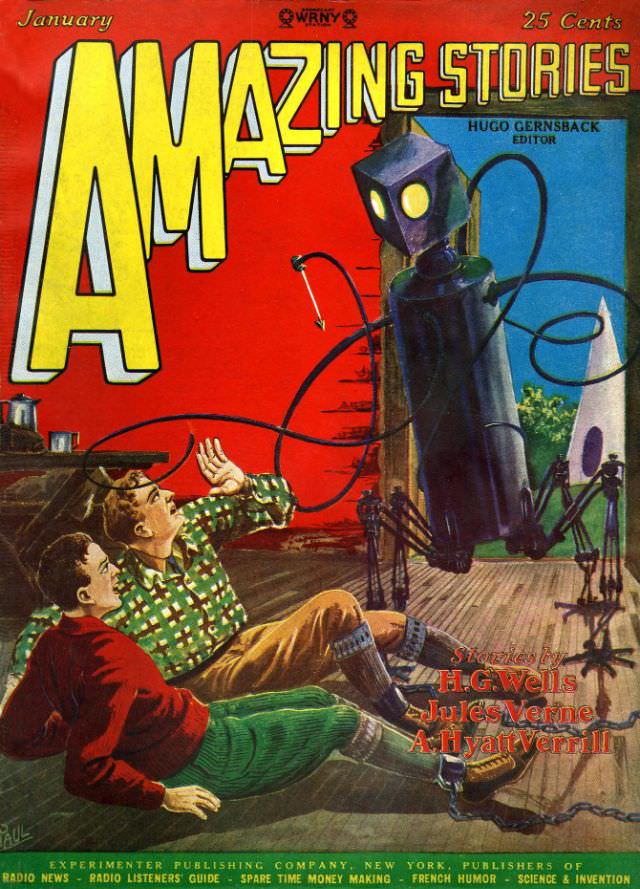
Bold color and oversized lettering announce the January 1928 issue of *Amazing Stories*, a striking example of early science fiction magazine cover art. The design leans hard into spectacle: the giant “AMAZING” title dominates the top while the cover price and month frame the page like a storefront sign, selling wonder as much as stories. It’s an instantly recognizable slice of pulp-era visual culture, made to grab readers from a newsstand with dramatic action and futuristic promise.
At the center, a towering robot with glowing yellow eyes looms over two startled figures on the ground, its long cables or whiplike cords snaking across the scene. The split background—hot red to the left, cool blue to the right—heightens the tension, suggesting danger, experiment, and uncanny technology colliding in a single moment. Details like the looming machinery, the distant structures, and the exaggerated perspective reflect the period’s fascination with modern invention and the fear that progress might outgrow its makers.
Printed credits on the cover nod to the magazine’s role in popularizing science fiction, with Hugo Gernsback listed as editor and famous author names used as a draw for readers. For collectors and historians, this *Amazing Stories* cover from January 1928 is more than an illustration; it’s a window into how the late 1920s imagined robots, electricity, and the future. As an SEO-friendly artifact—pulp magazine cover, vintage sci-fi art, and early science fiction publishing—it remains a vivid landmark in genre history.