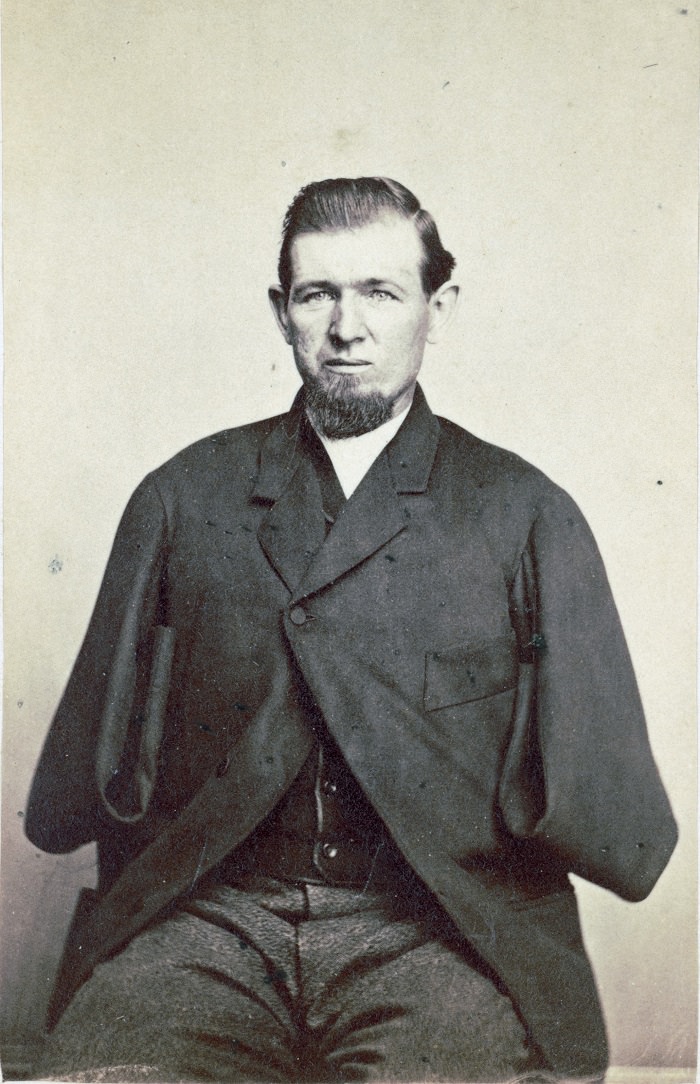
Private George W. Warner faces the camera with a steady, unadorned directness that feels both formal and deeply personal. Dressed in a dark coat and neatly kept hair and beard, he sits against a plain studio backdrop that leaves nothing to distract from the man himself. The starkest detail is his empty sleeves, a visual reminder that the Civil War’s most lasting legacy was carried home in bodies as well as memories.
The title links this portrait to Gettysburg on July 3, 1863, when Warner was wounded, and to the later moment of 1868 when the photograph was made. That gap matters: it suggests survival, recovery, and the long years of adaptation that followed the battlefields. In an era when photography was becoming a way to fix identity and experience on paper, veterans like Warner could present their changed selves to family, comrades, and history with an honesty that written records often soften.
For readers searching Civil War history, Gettysburg survivors, or veteran portraits, this image offers more than a biographical note—it invites contemplation of what “after the war” truly meant. The careful studio pose carries dignity, while the visible absence speaks to sacrifice without theatrics. As a historical photo, it stands as a quiet testament to the cost of the war and to the resilience of those who lived beyond its most famous days.