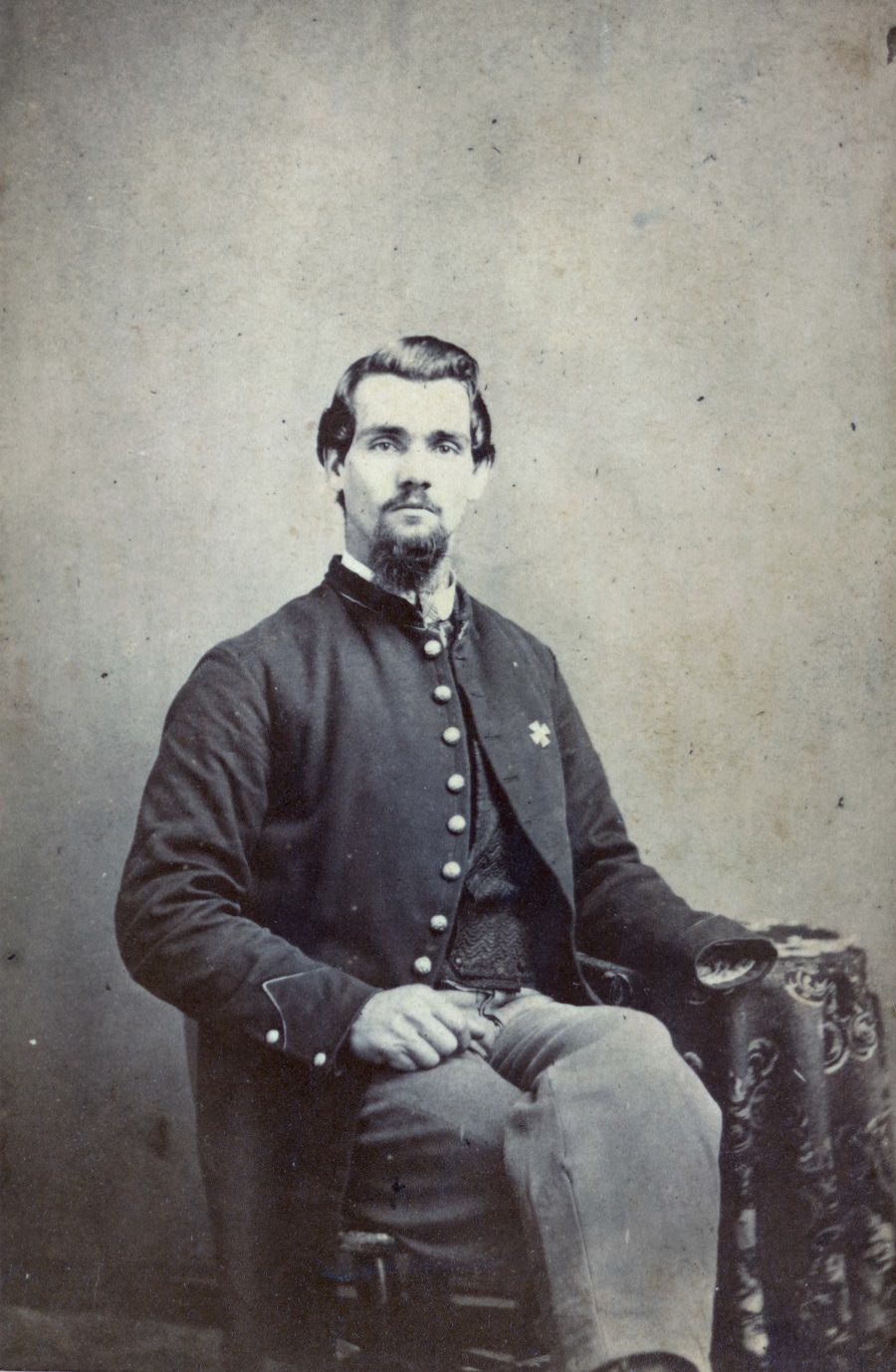
Sergeant Thomas Plunkett of Company E, 21st Massachusetts Infantry Regiment sits for the camera in a formal studio pose, his Union uniform neatly buttoned and a steady, unsmiling gaze fixed forward. The plain backdrop and careful lighting draw attention to the details that mattered in wartime portraiture: the cut of the coat, the bright line of brass buttons, and the tidy grooming that signals discipline as much as personal pride.
A small cross-shaped badge pinned to his chest adds another layer of story, hinting at recognition and the ways soldiers marked service and sacrifice during the Civil War era. The composition is spare but deliberate—one hand resting on his knee, the other near a rounded hat—suggesting a moment of calm between the uncertainties of camp life and the public duties of a noncommissioned officer.
Paired with the post’s title, the mention of the American flag frames this portrait in the language of allegiance and identity that surrounded Union regiments in 1863, even when the banner itself sits just outside the frame. For readers searching Civil War history, Massachusetts infantry records, or authentic 1860s military photography, this image offers a direct, human scale view of a soldier’s presence—part personal keepsake, part historical document preserved in silvered tones.