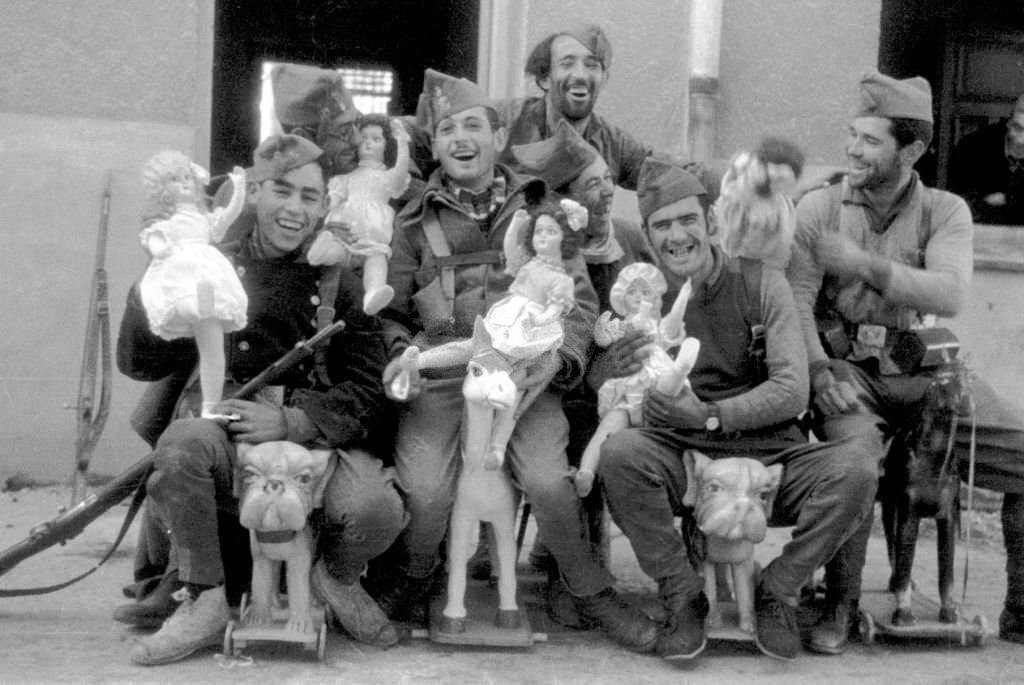
Laughter is the first thing that hits you: a tight cluster of soldiers grinning broadly as they crowd together for a playful pose in 1936. Instead of the stiff formality often associated with wartime portraits, these men hoist dolls in frilly dresses and perch on children’s ride-on toys, turning the moment into a bit of theater. Their uniforms and caps signal military life, yet the expressions suggest a brief holiday from discipline, danger, and routine.
Details in the scene reward a closer look, from the rifles leaned nearby to the odd, almost surreal mix of props—dolls with painted faces, a toy horse in the middle, and other small figures arranged like a makeshift parade. The contrast between weapons and playthings gives the photograph its uneasy charm, hinting at the way humor and improvisation helped soldiers endure the strain of civil conflict. Even without a clearly marked place, the setting reads as a street or courtyard, ordinary architecture turned into a backdrop for an extraordinary snapshot.
For readers interested in Civil Wars and the everyday texture of 1930s military history, this image offers something rarer than battle scenes: a candid glimpse of morale, camaraderie, and coping. It reminds us that war photography isn’t only about tactics and tragedy, but also about the human urge to reclaim normalcy—if only for the length of a shutter click. In that small act of posing with dolls, the soldiers leave behind a record of resilience as vivid as any official chronicle.