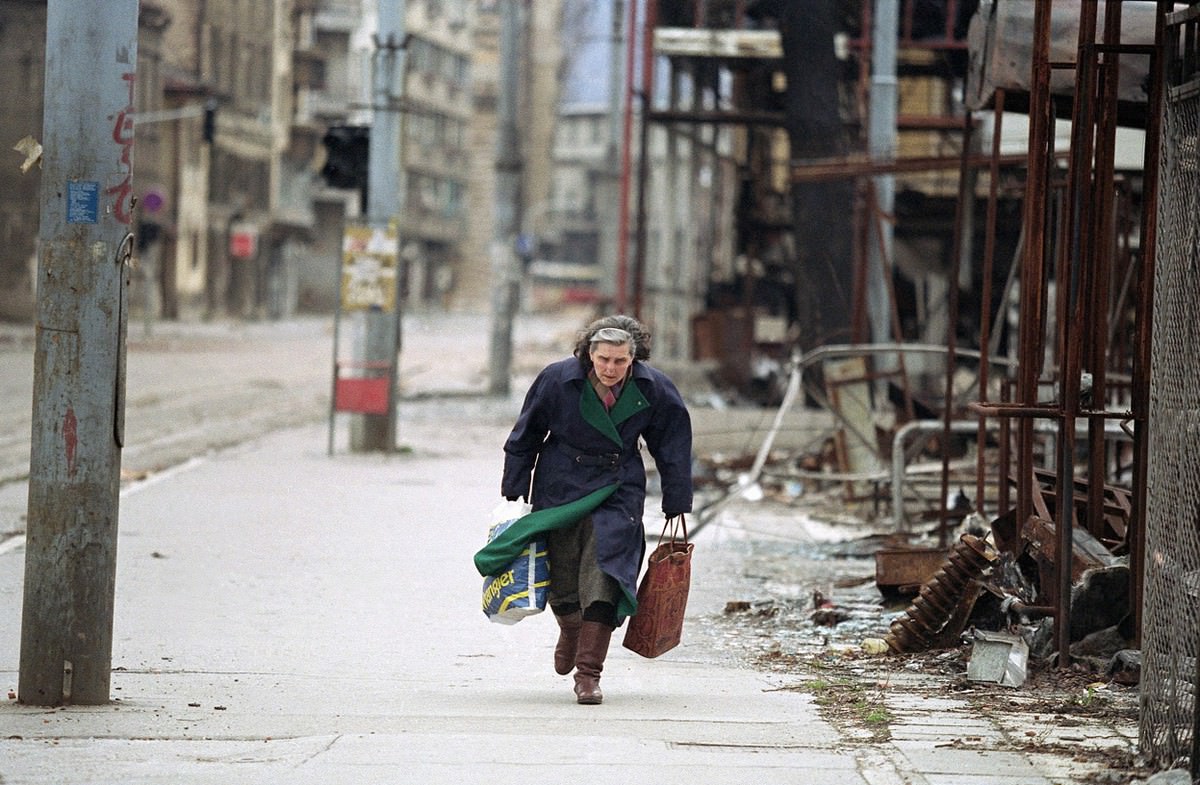
A lone woman leans into her stride, gripping shopping bags as she rushes down a bare sidewalk where everyday errands have become a dash for survival. The street around her is stripped of normal life—no crowds, no open storefronts—only the uneasy quiet that follows sustained violence. Her posture and pace tell the story as plainly as any caption: in a war zone, movement itself can feel like a calculated risk.
Along the curb, shattered shopfronts and twisted metal frame the route like a corridor of wreckage, while scorched walls and broken fixtures suggest how thoroughly commerce and community have been dismantled. The emptiness is as striking as the destruction, turning an ordinary urban block into an exposed passage where there is nowhere to linger. Even without a visible threat in the frame, the scene carries the tension implied by the notorious nickname “Sniper Alley,” a phrase that evokes targeted danger and the fear of being seen.
Civil wars are often remembered through battles and political milestones, but photographs like this return the focus to civilians navigating ruined streets in search of necessities. The contrast between the simple act of carrying groceries and the surrounding devastation underscores how conflict reshapes routine into endurance. For readers exploring Bosnia war history, Sarajevo siege imagery, and the human experience of urban warfare, this moment offers a stark, unforgettable glimpse of resilience under fire.