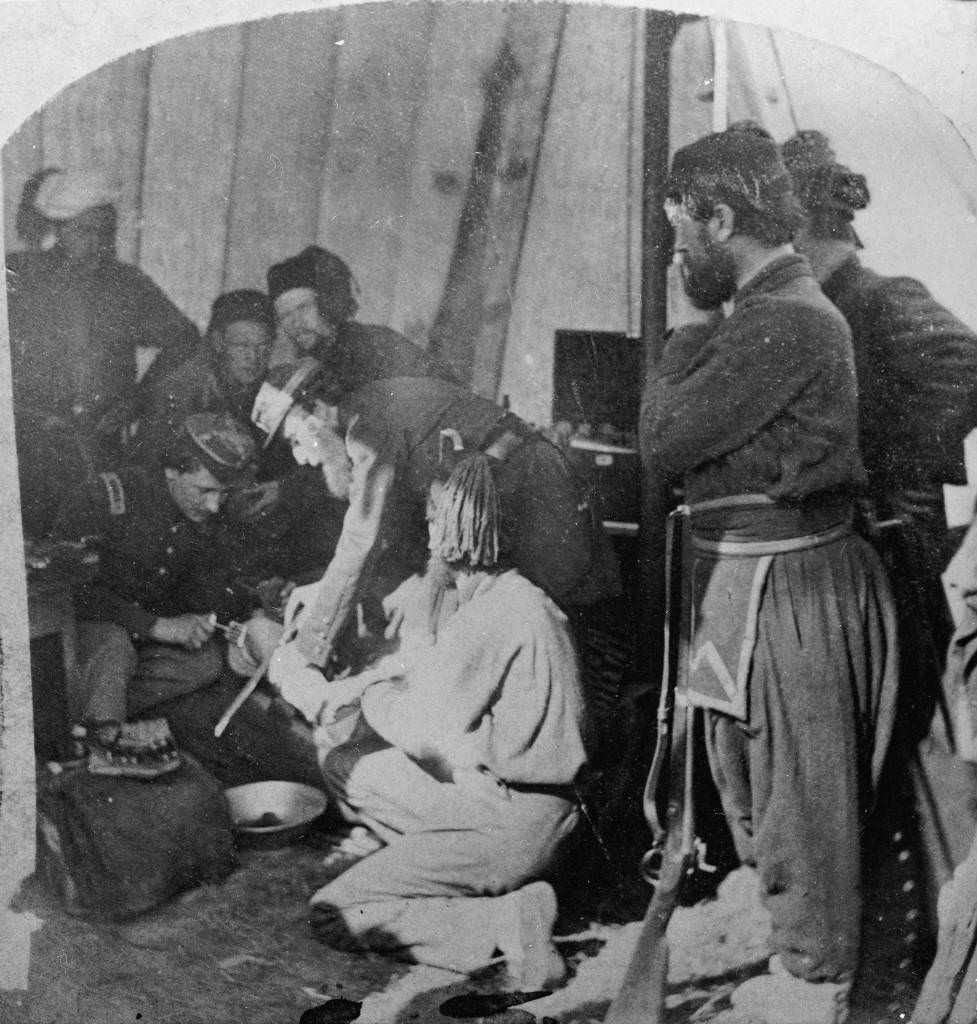
Inside a canvas-walled, makeshift hospital, Army surgeons bend over a wounded soldier while comrades hover close by, some watching and others turning away. The cramped scene—rough boards, dim light, and bodies pressed into every corner—conveys how quickly wartime medicine had to adapt when battles flooded the camps with casualties. Even without a formal operating room, the urgency is unmistakable, with instruments in hand and a basin on the ground ready for what comes next.
The title points to an amputation during the U.S. Civil War, and the photograph’s arrangement underscores the grim practicality behind that decision. In an era before antibiotics, severe limb injuries from bullets and shrapnel often left doctors choosing speed and survival over preservation. The men in uniform form a tight ring around the patient, suggesting the presence of assistants and orderlies as well as the sobering reality that many soldiers witnessed such procedures firsthand.
As a rare, unvarnished glimpse of Civil War medical care in 1863, this image helps modern viewers understand what “field hospital” truly meant: improvisation, limited supplies, and relentless triage. It also highlights the human cost of the conflict beyond the battlefield—pain, endurance, and the medical teams trying to keep pace with injury and infection. For readers searching Civil War history photographs, wartime surgery, or army doctors in 1861–1865, few visuals speak so directly to the hard edge of nineteenth-century medicine.