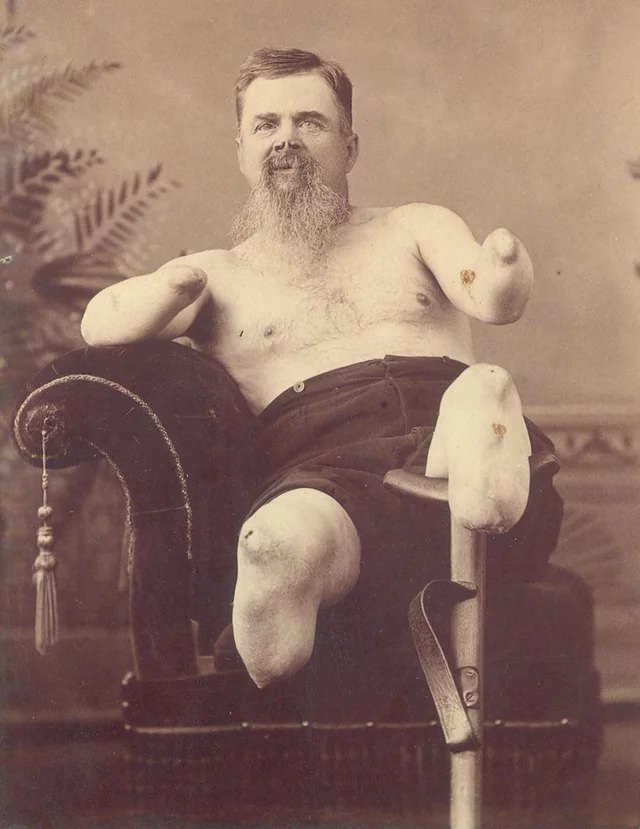
A bearded veteran sits for a studio portrait with a steady, unflinching gaze, his bare torso and multiple amputations presented without disguise. The photographer’s choice to pose him in a formal chair, against a softly painted backdrop, frames disability and survival as undeniable facts rather than curiosities. In an era when many preferred to look away, images like this insisted that the human cost of the Civil War be seen.
Wounds like these were not rare outcomes of mid-19th-century warfare, when devastating injuries and limited surgical options often made amputation the only chance at life. What follows the battlefield is written here in posture and presence: the daily work of living, the changed relationship to one’s own body, and the long recovery that continued long after the fighting ended. The portrait also hints at the evolving world of prosthetics and support systems that veterans relied on, even as pain, stigma, and practical barriers shaped every ordinary task.
For readers searching the history of Civil War amputee veterans, this photograph offers an intimate point of entry into broader questions about medicine, rehabilitation, and memory. It invites reflection on how veterans navigated employment, family life, and public recognition while carrying visible reminders of the conflict. Alongside the title’s focus on surviving limb loss, the image stands as a stark testament to endurance—and to the stories still embedded in archival photographs from America’s Civil Wars.