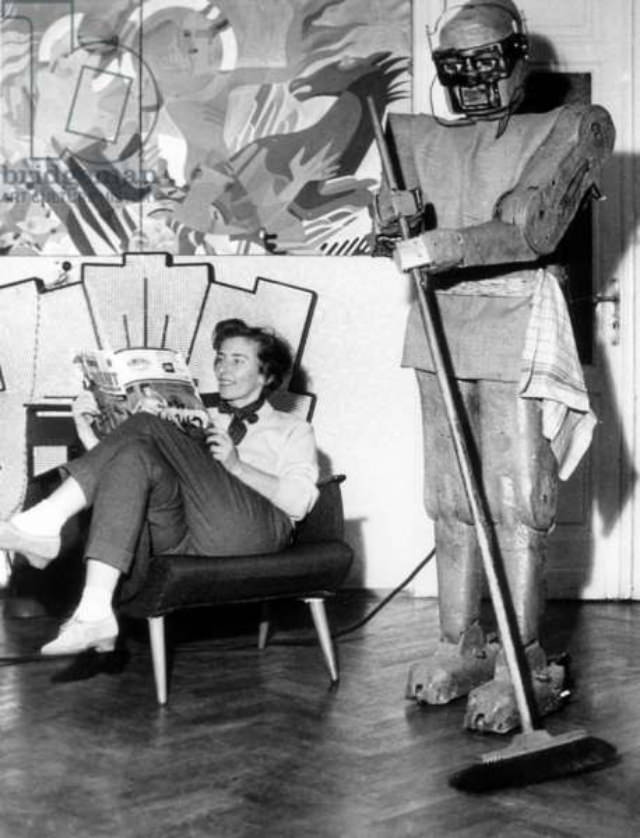
A domestic scene turns strangely futuristic as Claus Scholz-Nauendorff’s MM7 Selektor Robot stands beside a lounge chair, broom angled to the floor like a dutiful caretaker. The machine’s bulky, riveted body and helmet-like head evoke industrial equipment more than a friendly household helper, yet the intent is unmistakable: bring automation into everyday housework. In the background, a relaxed figure leafs through reading material, underscoring the promise that a “robot servant” could reclaim leisure from chores.
Details in the photograph hint at an era fascinated by push-button modernity and mechanical solutions to mundane labor. The robot’s oversized feet, rigid arms, and wired presence suggest a prototype built for demonstration—part engineering experiment, part publicity spectacle—meant to make the future feel tangible inside an ordinary room. Even the broom becomes a symbol, linking traditional cleaning to new inventions and the optimistic belief that technology could transform the home as dramatically as it was changing factories.
For anyone exploring the history of robotics, retro technology, and early visions of smart homes, this image offers a vivid snapshot of ambition meeting domestic life. The MM7 Selektor Robot represents more than novelty; it reflects shifting expectations about convenience, gendered labor, and the marketing of “labor-saving” devices in the twentieth century. Readers searching for vintage robot photographs, classic invention stories, or the roots of household automation will find plenty to linger on in this striking moment of mechanical housework.