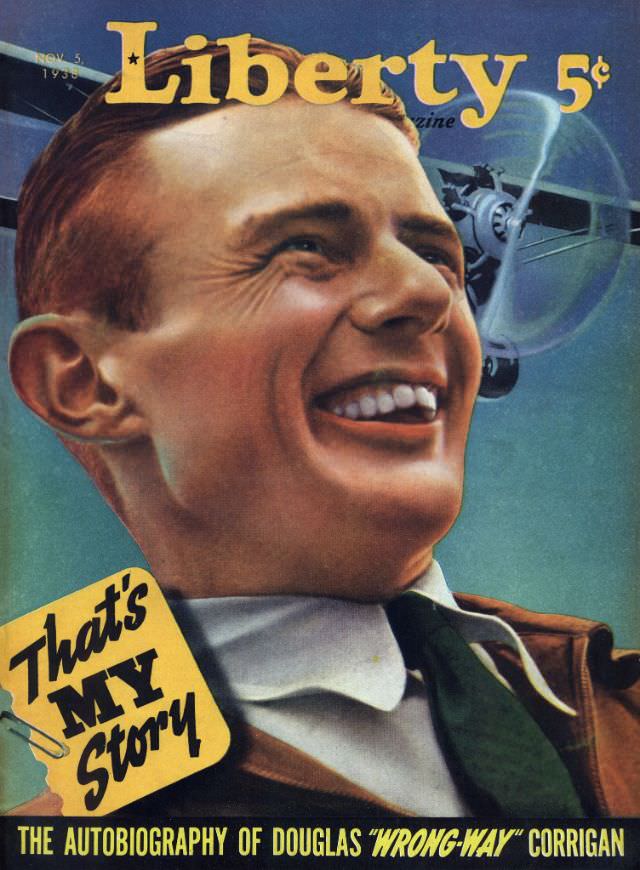
Bold lettering crowns the Liberty magazine cover dated November 5, 1938, priced at 5 cents, with a radiant, close-up portrait that practically spills past the frame. The illustration leans into warm skin tones and crisp highlights, the subject’s grin and laughing eyes selling confidence and momentum. Behind the head, the blurred suggestion of an airplane propeller and cockpit hardware hints at modern speed and a skyward worldview—perfect visual shorthand for late-1930s aviation fascination.
Along the lower edge, a yellow tag line declares “That’s My Story,” and the cover copy announces “The Autobiography of Douglas ‘Wrong-Way’ Corrigan,” turning the face into a headline you can’t ignore. The composition is pure newsstand theater: oversized typography, a heroic angle, and a palette designed to pop from a rack of competing periodicals. Even without opening the issue, the message is clear—adventure, personality, and a promise of first-person storytelling.
As cover art, this piece also serves as a snapshot of how mass-market magazines packaged celebrity and daring for readers in the prewar years. The design blends portraiture with aviation iconography to evoke progress, risk, and upbeat American grit, making it a strong example of 1930s illustration and editorial marketing. For collectors and historians of vintage magazines, the Liberty cover from November 5, 1938 offers a striking window into the era’s visual culture and the public appetite for larger-than-life true tales.