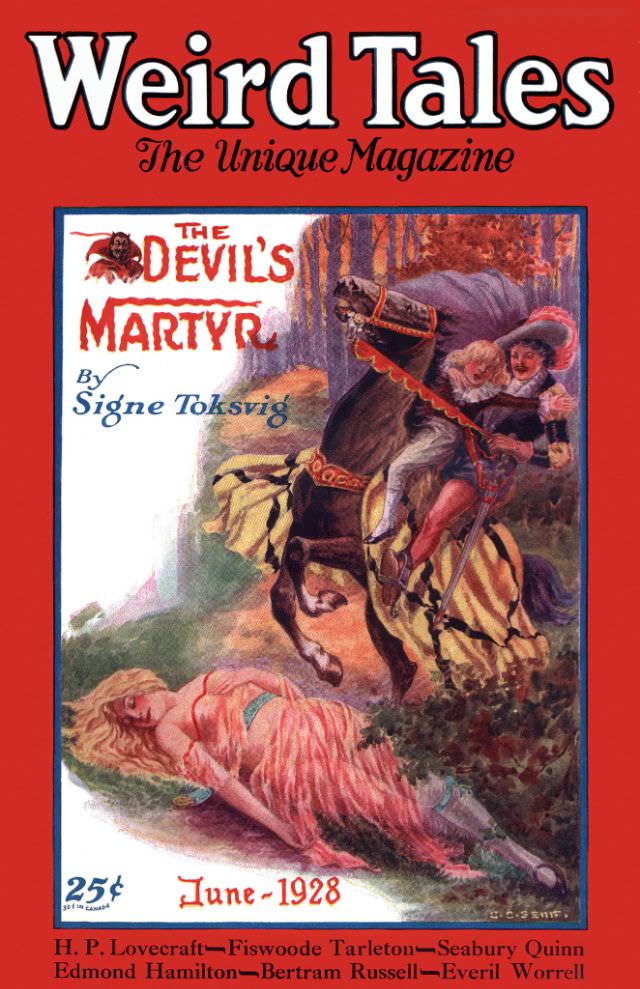
Bold red lettering crowns the June 1928 issue of *Weird Tales*, instantly telegraphing the pulp magazine’s promise of the uncanny and sensational. Beneath the masthead, the cover line “The Devil’s Martyr” and the author credit are set like a theatrical placard, priming the reader for melodrama before the scene even unfolds. Even the price at the bottom edge anchors it as a mass-market artifact—fantasy and horror sold for pocket change, meant to be devoured quickly and remembered vividly.
At the center, the cover art stages a tense, storybook tableau: a rider in flamboyant, period costume leans from a dark horse, sword raised, while a pale figure lies sprawled in the foreground amid drapery and fallen fabric. The composition guides the eye along a diagonal sweep—horse and rider charging across the frame, the prone body drawing attention to vulnerability and peril. Rich, warm tones and sharp contrasts heighten the sense of danger, making the moment feel like a frozen climax pulled straight from a lurid adventure tale.
Collectors and genre historians return to covers like this because they function as miniature advertisements for early 20th-century weird fiction, where romance, violence, and the supernatural often mingled in a single dramatic image. The June 1928 *Weird Tales* cover also serves as a snapshot of pulp illustration trends: expressive brushwork, exaggerated action, and typography designed to shout from a newsstand. For anyone searching for “Weird Tales June 1928 cover art” or classic pulp magazine covers, this piece is a vivid doorway into the era’s popular imagination.