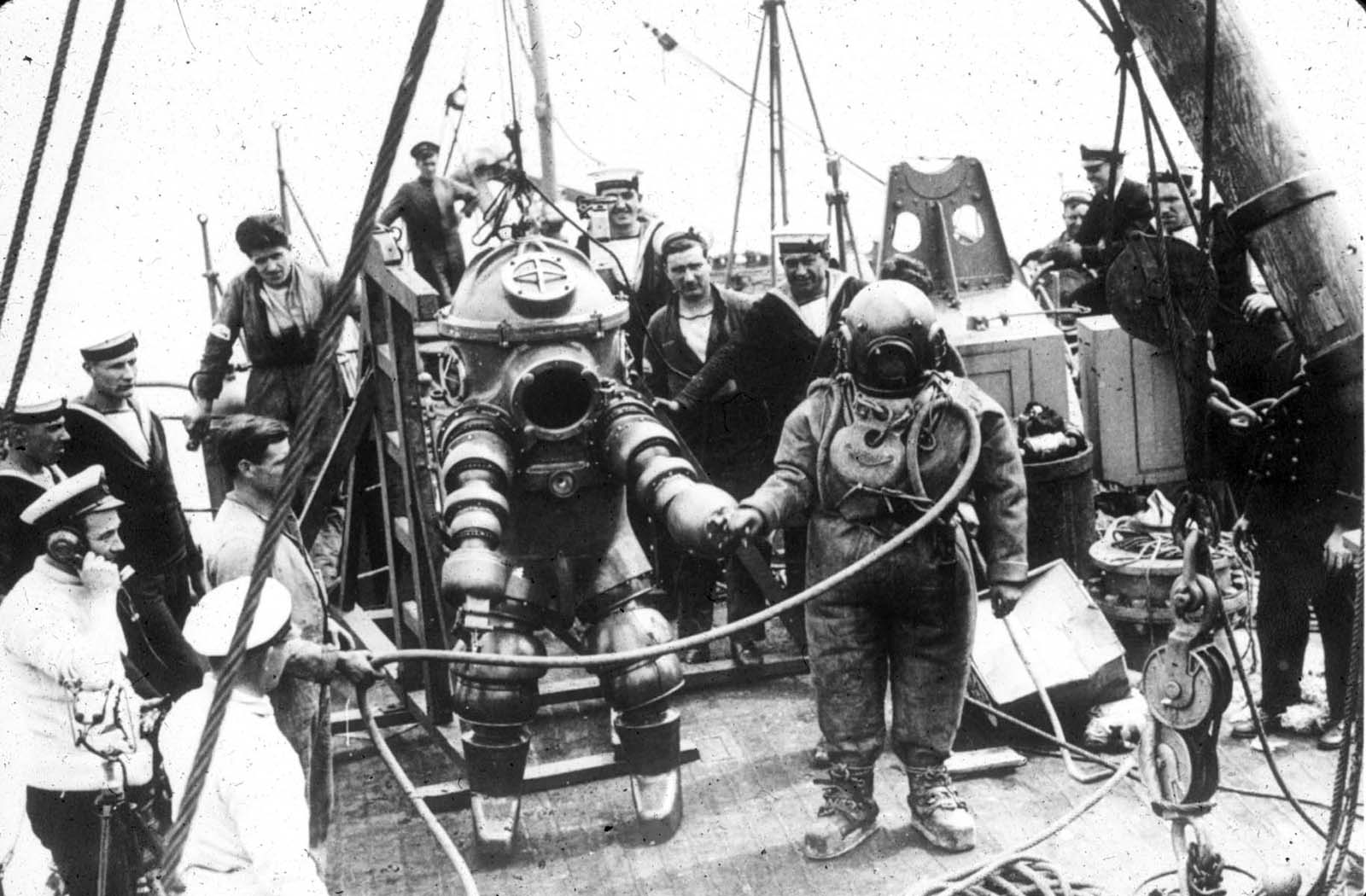
Amid a cluttered ship’s deck of cables, pulleys, and watchful sailors, two divers stand side by side at the threshold of a dangerous descent toward the RMS Lusitania wreck. One figure is encased in the bulky, jointed shell of the Tritonia ADS, its rounded helmet and thick limbs giving it the look of an early deep-sea “spacesuit.” Next to it, a diver in standard diving dress wears a softer suit and helmet, tethered by an air hose that loops across the planks as the crew gathers close to steady, check, and assist.
The contrast between these two systems is the real drama of the photograph: a meeting of experimental engineering and established practice in 1935 salvage and exploration. The atmospheric diving suit promises protection and mobility without the same dependence on surface-supplied air, while the traditional setup speaks to decades of hard-earned procedure—ropes managed carefully, lines kept clear, and equipment inspected before anyone goes over the side. Faces in caps and work clothes frame the scene, underscoring that underwater work was never a solo feat but a coordinated operation of divers, tenders, and deckhands.
For readers drawn to maritime history, early diving technology, and RMS Lusitania exploration, this image captures a moment when invention moved from workshop theory to working deck reality. The Tritonia ADS stands as a symbol of interwar innovation, while the standard diving dress anchors the story in the practical routines that made deep-sea efforts possible. Taken together, the photo offers an evocative glimpse into the tools, risks, and ambition behind 1930s shipwreck expeditions.