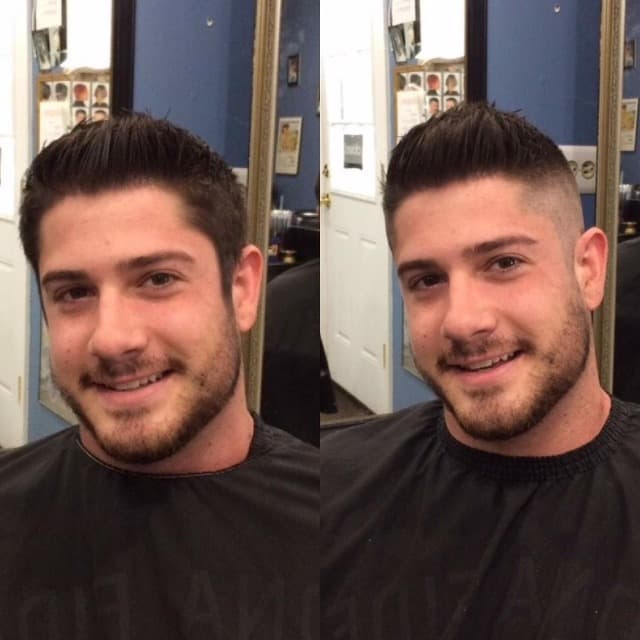
Set in the familiar glow of a barbershop mirror, the “Princeton Fade” frames a young man in a cape, smiling as the camera catches both his face and the clean geometry of his haircut. The top is left textured and slightly lifted, while the sides taper down with a neat, controlled fade—an approach that reads polished without looking overworked. Even the shop details in the background, from the product shelves to the doorway, reinforce the everyday ritual of grooming as a form of self-presentation.
Ivy League style has long favored restraint: crisp edges, tidy lines, and a silhouette that fits as easily in a lecture hall as it does at a weekend gathering. That tradition is echoed here in the haircut’s balance—short enough to look disciplined, long enough on top to allow movement and personality. The subtle transition at the temples and around the ears highlights the craft of the barber, where blending becomes the quiet signature of good taste.
Fashion and culture often travel through small, repeatable choices, and men’s haircuts are among the most visible. The Princeton Fade, as suggested by the title, leans into that collegiate ideal: classic, camera-ready, and adaptable to different face shapes and grooming preferences. In a single glance, the style signals confidence and care, linking modern barbershop technique to an older American tradition of clean-cut refinement.