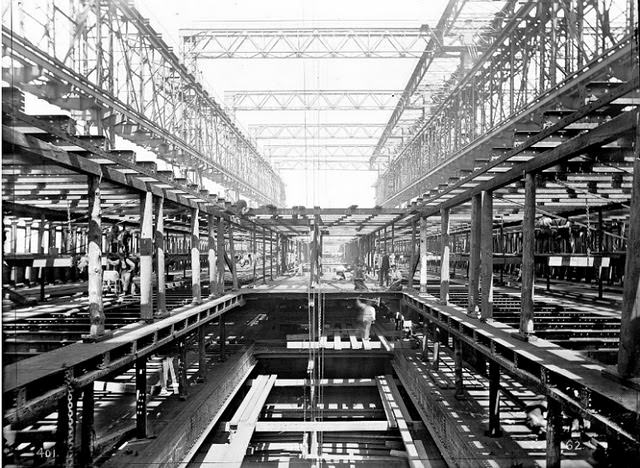
Rising in a forest of steel and scaffolding, the shipyard interior in this photo hints at the staggering scale required to build the RMS Titanic. The eye is drawn down a long corridor of girders and gantries, where beams, plates, and temporary frameworks form a skeletal world of industry. Even without faces in close view, the scene evokes the organized bustle behind a project that aimed to redefine luxury ocean travel.
Between the stacked walkways and overhead trusses lies the practical genius of early 20th-century shipbuilding—precision, repetition, and relentless labor. This was the era when riveted steel, heavy cranes, and carefully staged assembly transformed raw materials into a liner promoted as modern and remarkably safe. For readers searching Titanic construction history, this kind of shipyard view provides a rare sense of how “unsinkable” confidence was built as much from engineering culture as from metal and machinery.
Long before fame turned into tragedy, the Titanic’s rise was powered by inventions and industrial methods that pushed boundaries and captured public imagination. The stark geometry of the framing here underscores how monumental projects depended on standardized parts, rigorous planning, and new techniques for moving and joining massive components. As a historical photo for a WordPress post, it pairs perfectly with the story of ambition—how the world’s most talked-about ship began as a grid of ironwork, noise, and daring ideas taking shape.