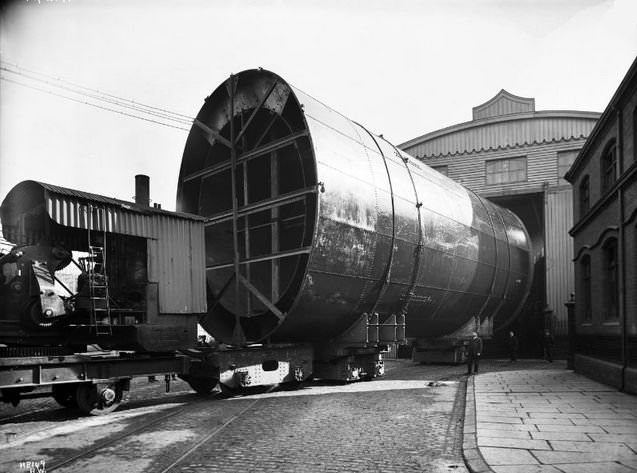
Steel dominates the frame as a massive cylindrical section—braced with ribs and seams—rests on a rail car in an industrial yard. Warehouses and workshop buildings crowd close, turning the scene into a corridor of machinery, track, and cobblestone where heavy components could be moved inch by inch. The sheer scale hints at the logistical ballet required to assemble an ocean liner that was marketed as the pinnacle of modern engineering.
Alongside stories of glamour and tragedy, Titanic construction history is also a story of infrastructure: rail spurs, cranes, foundries, and the skilled hands that shaped plate steel into ship-ready form. Photographs like this point to the “inventions” behind the legend—mass production techniques, improved metalworking, and the kind of modular thinking that let shipbuilders fabricate enormous pieces before fitting them into a single hull. Even without a named yard or labeled part, the image evokes the industrial confidence that fed the era’s belief in an “unsinkable” future.
For readers searching for how the Titanic was built, this historical photo offers an honest, ground-level view of the process: not a finished liner at the pier, but the raw, rolling backbone of construction. It’s a reminder that fame begins long before a maiden voyage, in places where smoke, rivets, and transport systems make ambitious projects possible. Explore the story here as a blend of maritime history and early-20th-century innovation, where engineering promised safety, speed, and spectacle—and where the myth of perfection was forged one massive component at a time.