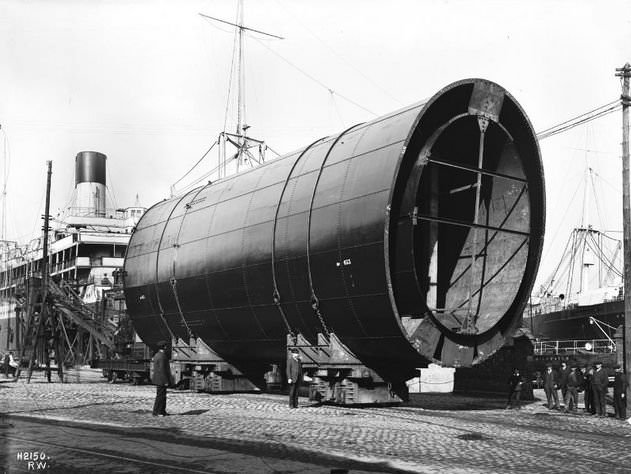
Steel dominates the scene, with a gigantic cylindrical structure resting on cradles along a cobbled yard while workers linger at its base for scale. The industrial waterfront beyond—masts, rigging, and the silhouettes of ships—frames the sense of a busy shipyard where engineering was as much spectacle as labor. Every riveted seam and curved plate hints at the enormous logistics required to build an “unsinkable” liner in the public imagination.
In the story of the Titanic’s construction and rise to fame, it wasn’t only the finished ship that inspired awe, but also the parts and processes that made such size possible. The photo’s emphasis on a massive component evokes the era’s breakthroughs in heavy manufacturing, metalworking, and assembly methods that powered ocean travel’s golden age. Visitors searching for Titanic construction history will recognize the hallmarks of early 20th-century shipbuilding: scale, precision, and a faith in modern invention.
Against the open yard and towering hardware, the human figures become a reminder that grand ambitions were carried out by many hands and careful routines. The promise of safety and progress—often summarized in the shorthand of “unsinkable”—was built piece by piece, long before the ship met the sea and the headlines followed. This post pairs the historical photo with the wider narrative of Titanic-era innovation, tracing how engineering confidence helped launch a legend.