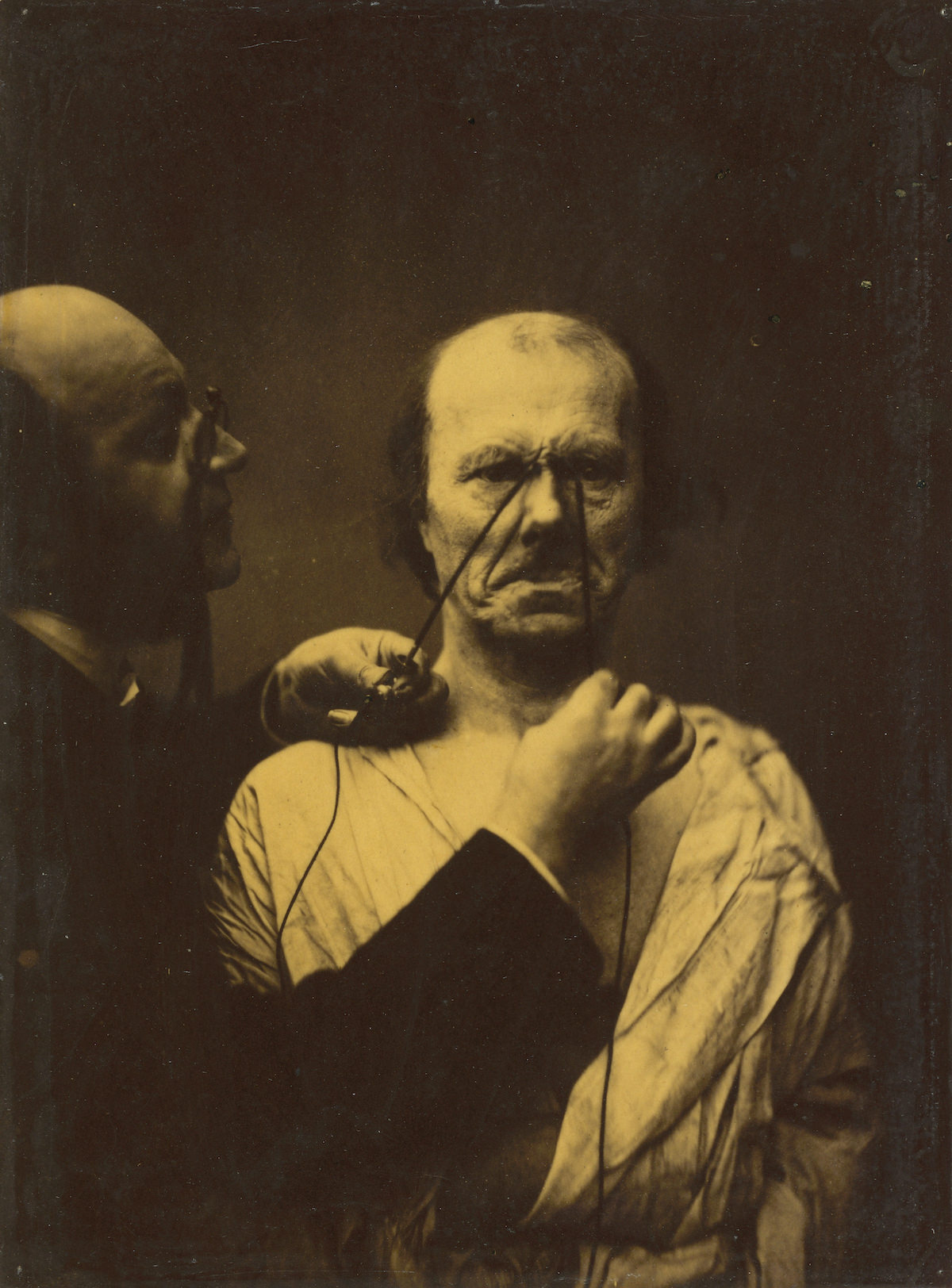
Violence is staged here with chilling intimacy: two men pressed into a tight frame, one bald figure leaning in while a clenched hand grips a cord or strap pulled hard across the other man’s face. The seated subject wears a loose, pale garment that reads like a shirt or smock, its folds catching the dim light, while his expression—furrowed, rigid, and weary—becomes the picture’s emotional center. Sepia tones and heavy shadows deepen the sense of menace, turning the background into a void where the act feels both private and unavoidable.
Aggression, wickedness is more than a provocative title; it functions like a caption for the body language on display. The taut line cutting diagonally across the face, the controlling arm drawn tight at the chest, and the invasive proximity of the attacker build a narrative of dominance and coercion without needing any explicit setting. As an artwork or staged historical scene, it invites the viewer to consider how cruelty can be choreographed—how the camera can freeze a moment of intimidation and make it endure.
Artworks like this often live on the border between documentation and allegory, and that uncertainty is part of their power. The lack of visible context—no readable signs, no clear room, no identifying details—forces attention onto gesture, texture, and expression, the oldest vocabulary of storytelling. For readers searching for historical photo art, vintage dramatic portraiture, or early theatrical images of conflict, this unsettling composition offers a stark study in how aggression can be made visible, and how “wickedness” can be suggested through nothing more than light, skin, and a pulled thread.