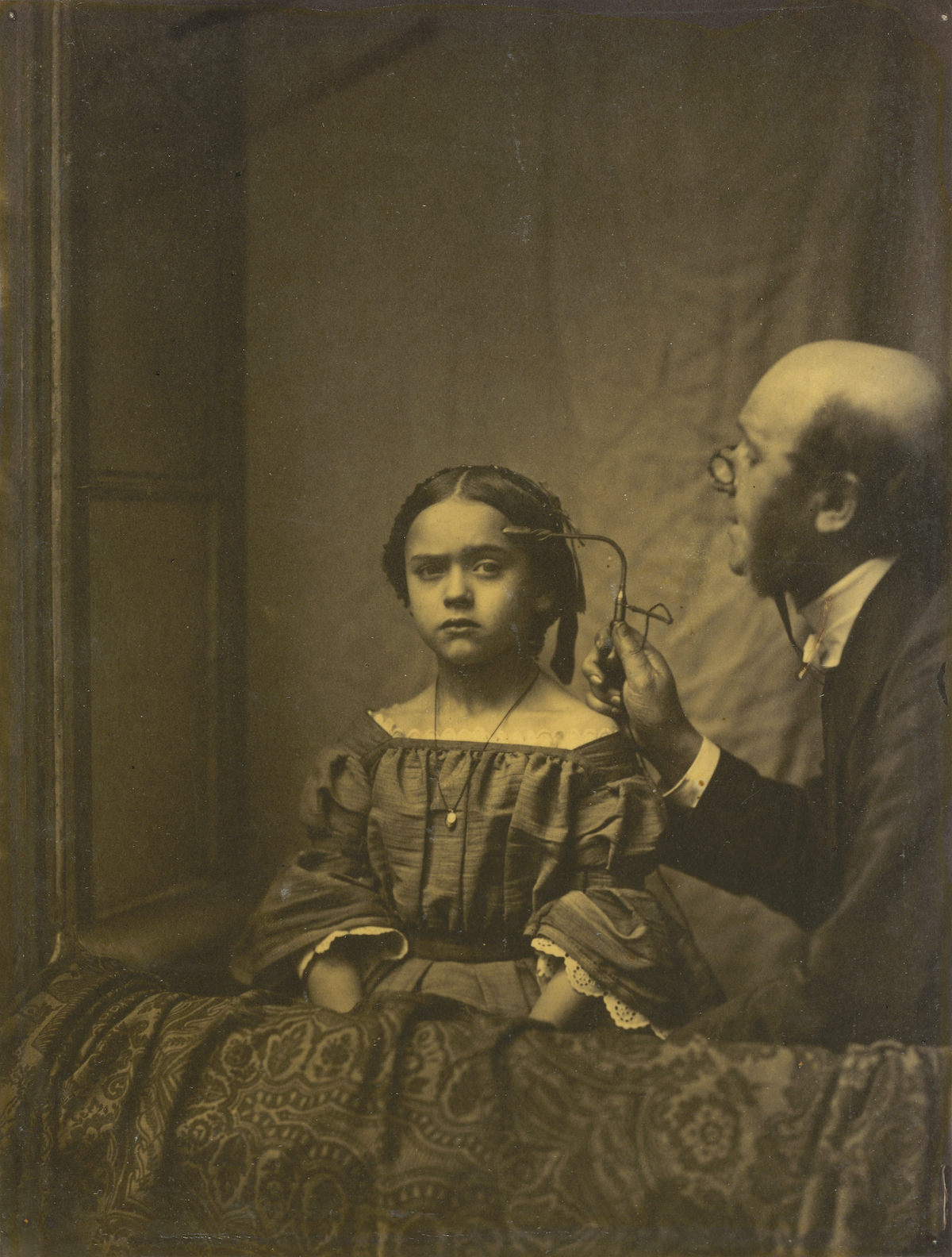
Silence hangs in the studio as a young girl sits perfectly still, her gaze fixed forward with the practiced steadiness of early portrait photography. A man in formal dress leans in from the side, holding a delicate metal instrument near her face—an improvised aid meant to coax the eyes into the right position and keep the sitter “on mark.” The title, “Attention,” feels literal here: not the quick glance of a snapshot, but a disciplined act of looking and being looked at.
Details in the scene reward close viewing, from the off-the-shoulder dress with lace at the sleeves to the small pendant resting at her chest. The patterned textile in the foreground reads like a stage curtain, softening the boundary between subject and viewer while echoing the era’s taste for elaborate fabrics. Even the lighting—dim, directional, and controlled—suggests the careful choreography required when exposures were slow and every blink mattered.
As an artwork and a document, the photograph captures the uneasy partnership between technology and human patience that shaped nineteenth-century portrait studios. It invites questions about the sitter’s experience, the photographer’s methods, and the social expectations pressed into a single pose. For readers searching for antique photography, early studio portraits, or the history of visual attention, this image offers a memorable reminder that “attention” once meant endurance as much as focus.