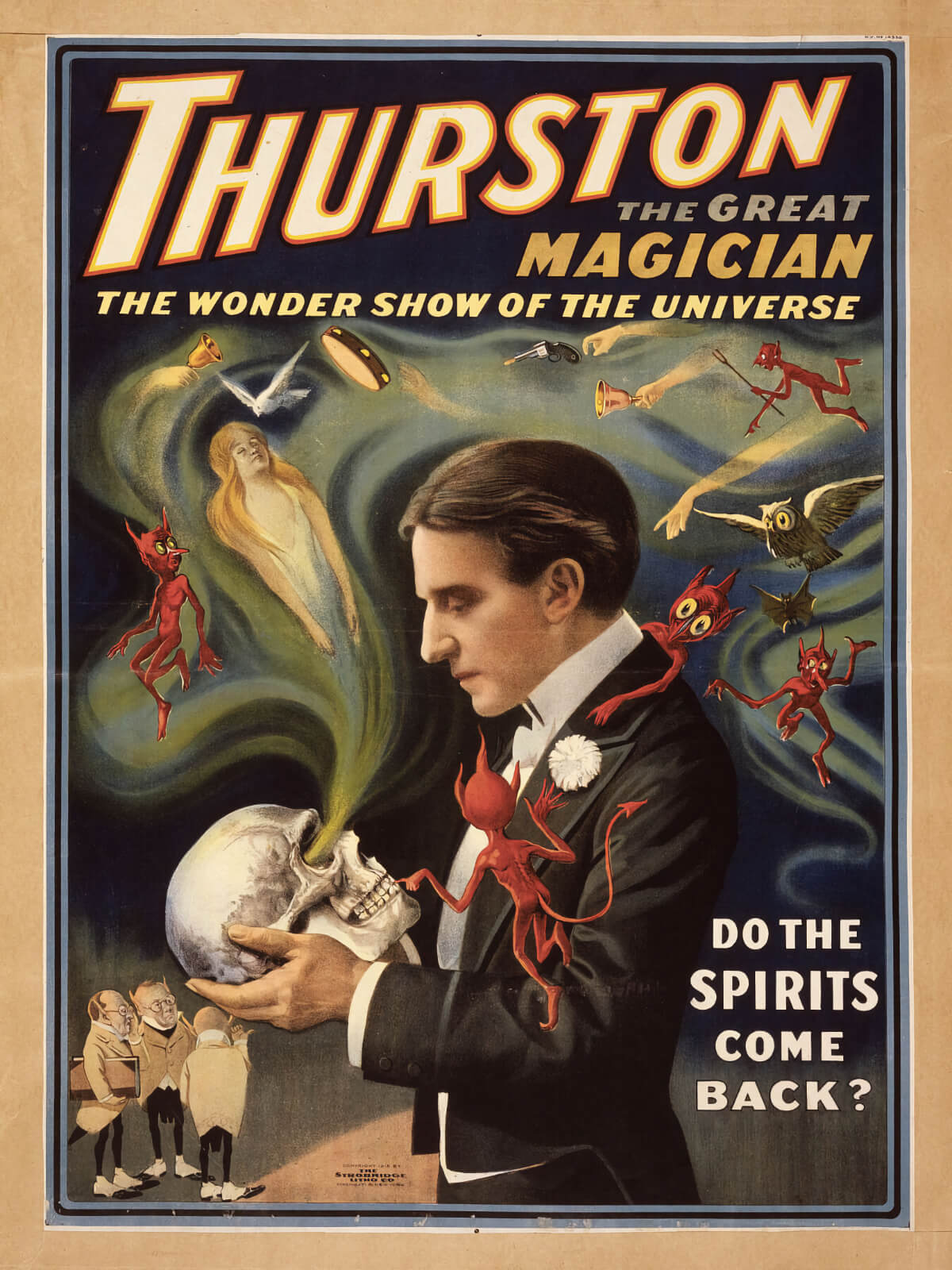
Bold lettering for “THURSTON” dominates the top of this 1914 cover art, announcing “The Great Magician” and promising “The Wonder Show of the Universe” in the booming language of early twentieth-century stage entertainment. The design pulls the eye down to a sharply dressed performer in profile, poised and composed, as if inviting the viewer to step into a theater where spectacle and mystery were marketed as high art. Even before the first trick is imagined, the poster’s typography and color set the tone for a grand touring illusion show.
Swirling smoke and supernatural imagery crowd the scene, with a skull cradled in the magician’s hands and a ghostly figure rising from the haze like an apparition. Little red devils dart around the composition while an owl-like creature and scattered props—suggestive of conjuring and misdirection—float in the air, turning the background into a visual whirlwind. At the lower right, the provocative question “DO THE SPIRITS COME BACK?” anchors the theme, blending spiritualism, séance-era fascination, and theatrical illusion into a single dramatic hook.
Posters like this were more than advertisements; they were portable theater, designed to stop passersby with a mix of fear, wonder, and curiosity. The artwork captures how magic shows of the period borrowed the aesthetics of the occult while remaining firmly in the world of commercial entertainment, where a single striking image could sell a night’s ticket. For collectors and historians of vintage circus and vaudeville ephemera, this Thurston poster remains a vivid example of how 1910s graphic design turned stagecraft into legend.