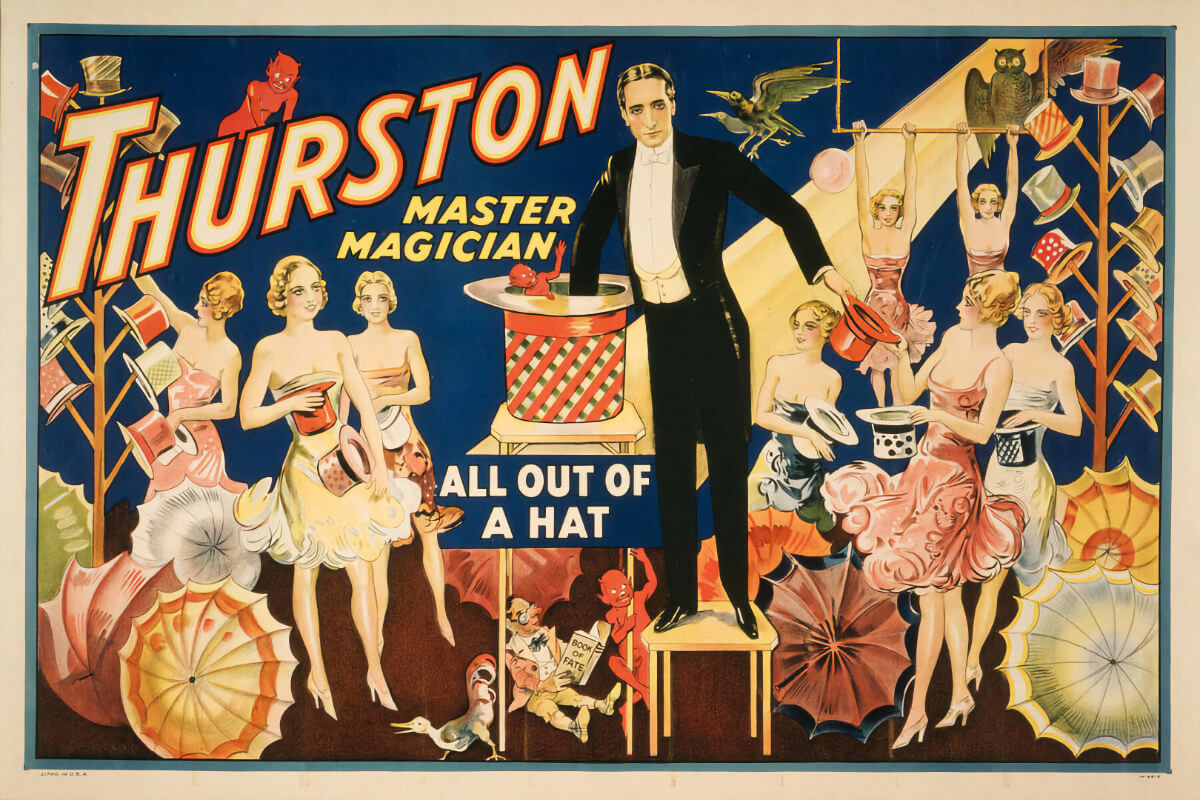
Bold lettering spells out “THURSTON” across a deep blue field, pulling the eye straight to a sharply dressed stage magician posed at center. Around him, a lively ring of performers and theatrical props turns the poster into a miniature spectacle: top hats held aloft, a striped hat on a pedestal, and playful creatures and birds that seem to have leapt from the world of illusion. The title line, “MASTER MAGICIAN,” frames the showman as both star and brand, while “ALL OUT OF A HAT” promises abundance and surprise with every flourish.
Color and composition work like a magician’s misdirection, guiding viewers from the commanding figure in formal evening wear to the animated surrounding cast. The scene brims with vaudeville-era energy—showgirls, stagecraft, and fanciful details layered like a visual drumroll—suggesting a program built on quick changes and crowd-pleasing reveals. The repeated motif of hats becomes a symbol of theatrical possibility, each one a potential source of rabbits, ribbons, or the next improbable transformation.
As cover art for a 1910-era magic attraction, this piece offers more than decoration; it’s an advertisement designed to stop passersby in their tracks and sell the promise of wonder. Collectors and historians of vintage posters will recognize the hallmark traits of early 20th-century entertainment printing: high-contrast colors, dramatic typography, and a narrative packed into a single frame. For anyone researching stage magic, vaudeville marketing, or the visual culture of performance, “Thurston, Master Magician—All Out of a Hat” remains a vivid portal into the era’s appetite for showmanship.