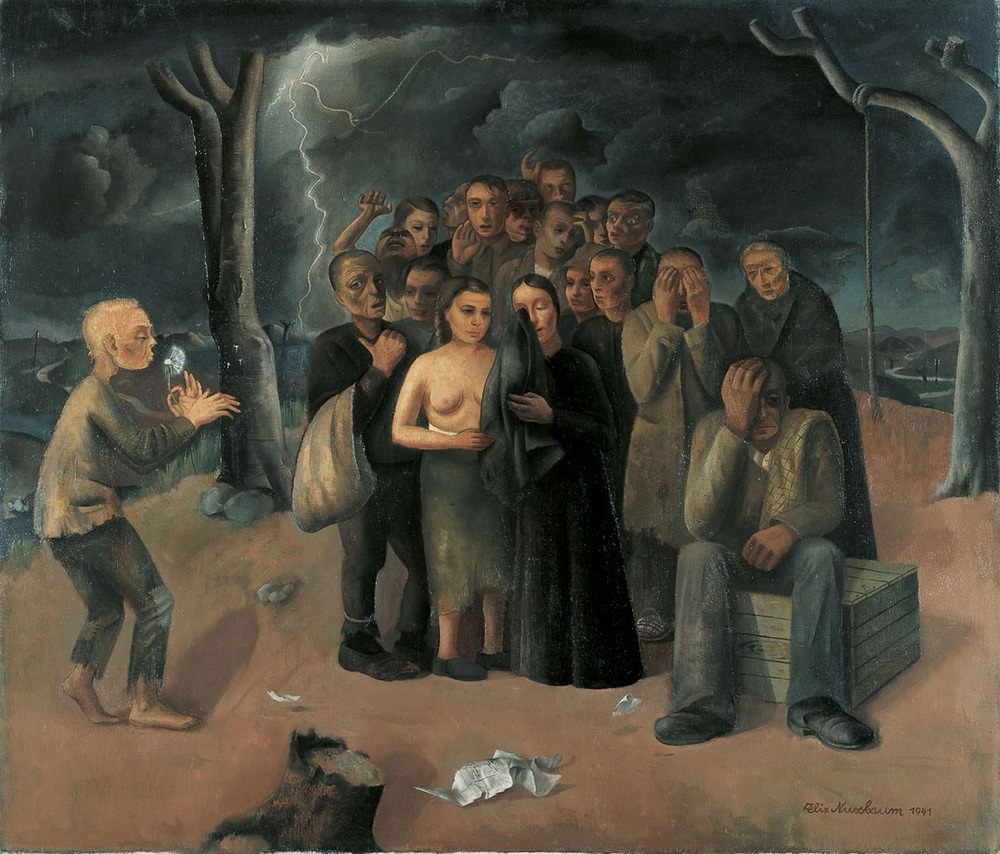
Under a bruised, storm-laden sky, a tight cluster of figures gathers as if pressed together by fear itself, their faces turned outward in a chorus of anxiety, shock, and resignation. A jagged streak of lightning tears through the darkness, briefly illuminating bare trees and a barren, sloping ground scattered with scraps of paper. At the left edge, a barefoot man brings a tiny spark to life in his hands, while on the right a seated figure collapses into grief, head bowed and heavy, beside a simple wooden crate.
Painted in 1941 and signed by Felix Nussbaum, this artwork uses a muted palette and theatrical staging to convey a world where ordinary people seem trapped between exposure and concealment. The central group includes men and women of varying ages; some cover their eyes, others stare straight ahead, and a young, unclothed figure stands starkly vulnerable amid dark clothing and rigid postures. The landscape behind them feels emptied out—distant shapes and shadowy structures recede into the night—so that the emotional weight stays concentrated on the crowd’s strained expressions.
For readers searching for Felix Nussbaum 1941, wartime art, or expressionist painting, the scene offers a powerful entry point into the visual language of dread and displacement. The composition reads like a silent tableau of people caught in a moment of crisis, with the fragile flame on one side and the desolate sky above reinforcing how precarious safety can be. As a historical image for a WordPress post, it invites slow looking: each face suggests a separate story, yet together they form a single, tense community bracing for what comes next.