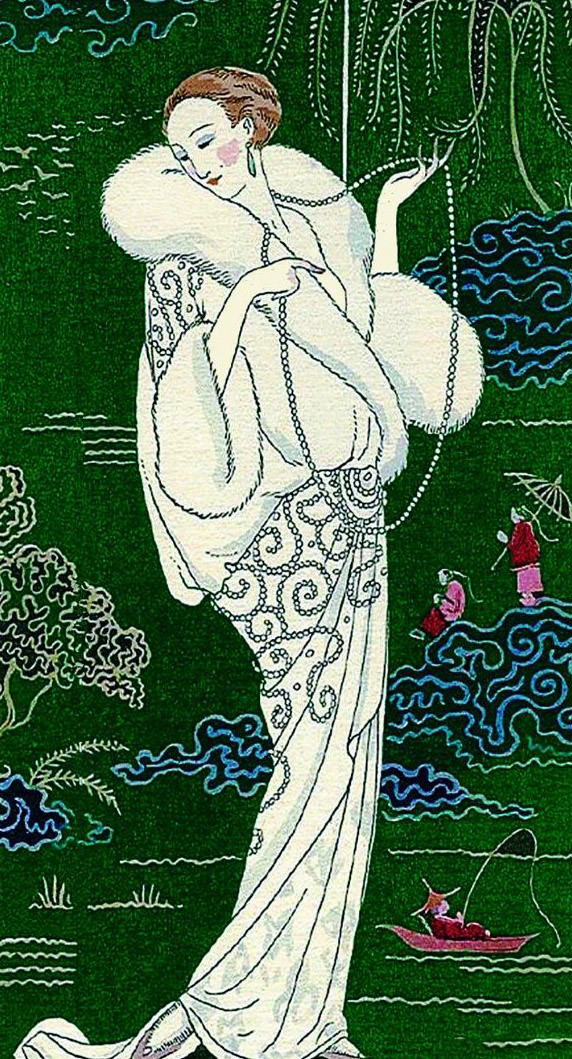
Poised in a flowing white ensemble, the woman stands with an elegance that feels unmistakably early‑20th century, her posture relaxed yet carefully composed. A plush, pale wrap frames her shoulders, while long strands of beads drape and loop across the garment, turning simple fabric into a statement of luxury and taste. Her softly turned face and neatly arranged hair add to the sense of a staged portrait—less a candid moment than an intentional presentation of style.
Behind her, the scene shifts into a decorative landscape: dark, richly colored ground, curling patterns that suggest water and breeze, and delicate plant forms that border the figure like theater scenery. Small, distant figures and a boat-like shape float in the background, creating depth and a hint of narrative without anchoring the image to a specific place. The overall effect reads like an artwork designed for mood and ornament—part fashion illustration, part dreamlike vignette.
For readers interested in 1913 fashion, Asian portraiture, and the visual language of refinement, this piece offers a striking example of how “white” could be used to emphasize silhouette, texture, and jewelry against a darker backdrop. It also invites a closer look at how femininity and modernity were being styled and circulated in artworks of the period. Whether you arrived here seeking a historical photo reference or a collectible art image, the composition rewards attention to its details and the quiet confidence it projects.