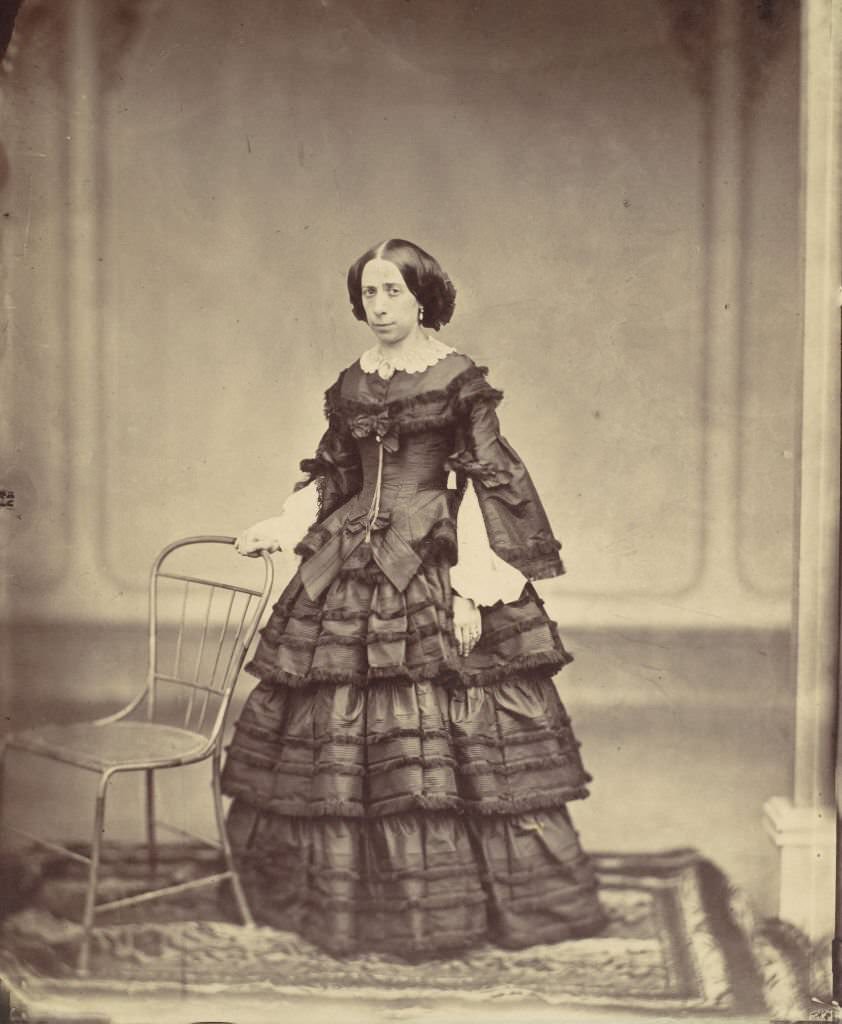
Poised beside a simple chair, Frau Hofrat Josefine Raymond stands in the controlled calm of a studio portrait typical of the 1850s. Her direct gaze and steady posture suggest a sitter accustomed to formality, while the plain backdrop keeps attention fixed on her face and dress. The soft tonal range and careful lighting speak to early photographic practice, when holding still was part of the discipline of being photographed.
Richly detailed fashion takes center stage: a dark, fitted bodice gives way to a wide crinoline silhouette, built out with structured underpinnings and finished with rows of ruffles and bands. The sleeves and skirt echo one another in their layered trim, and a pale, scalloped collar provides sharp contrast at the neckline. In her hands, she gathers fabric as if to manage the volume, an everyday gesture that reveals the practical reality behind mid-19th-century elegance.
As a piece of fashion and culture history, the portrait offers more than a record of clothing—it hints at status, taste, and the visual language of respectability in the nineteenth century. The title’s honorific “Frau Hofrat” situates Raymond within a social world where rank mattered, and where clothing communicated it immediately. For researchers of Victorian-era dress, crinolines, and early studio photography, this image preserves the textures and proportions that written descriptions rarely capture.