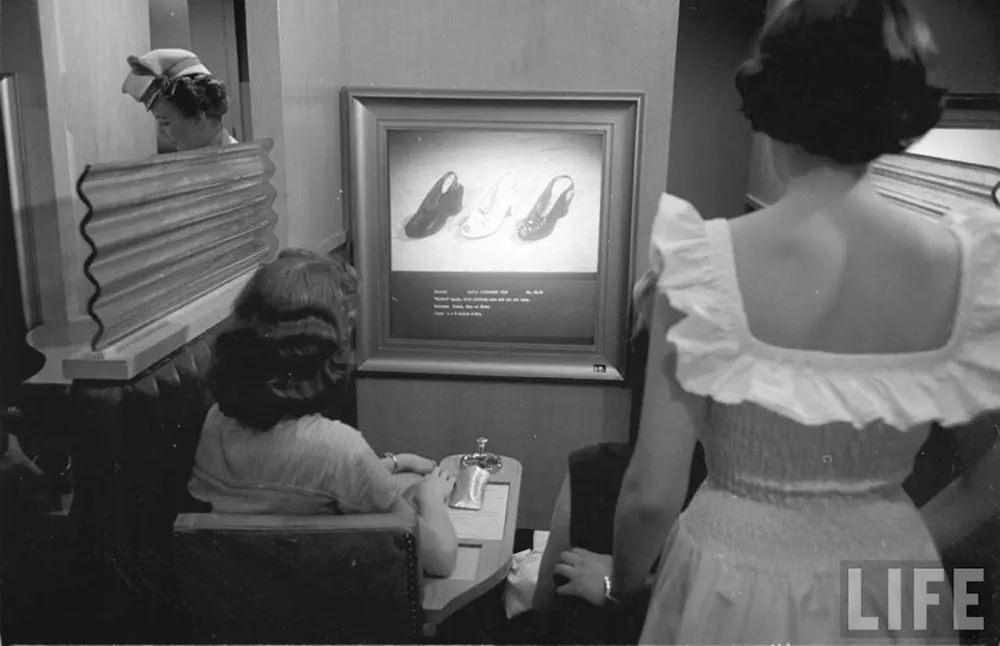
Long before browsers, carts, and one-click checkouts, shoppers were already being invited to buy from a screen. In this striking LIFE-era scene, a seated customer faces a framed display showing a pair of shoes and a block of product text, while a small console with controls and paperwork sits within reach—part catalog, part machine, and entirely futuristic for its day. Attendants hover nearby, giving the setup the feel of a boutique demonstration as much as a retail transaction.
The concept behind this “pre-internet online shopping store” is wonderfully familiar: browse items electronically, place an order, and let the company ship the goods to you. Instead of endless aisles, the selection arrives as curated images and descriptions, suggesting an early attempt to solve the same problems modern e-commerce tackles—limited shelf space, convenience, and the promise of shopping without carrying bags home. Even the emphasis on footwear hints at how innovators tested consumer trust with everyday products people could easily imagine receiving by delivery.
Seen now, the photo reads like a bridge between mail-order catalogs and the digital marketplaces that dominate today. The careful staging—screen-centered, staff-assisted, and quietly mechanical—captures a moment when “shopping from home” was still an idea being taught to customers in person. For readers interested in inventions, retail history, and the roots of online shopping, this image offers a vivid reminder that the future often arrives in small, experimental rooms before it reaches the world.