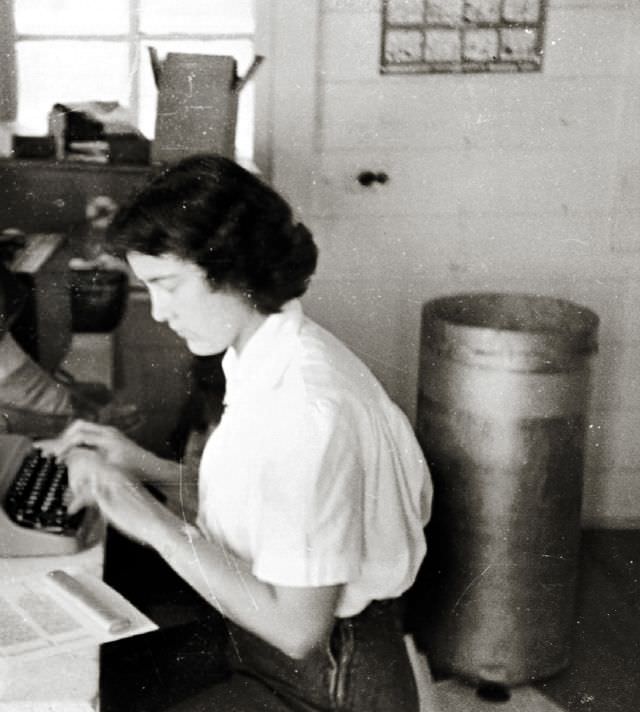
Leaning toward the keys with practiced focus, a young woman works at a typewriter in a modest office setting, her hands poised mid-task as paperwork lies open beside the machine. The soft blur and worn grain suggest a well-handled print, while the practical furnishings in the background—sturdy storage and everyday workroom clutter—quietly underline how routine and essential typing had become. Moments like this help explain why the typewriter is remembered not only as a clever invention, but as a tool that reshaped daily labor.
In the era of past inventions, the typewriter turned writing into something faster, more standardized, and easier to duplicate, changing how businesses, schools, and institutions communicated. For many women, proficiency on the keyboard opened doors to clerical and administrative roles, making the typist an emblem of modern office life. The posture and concentration seen here speak to skill as much as to social change: work that demanded accuracy, endurance, and speed.
Historical photos of ladies using typewriters preserve the human side of technological progress—quiet rooms where letters, reports, and records were produced line by line. Even without a marked date or location, the scene evokes a transitional workplace where manual precision met mechanical innovation. If you’re exploring vintage office history, women’s work, or the evolution of communication technology, this image offers a grounded glimpse into how the typewriter shaped everyday life.