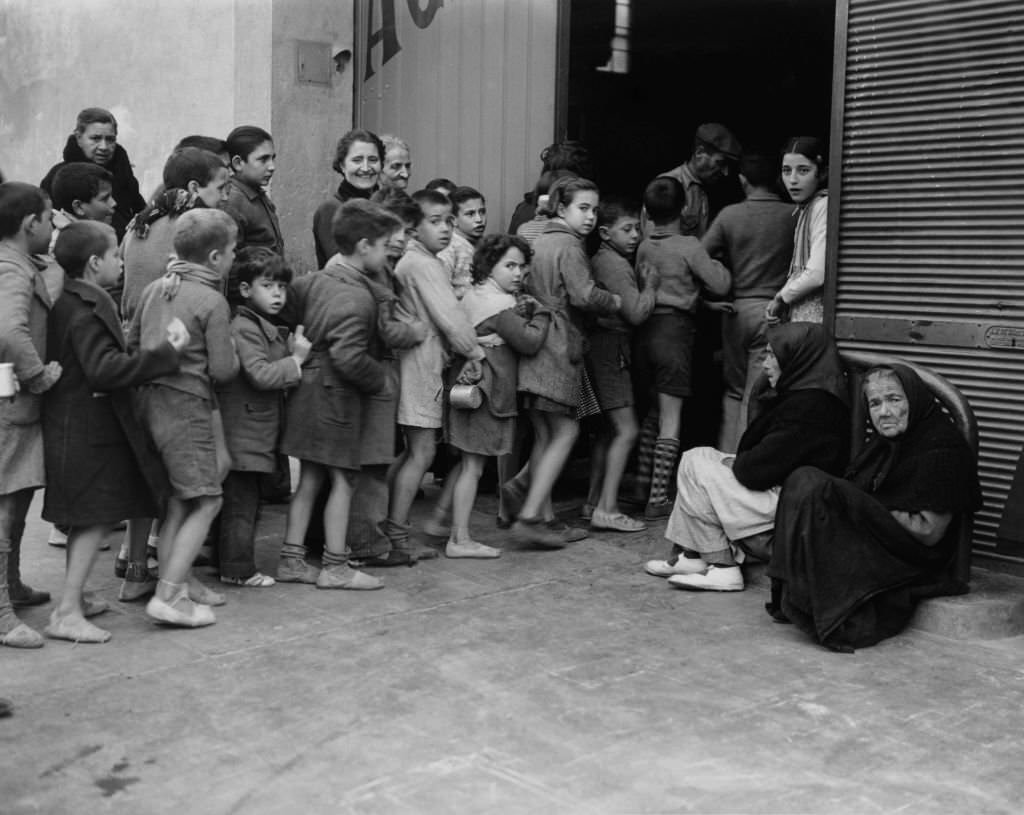
Along a narrow street-front entrance, a line of children waits its turn for milk rations in December 1937, during the Spanish Civil War. Their coats hang loose, socks slump at the ankles, and small hands clutch cups and tins—everyday containers repurposed for survival. Several faces turn toward the camera with a mix of curiosity and fatigue, while the doorway ahead swallows the line into a dim interior where distribution is taking place.
The scene is crowded yet orderly, a quiet choreography of scarcity shaped by war-time shortages and disrupted supply lines. Adults hover at the edges—one seated on the pavement, another standing watchfully—suggesting families stretched thin and communities forced to organize the basics of nutrition for the young. Details like worn shoes, patched clothing, and the tight spacing of bodies underline how rationing reached into the most ordinary routines of childhood.
Viewed today, this historical photo offers a grounded entry point into the lived experience of the Spanish Civil War beyond battlefields and headlines. It highlights how civilians—especially children—endured the conflict through queues, coupons, and brief moments of relief measured in a ladle of milk. For readers searching Spanish Civil War rationing, civilian life, or wartime food distribution, the image serves as a stark reminder that history is often written in lines like this one, waiting at a doorway.