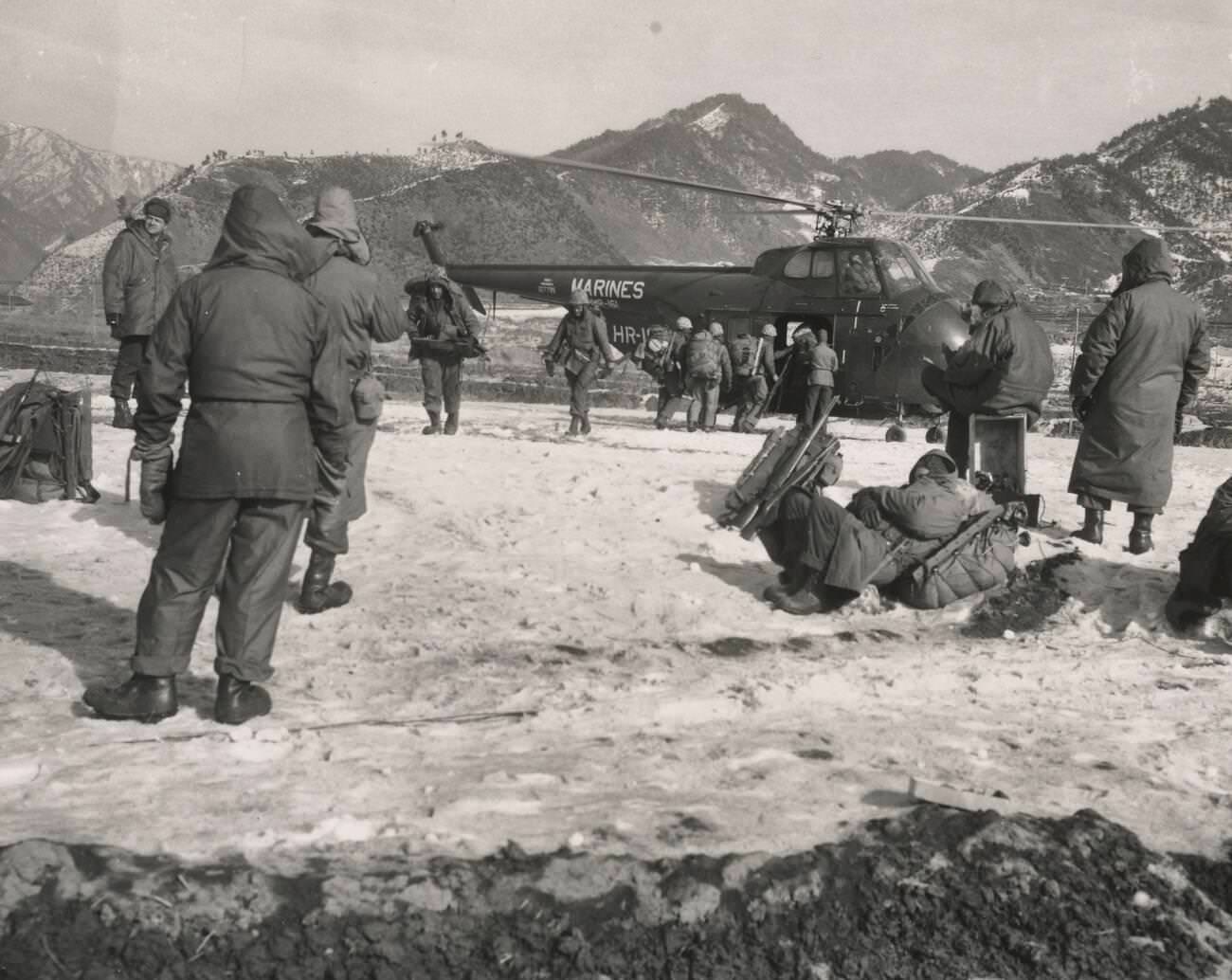
Snow blankets the ground as Marines in heavy cold-weather gear queue toward a large transport helicopter marked “MARINES,” its rotor mast and long blades rising against rugged Korean hills. Packs and equipment lie scattered in the foreground, while others crouch low near the landing area, suggesting the wind and grit kicked up by an aircraft preparing to lift. The scene is spare and practical—men, machines, and a frozen landscape—yet it conveys the urgency of movement in a war fought as much against terrain and weather as against an enemy.
Along the fuselage, a line of Leathernecks from the First Marine Division climbs aboard with the quick, practiced economy of troops accustomed to short windows and tight schedules. The helicopter’s open side and the clustering figures at its doorway hint at a new rhythm in mid-century combat: rapid loading, swift repositioning, and the ability to leap over mountains that would otherwise slow a column for hours or days. Even in a single still frame, the choreography of air mobility is visible—ground crews and passengers sharing the same icy patch of earth, each step coordinated for departure.
Helicopter operations became one of the defining images of the Korean War era, and photographs like this help explain why. Beyond the drama of the aircraft itself, the details—parkas, boots, and the stark winter light—root the story in the lived experience of Marine aviation and infantry working together in extreme conditions. For readers searching Korean War history, First Marine Division photos, or early U.S. Marine Corps helicopter transport, this moment captures the transitional decade when vertical lift began reshaping how wars were supplied, reinforced, and fought.