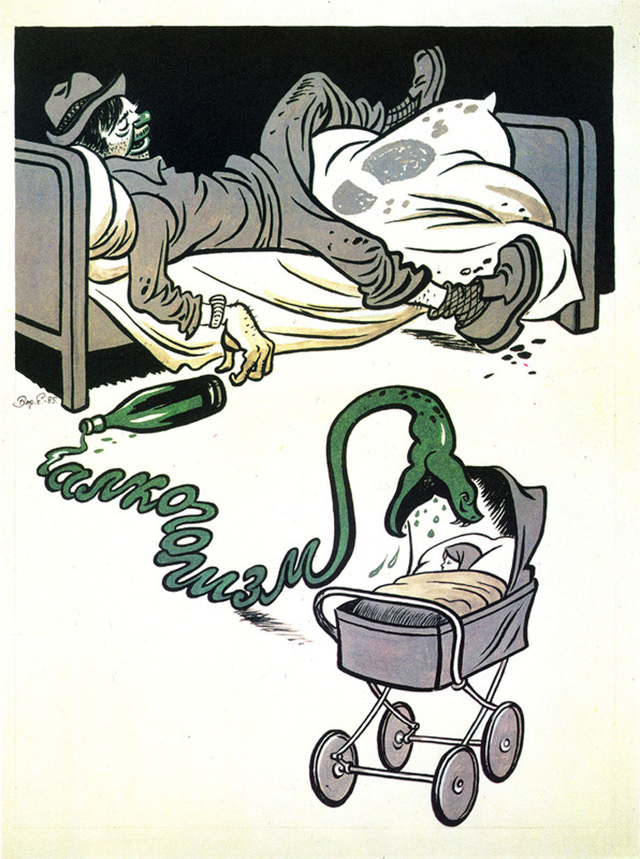
A stark, cartoon-like artwork turns the subject of alcoholism into a scene that feels both intimate and accusatory. An adult lies sprawled across a bed, shoes still on, one arm slack and dangling, while a dark bottle sits on the floor like an afterthought that has become the main character. The limited palette and heavy outlines push the viewer toward the grim essentials: exhaustion, neglect, and the quiet aftermath of binge drinking.
Below the bed, the illustrator makes the message impossible to miss by letting a green, snake-like trail spill from the bottle and curl toward a baby carriage. That crawling shape reads as poison, temptation, and consequence all at once, linking alcohol abuse to the vulnerable lives nearby. It’s moralizing, yes, but it’s also effective visual storytelling—an anti-alcohol warning rendered as domestic tragedy rather than public scandal.
As part of a post titled “Alcoholism,” this image works well for readers searching for historical temperance imagery, vintage social commentary art, and early public health messaging around addiction. The composition invites a longer conversation about how families were portrayed in campaigns against drinking, and how graphic symbolism was used to translate private suffering into a public lesson. In that sense, the piece stands as both artwork and argument, aimed at the heart as much as the mind.