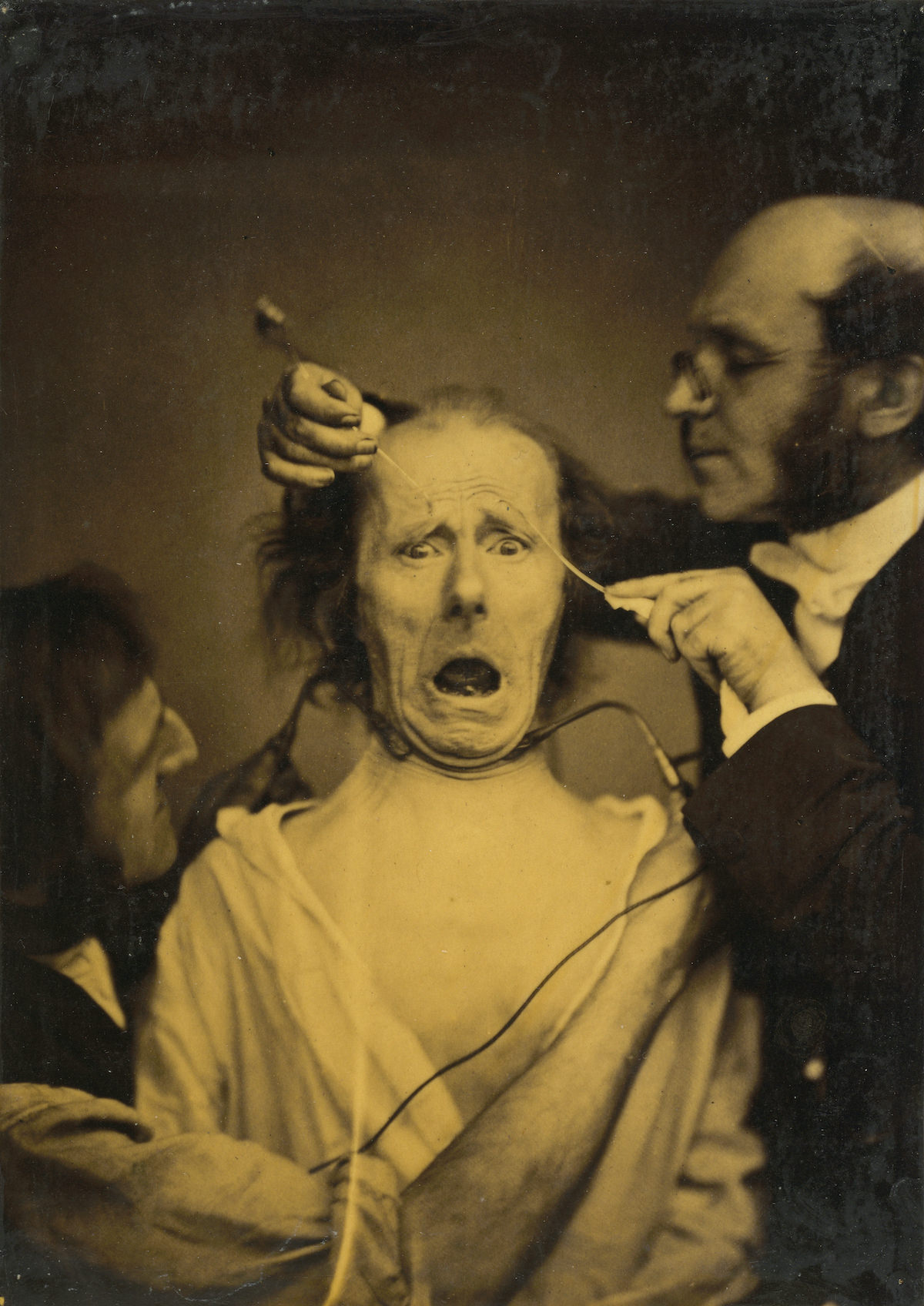
Fear is written across the subject’s face, mouth agape and eyes widened as two attendants hold him in place. One figure, dressed in dark formal clothing, leans in with calm concentration while a thin wire and small instrument are positioned near the head, suggesting an early electrical or medical procedure. The contrast between the patient’s raw panic and the operator’s controlled posture gives the scene its unsettling power, echoing the title’s mix of terror, pain, and torture.
Details in the composition point to a period when science, spectacle, and medicine often overlapped in ways that modern viewers find hard to stomach. The plain backdrop, the clinical grip on the arms, and the visible cable leading toward the subject create a stark, theatrical focus on the moment of distress. As a piece of historical imagery, it functions almost like an artwork—staged or candid, it still communicates vulnerability, authority, and the thin line between treatment and coercion.
For readers drawn to dark history, early medical practices, and the aesthetics of unsettling archives, this photograph offers plenty to study. It invites questions about consent, experimentation, and the public fascination with pain as proof of progress. Paired with the post title “Terror mixed with pain, torture,” the image becomes a haunting reminder that the history of care can also carry shadows of control and fear.