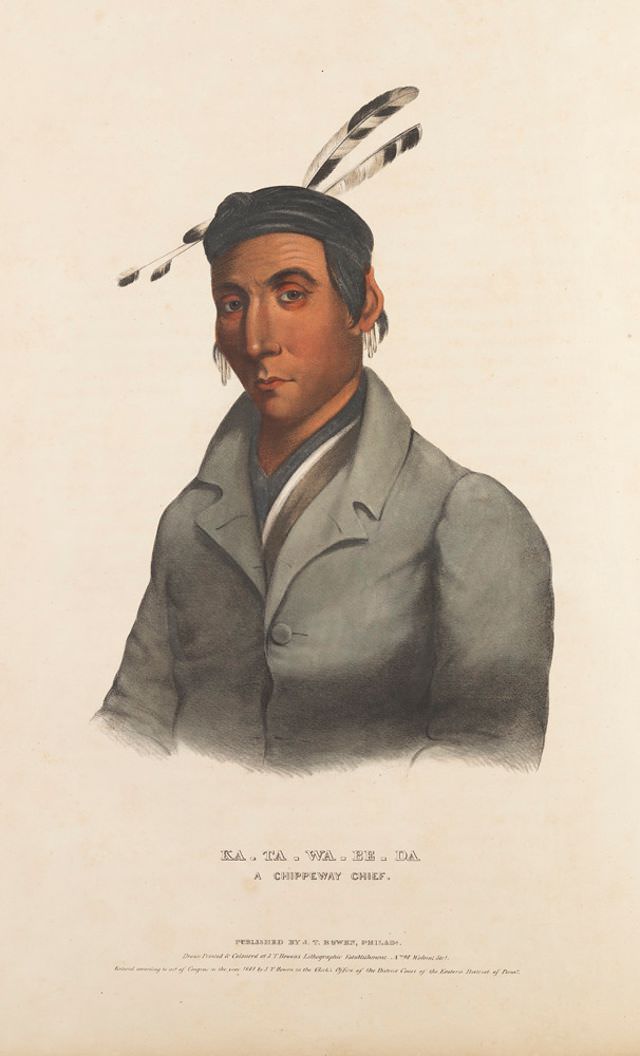
Ka-Ta-Wa-Be-Da is presented here in a carefully rendered portrait that reads as both artwork and record, with the sitter turned slightly to one side and meeting the viewer’s gaze with a composed, direct expression. A dark headwrap is adorned with long feathers, and the subtle modeling of the face draws attention to the eyes, the mouth, and the quiet authority conveyed in the pose. The pale, uncluttered background heightens the sense of formality, letting clothing and adornment carry much of the story.
Beneath the figure, the caption identifies him as “A Chippeway Chief,” using a historical spelling that points to the period’s publishing conventions rather than modern usage. The coat, layered collar, and restrained palette suggest a moment when Indigenous leaders were frequently portrayed through a lens that blended Native identity with European-style dress, whether by choice, circumstance, or the expectations of the artist and audience. Small details—earrings, the set of the shoulders, the careful shading—invite lingering close reading for anyone interested in Native American portraiture and nineteenth-century print culture.
Collectors and researchers will appreciate how this kind of labeled portrait functioned as a bridge between communities, circulated as an “artwork” while shaping popular perceptions of the Chippewa (Ojibwe) world. The print’s typography and ample margins also signal its life as a published plate, meant to be preserved, handled, and referenced. For a WordPress post focused on historical images, “Ka-Ta-Wa-Be-Da, A Chippeway Chief” offers a strong focal point for discussions of representation, material culture, and the ways Indigenous leadership was depicted for wider audiences.