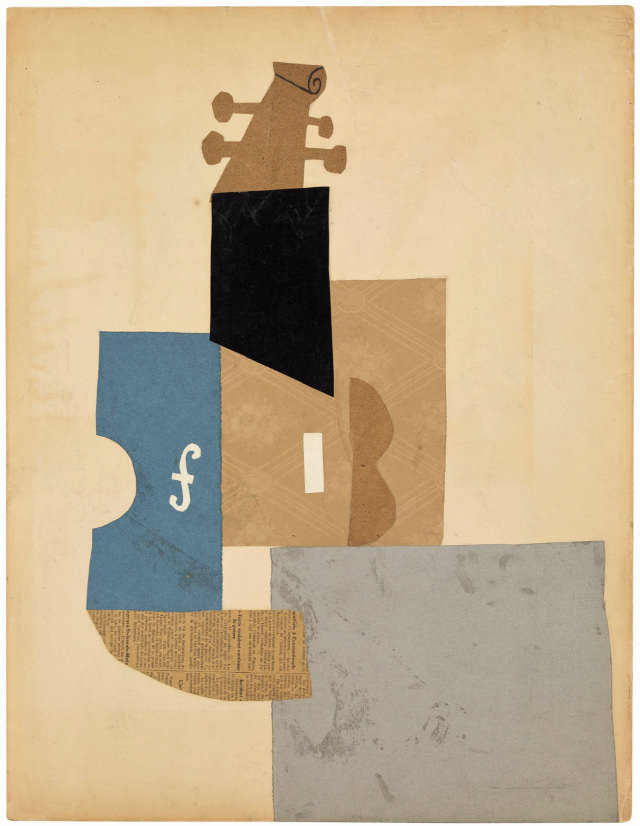
A quiet instrument takes shape from scraps: a stylized guitar built from torn and cut paper, with a curled scroll at the top and blocky forms stacked like architecture. Muted blues, tan, black, and a cool slab of gray create a restrained palette, while the aged paper ground—yellowed at the edges—reminds you this is an object with a life of its own, not just an image. Even a few printed newspaper fragments slip into the composition, turning everyday ephemera into structure and rhythm.
What makes “Paper Mosaics: Picasso’s Rare Cut-Paper Artworks” so compelling is the way it treats collage as both drawing and construction, a game of silhouette and texture. The instrument’s curves are suggested by absence as much as presence, with crisp negative spaces and a single letter-like mark hinting at signage, music, or the urban world outside the studio. Seen up close, the joins and overlaps read like decisions made at the table—trim, place, reconsider—until the pieces lock into a new, modern whole.
For readers exploring Picasso cut-paper art, Cubist collage, or early modernist mixed-media works, this historical photo offers an intimate look at how paper can behave like paint, wood, and sound all at once. It’s also a reminder that innovation often arrives through humble materials: printed newsprint, plain stock, and simple color fields pressed into a new language. The result feels simultaneously playful and rigorous, a paper mosaic that still carries the pulse of the hand that assembled it.