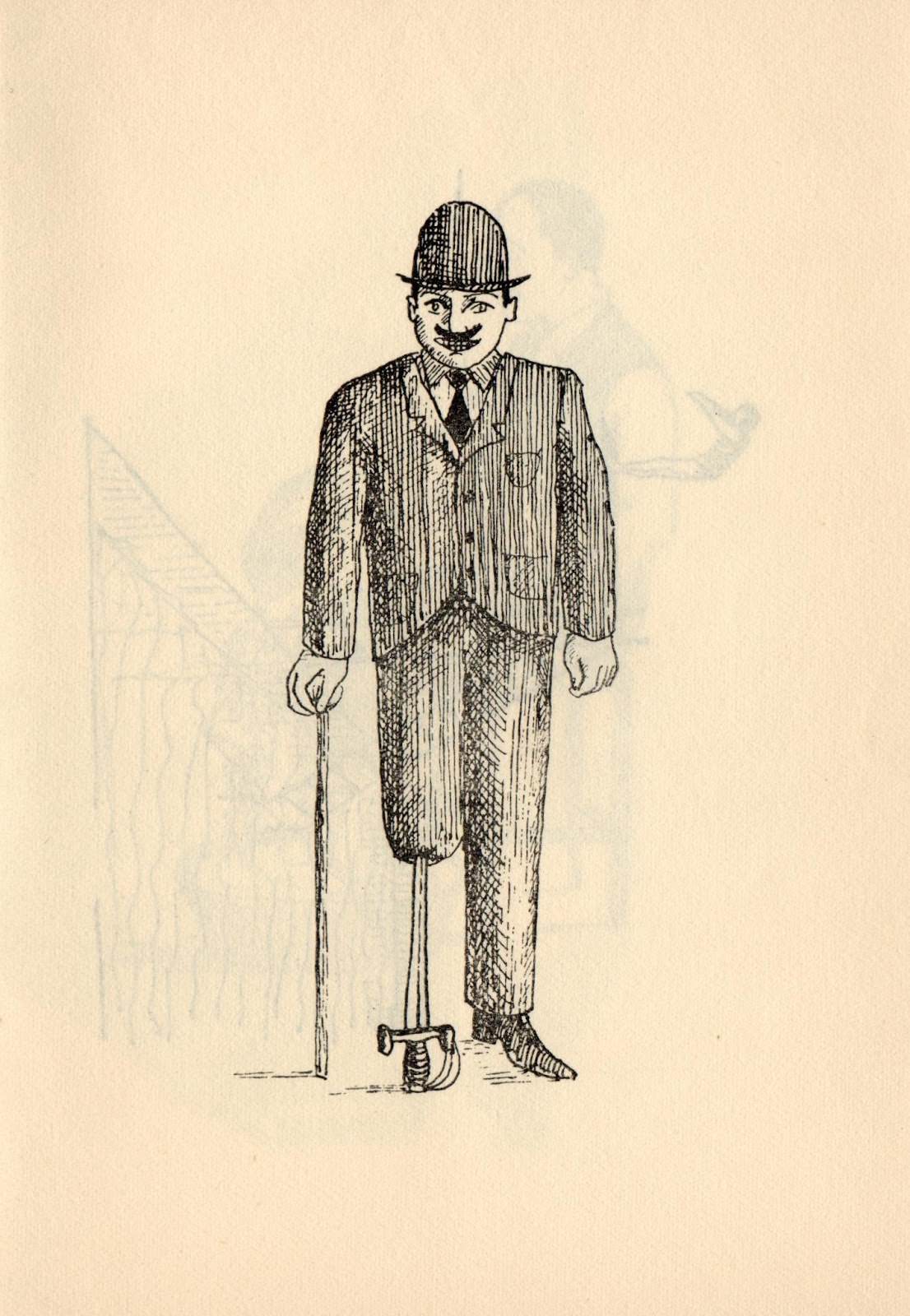
A stiffly dressed gentleman stands alone on a pale, nearly empty ground, rendered in tight hatching that makes his suit feel heavy and airless. The bowler hat, small moustache, and straight-on pose suggest respectability, yet the figure’s calm expression reads as oddly theatrical. Even before the eye settles on details, the drawing’s quiet austerity hints that something is misaligned beneath the surface.
Look closer and the unsettling turn reveals itself: one shoe is pinned to the floor with a nail, a simple, brutal device that transforms an everyday stance into a trap. The cane becomes less a symbol of elegance than a prop of endurance, as if the man’s poise depends on accepting what hurts. In the spirit of Roland Topor’s 1960 illustration of masochism, the humor is dry and the cruelty is cleanly drawn, letting a single visual twist carry the psychological weight.
For readers exploring masochism art and surreal satire, this artwork operates like a miniature fable about restraint, compliance, and the masks of civilized life. The blank background refuses distraction, pushing attention toward the contradiction between polished appearance and private suffering. As a historical illustration, it also reflects a mid-century appetite for provocative graphic ideas—images that confront pain not with spectacle, but with a sharp, unsettling simplicity.