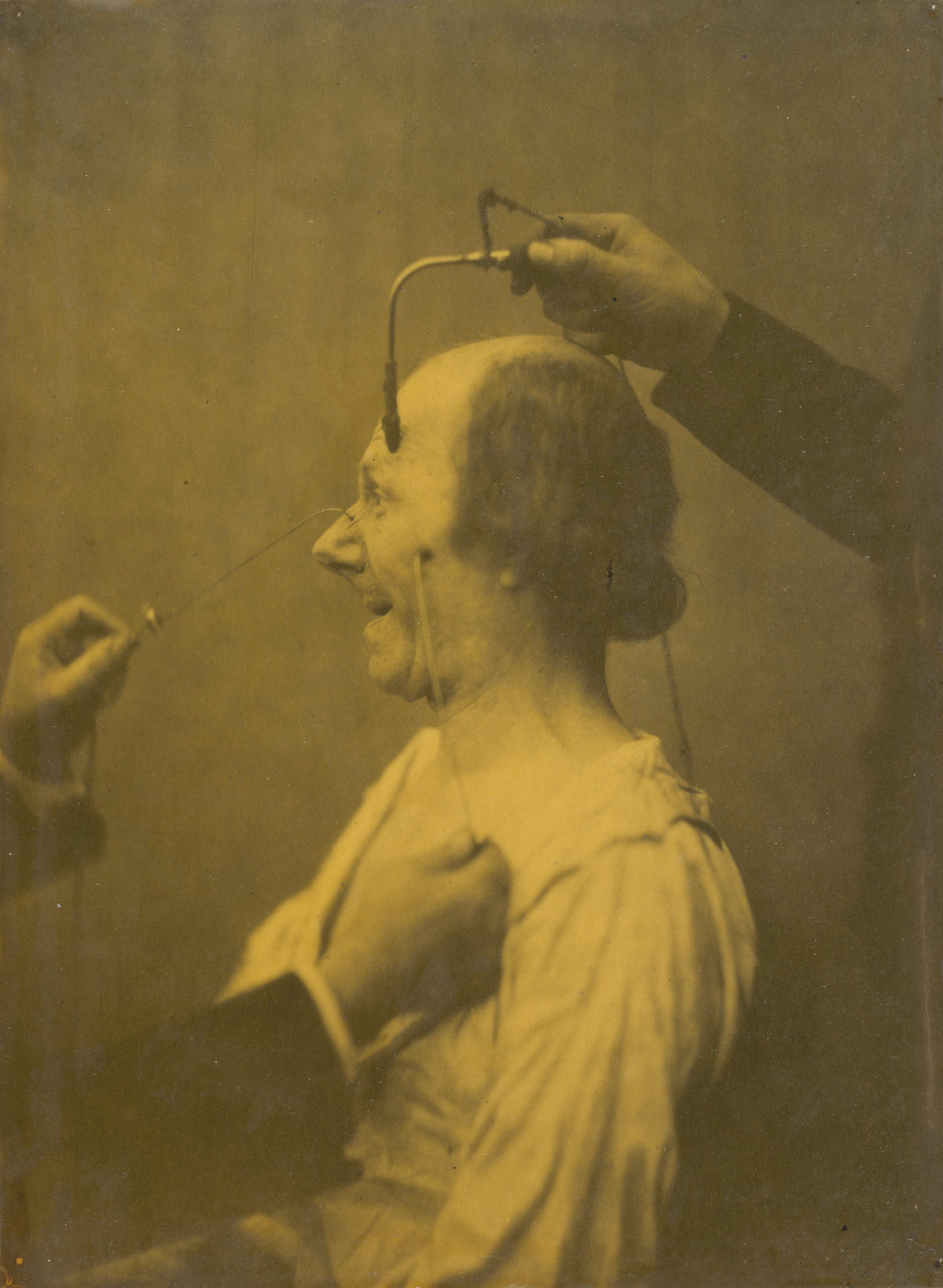
A tense profile emerges from the sepia haze: a seated woman in a plain, high-necked dress, hair pulled back, mouth parted as if caught mid-exclamation. Two unseen attendants intrude into the frame, one steadying her from the front while another holds a small metal device above her head, its wires or probes seeming to touch at the forehead. The studio-like backdrop is empty, making the body language and apparatus the entire drama.
The title, “Lascivious ideas and desires,” invites a look at how earlier eras tried to define, diagnose, and control sexuality—especially when it was labeled improper or dangerous. Rather than offering romance, the scene suggests examination and coercion, hinting at the uneasy overlap between medicine, morality, and spectacle in historical imagery. In that charged space, a woman’s expression becomes evidence, and the instruments become symbols of authority as much as tools.
For WordPress readers exploring historical photo archives, medical history, and vintage artworks, this image works as a haunting entry point into the visual culture of “treatment” and social judgment. Its theatrical composition—hands, wires, and the captive profile—echoes the period’s fascination with nerves, desire, and the idea that impulses could be measured or corrected. As an artifact, it asks a simple but unsettling question: who got to decide what counted as deviant, and what happened to those who were made to fit the label?