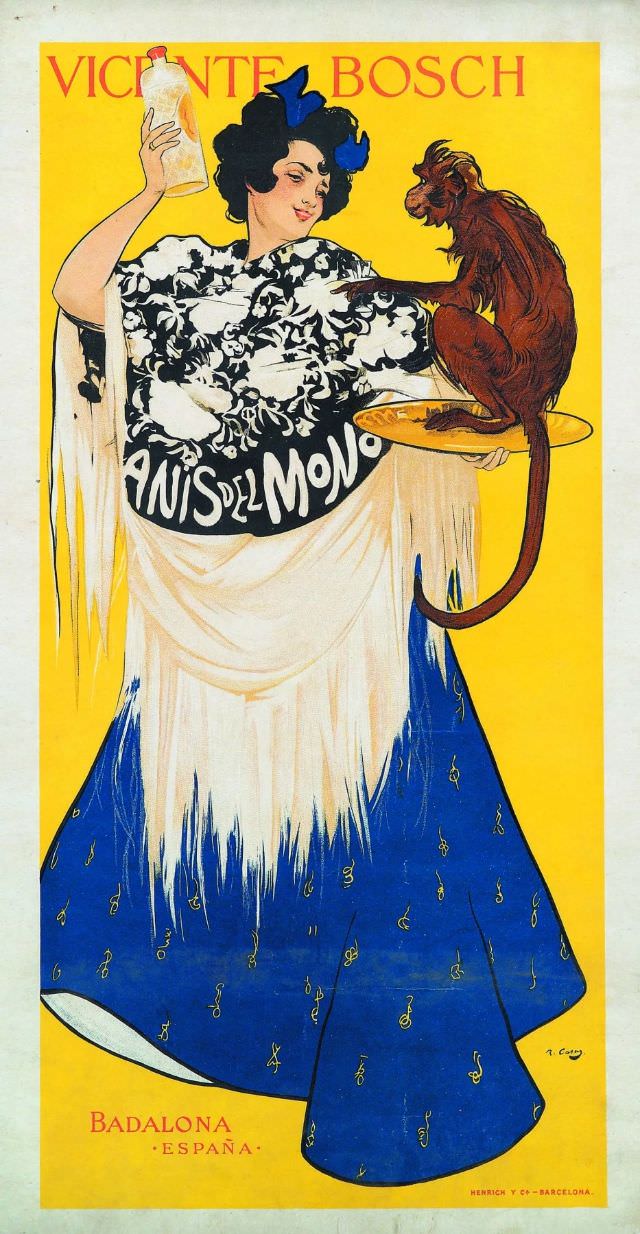
Golden poster art from Badalona, Spain (1898) leans into theatrical charm: a stylish woman in a sweeping white-and-blue dress lifts a bottle while turning toward a small monkey perched on a serving tray. The scene is playful and slightly mischievous, as if the label’s promise is best delivered with a wink. Bold lettering spells out “Anis del Mono,” turning the skirt into a moving billboard and giving the composition instant advertising punch.
At the top, the brand name “Vicente Bosch” anchors the design, while the saturated yellow background makes the figures pop like a stage set under bright lights. The monkey’s expressive pose—reaching out with one hand, tail curling behind—adds comic energy and a hint of exotic spectacle that would have stood out on a busy street. Along the bottom, “Badalona – España” situates the product in Catalonia’s coastal industrial town, connecting local production to the wider consumer world of late‑19th‑century Spain.
More than a mere product notice, “Anise for a monkey” reads as a snapshot of how liquor advertising embraced illustration, fashion, and humor to sell a familiar aniseed spirit. The flowing lines, decorative patterns, and confident typography reflect the era’s taste for eye-catching prints meant for cafés, shopfronts, and public walls. For collectors of Spanish ephemera and historians of branding, this “Anis del Mono” image is a vivid reminder that marketing could be as memorable as the drink itself.