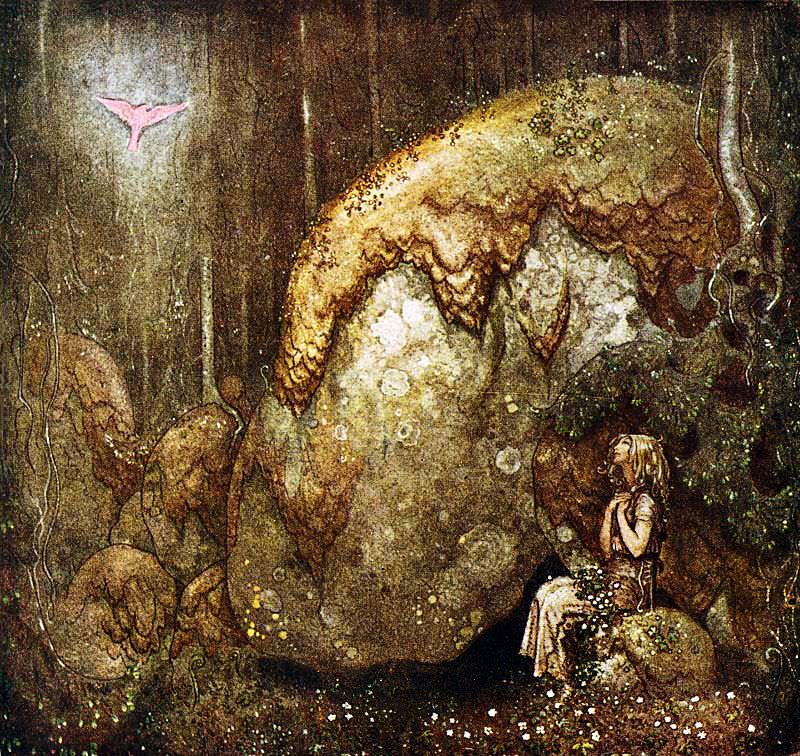
Bland Tomtar och Troll-2 (1915) invites the viewer into a shadowed woodland where folklore feels close enough to touch. A towering, mushroom-like form rises from the dark, its cap mottled with warm ochres and pale, lichen-like patches, while delicate specks of light drift through the scene like spores or fireflies. The palette leans earthy and mossy, emphasizing damp roots, rough stone, and the deep hush of a forest floor.
At the lower right, a small human figure in a light dress sits quietly, hands near the face as if listening, praying, or holding a breath. The scale contrast—childlike presence against oversized natural shapes—turns the landscape into something enchanted and slightly unsettling, the kind of place where trolls and hidden beings might be sensed rather than seen. Even a small pink winged shape overhead reads as a fleeting sign of life, guiding the eye upward through the gloom.
As an artwork connected to the classic Scandinavian tradition of “tomtar” and “troll,” this 1915 image reflects the early-20th-century fascination with myth, nature, and the psychological edge of fairy tales. Textural brushwork and softly glowing highlights give it a storybook quality without smoothing away the forest’s darkness. For readers searching for Swedish folklore art, vintage illustration, or historical fantasy imagery, this piece offers a memorable glimpse into a world where the ordinary and the otherworldly share the same ground.