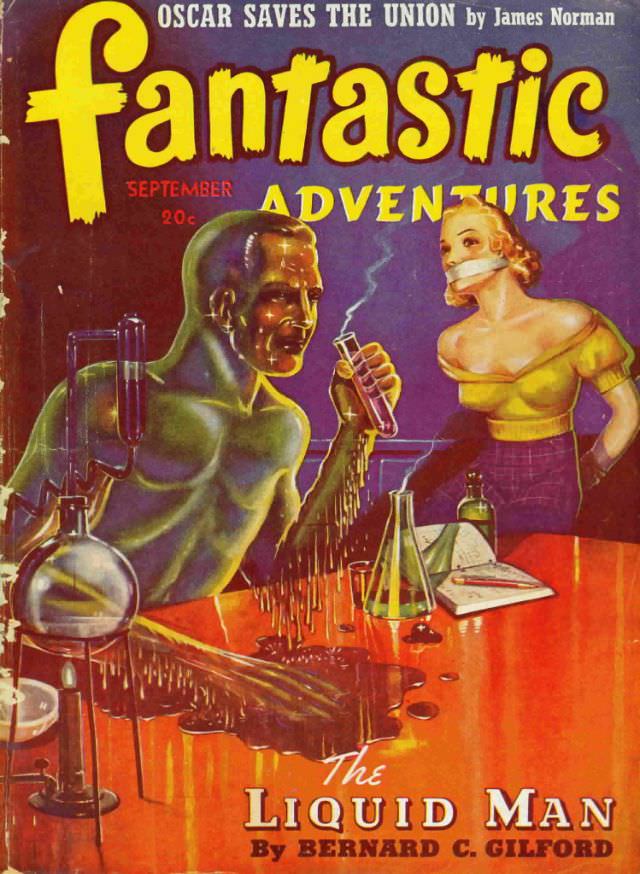
Bold yellow lettering sprawls across the September 1941 cover of *Fantastic Adventures*, setting a pulp-era tone before your eye even reaches the scene below. The issue teases “OSCAR SAVES THE UNION” at the top and sells for 20¢, while the main feature title, “The Liquid Man,” anchors the bottom in dramatic, painted type. Even the worn edges and printing textures feel like part of the period charm, hinting at how often magazines like this were read, traded, and tucked into pockets.
At the center, a gleaming, humanoid figure—more molten than flesh—leans over a lab table, a test tube lifted as if the next drop could change everything. Glassware crowds the foreground: round-bottom flasks, beakers, and a forest of tubes, all rendered with glossy highlights that make the “liquid” theme almost tactile. A bound woman in an off-shoulder dress watches from the side, her posture tense, as if caught between curiosity and fear in a makeshift laboratory of bright reds and purples.
Pulp science fiction covers like this were designed to stop passersby cold, distilling suspense, danger, and speculative science into one instant. The composition plays classic genre notes—mad-science apparatus, transformation, and peril—while the saturated colors and theatrical lighting advertise escapism at a glance. For collectors, artists, and fans of vintage magazine art, this *Fantastic Adventures* September 1941 cover is a vivid snapshot of how mid-century imagination was packaged and sold on the newsstand.