Category: Civil Wars
Explore the human side of civil wars through authentic historical photographs. Witness the struggles, courage, and consequences of divided nations.
These images document key events and personal moments that shaped political and social transformations around the world.
-
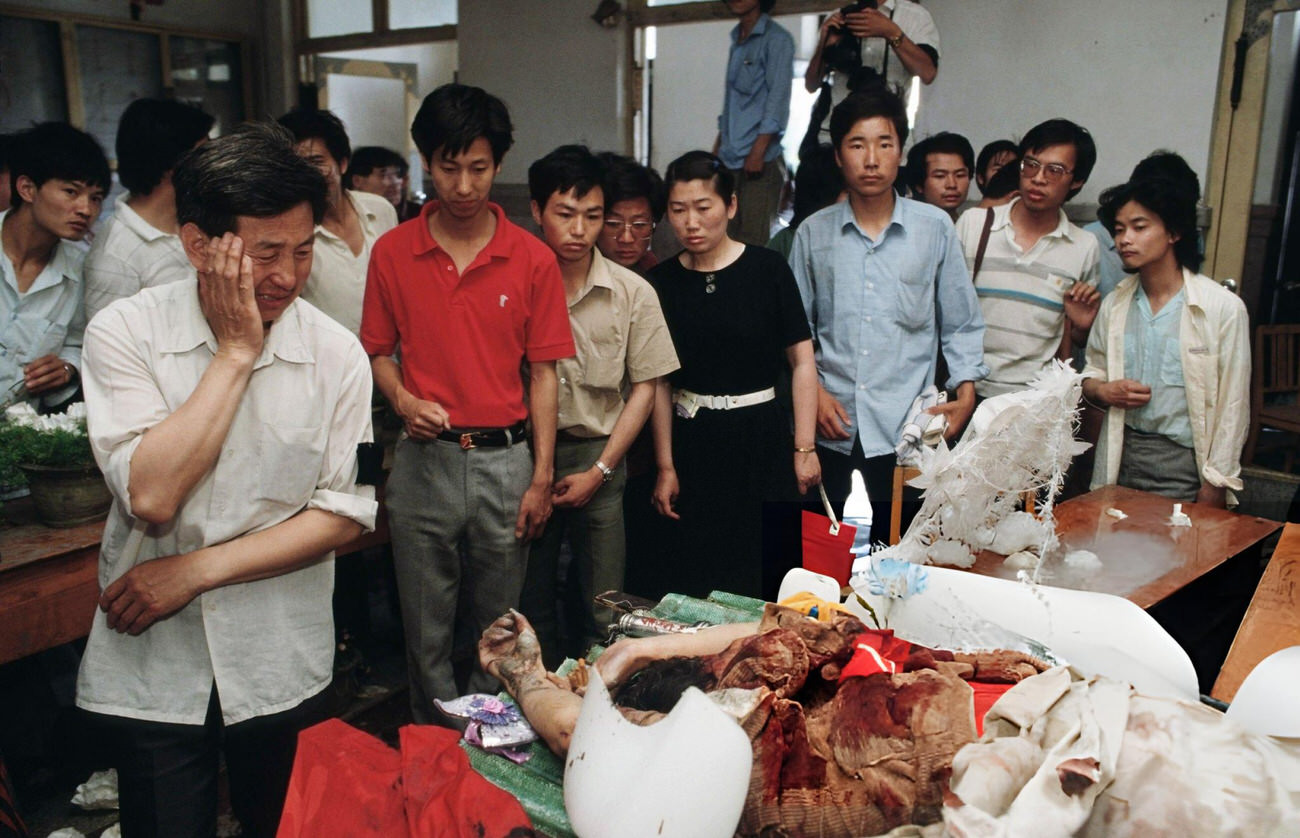
#56 Onlookers examine the dead body of a protestor lying in a temporary morgue, 1989.
Grief hangs in the air of a cramped, makeshift morgue as a crowd gathers around a stretcher. Faces tighten and eyes drop toward the body of a protestor laid out amid rumpled sheets and improvised coverings, the room’s ordinary furniture suddenly repurposed for tragedy. One man shields his face with his hand, while others stand…
-
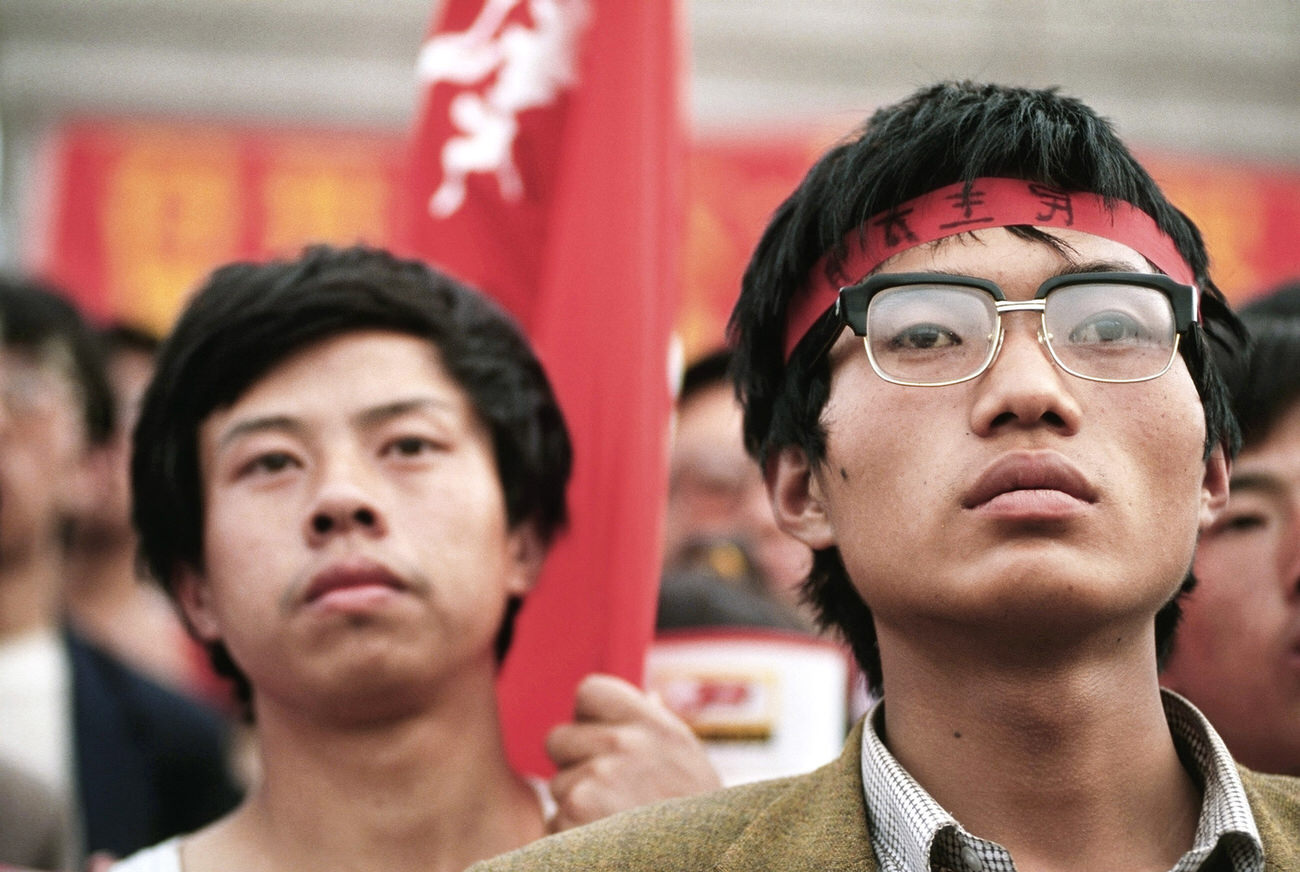
#72 Protesters holding red banners listen to a pro-democracy movement leader speak early one morning in Tiananmen Square.
Dawn light seems to hang in the air over Tiananmen Square as protesters gather shoulder to shoulder, their faces fixed on a voice just out of frame. A young man in glasses stands in the foreground with a red headband marked by handwritten Chinese characters, his expression equal parts weary and resolute. Behind him, red…
-
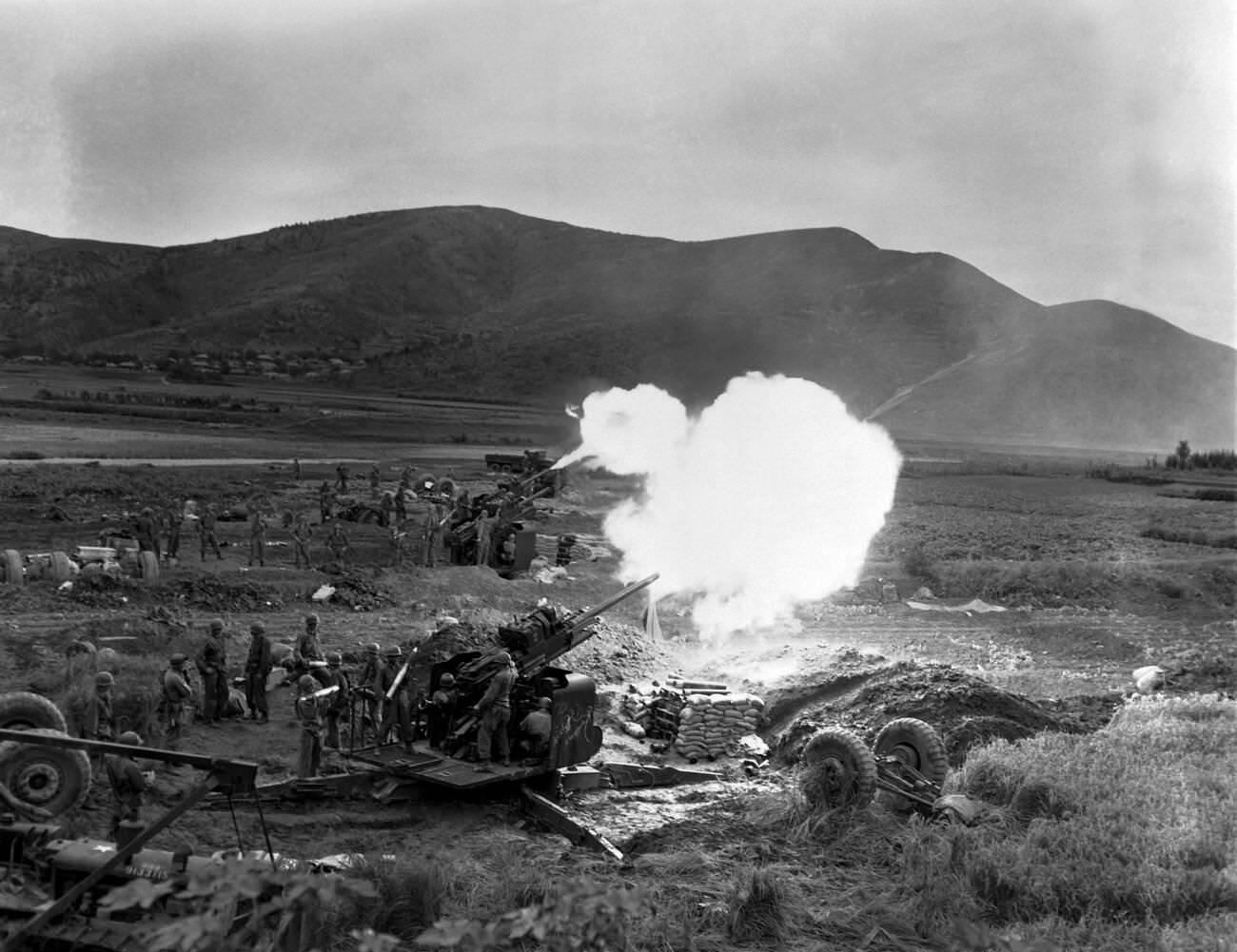
#13 Korean War, Artillery Crew Fires 90MM, 1950s.
Across a wide valley framed by dark, rolling hills, an artillery position erupts in a sudden bloom of muzzle blast. The title points to the Korean War and a 90mm gun in action, and the photograph emphasizes scale: a low, dug-in emplacement in the foreground, more guns stretching back in a rough line, and open…
-
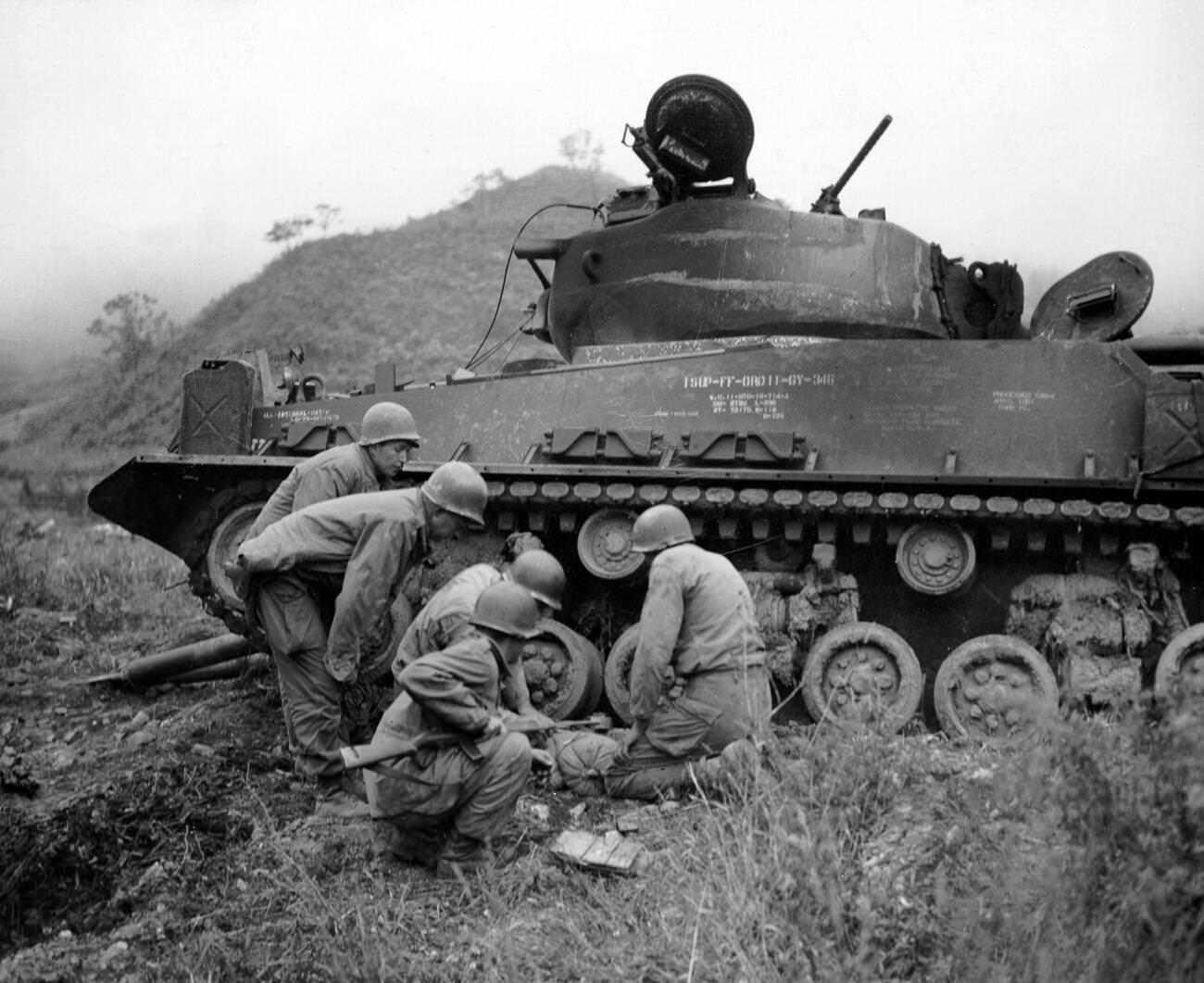
#29 Korean War, Demolition Squad, 1951.
Mud clings to the running gear of a tracked armored vehicle as helmeted soldiers crouch low beside it, hands busy with equipment and charges. The title, “Korean War, Demolition Squad, 1951,” frames the moment as battlefield engineering work—dangerous, precise labor carried out in the open while the vehicle looms overhead like both tool and shelter.…
-
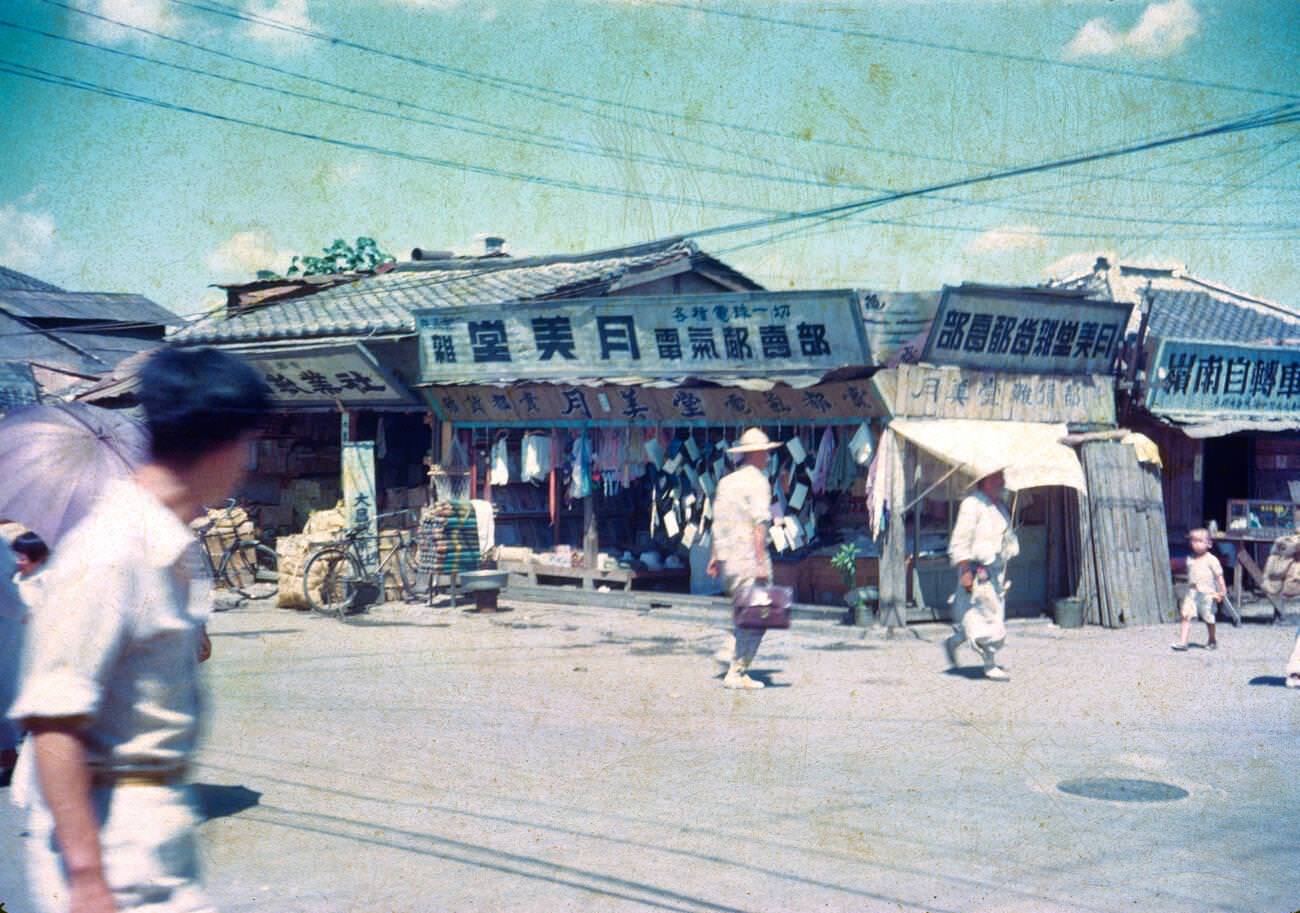
#45 Street scene in South Korea during Korean War, 1952.
Under a web of overhead wires, a row of low storefronts lines a dusty road, their painted signs and hanging goods turning the street into an open-air advertisement. People drift through the frame at different speeds—one passerby blurred by motion, others moving more deliberately—while bicycles rest near the shopfronts as if ready for the next…
-
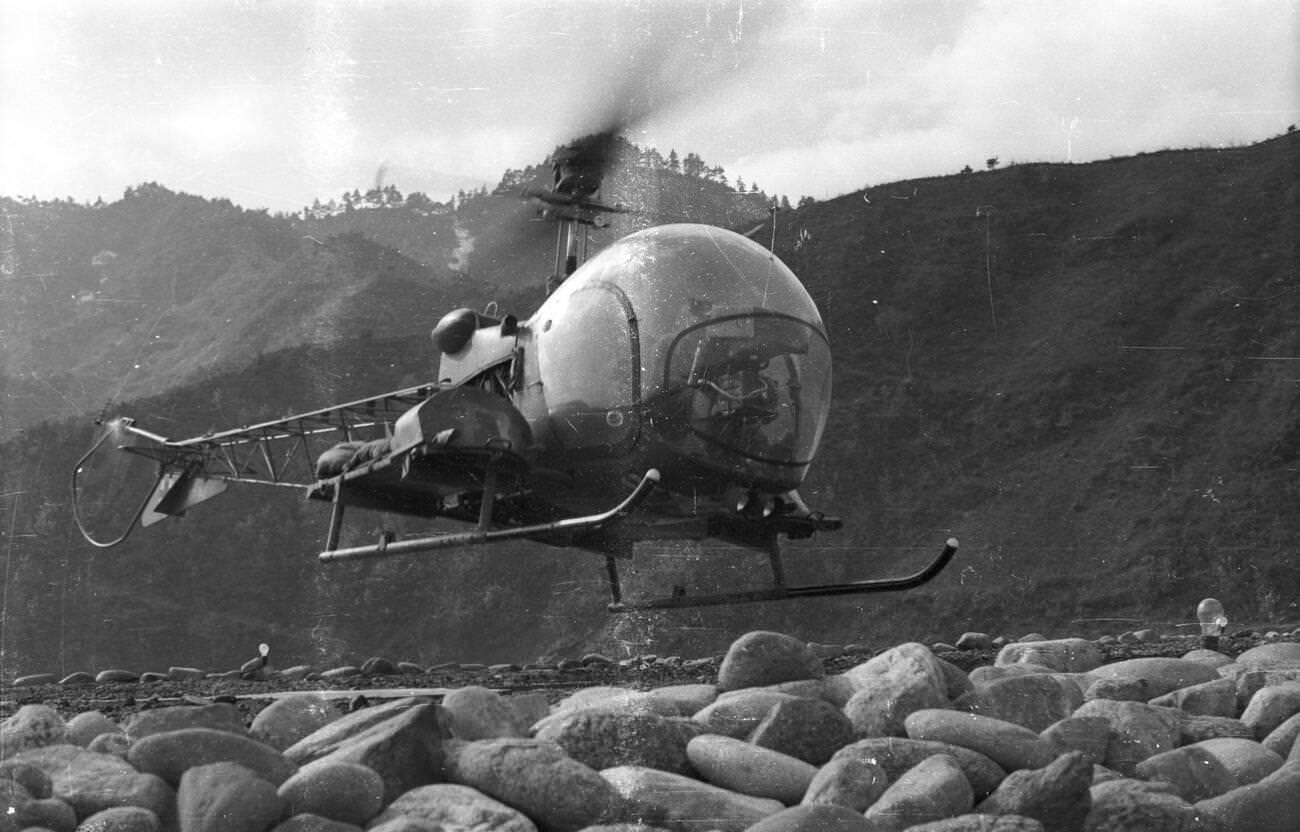
#61 Mobile Army Surgical Hospital (MASH) United States Army medical unit hospital combat area operations, 1950s.
Rotor wash kicks up dust and grit as a bubble-canopy helicopter hovers low over a rocky clearing, mountains rising behind it in soft haze. The aircraft’s skids hang inches above the stones, a vivid reminder of how improvised “landing zones” could be in mid‑century combat areas. Even without seeing the medical tents, the urgency of…
-
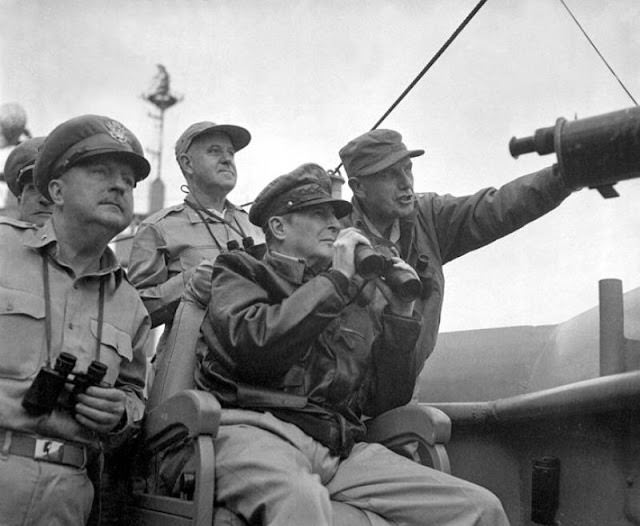
#77 General Douglas MacArthur observes the naval shelling of Incheon, 1950.
A tight cluster of officers stands on a ship’s deck, eyes fixed toward the shoreline as guns boom somewhere beyond the frame. In the center, General Douglas MacArthur—cap brim low—raises binoculars, while another commander leans forward and points, directing attention to the unfolding bombardment. The heavy barrel of a naval gun intrudes at the right…
-
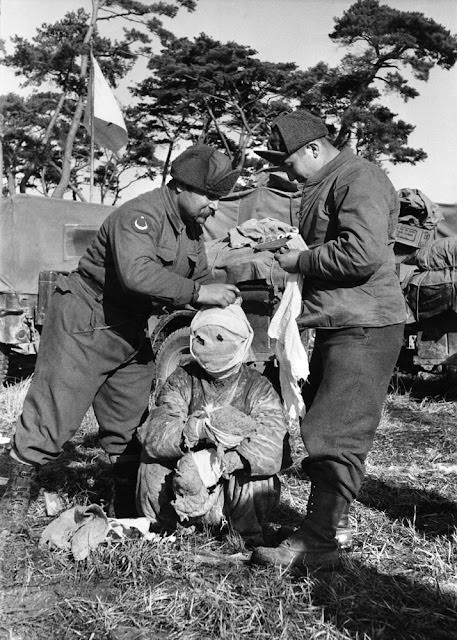
#93 Turkish soldiers attend to a wounded prisoner, 1951.
Beneath a stand of wind-swept trees, two Turkish soldiers work with quick, practiced care as they tend to a seated prisoner whose head and hands are heavily wrapped in bandages. The men lean in close, one steadying the injured captive while the other prepares fresh cloth, turning the moment into something quieter than the surrounding…
-
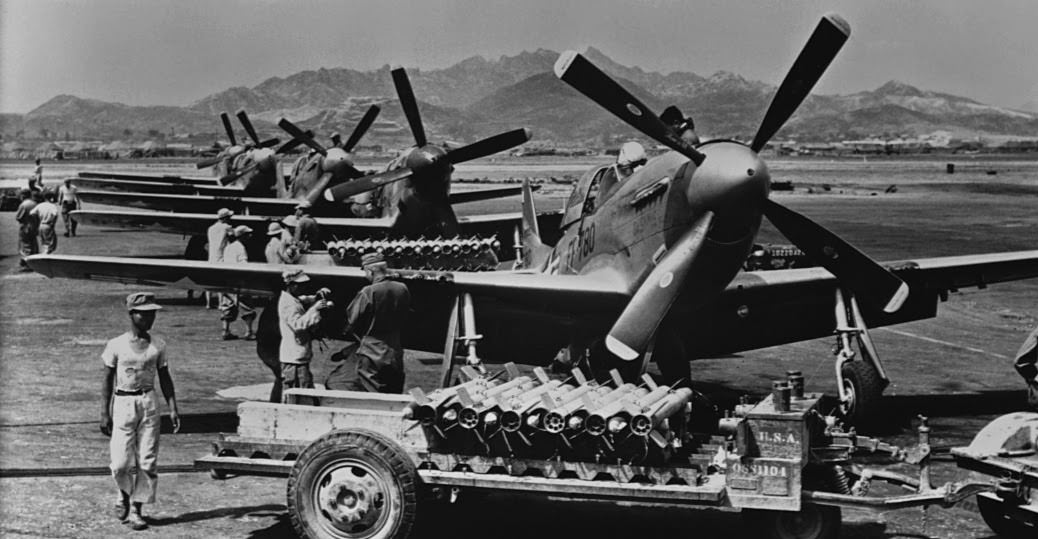
#109 At the start of the Korean War, the P-51 Mustang was the primary aircraft of the United Nations forces. Within a few years, the Mustang and other World War II-era propeller planes had been superseded by a new breed of jet fighters.
Propellers stand still for the moment as ground crews swarm a line of P-51 Mustangs on a busy airfield, the mountains beyond forming a hard horizon. In the foreground, a cart stacked with rockets and equipment underscores how much of aerial warfare depended on the labor and logistics on the tarmac. The aircraft sit nose-out…
-
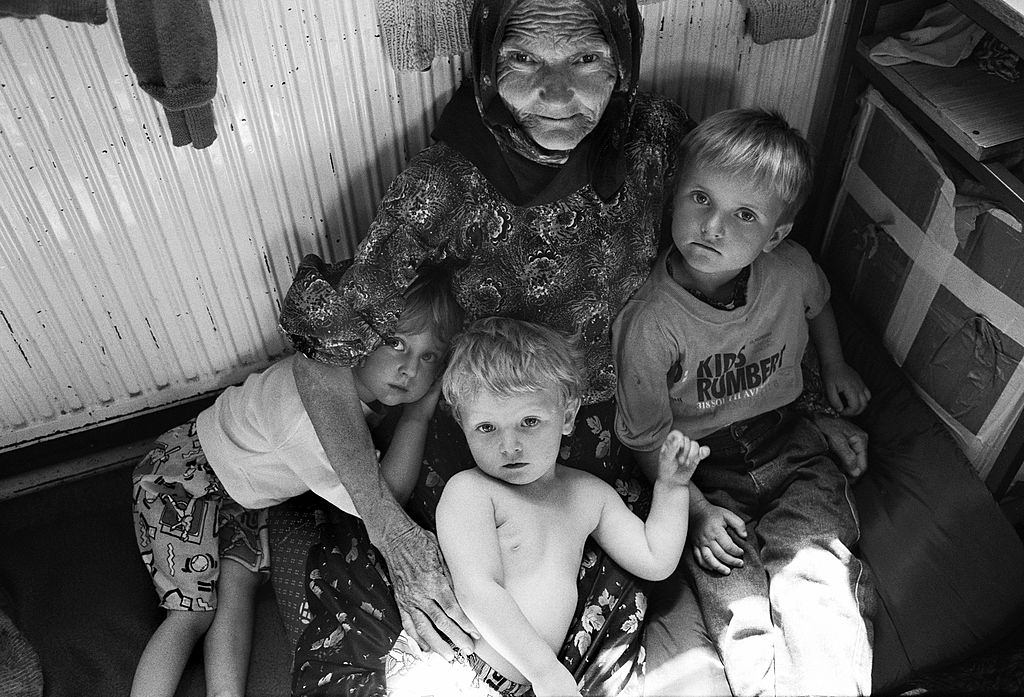
#9 A Muslim grandmother hugs her young grandchildren at a refugee centre set up near Tuzla for people fleeing the Srebrenica massacre.
In a cramped corner of a refugee centre near Tuzla, an elderly Muslim grandmother gathers her young grandchildren into the safest shelter she can offer—her arms. The corrugated wall behind them and the tight arrangement of bodies speak of sudden displacement, while the children’s expressions range from wary to exhausted. Her face, lined with experience,…