Category: Civil Wars
Explore the human side of civil wars through authentic historical photographs. Witness the struggles, courage, and consequences of divided nations.
These images document key events and personal moments that shaped political and social transformations around the world.
-
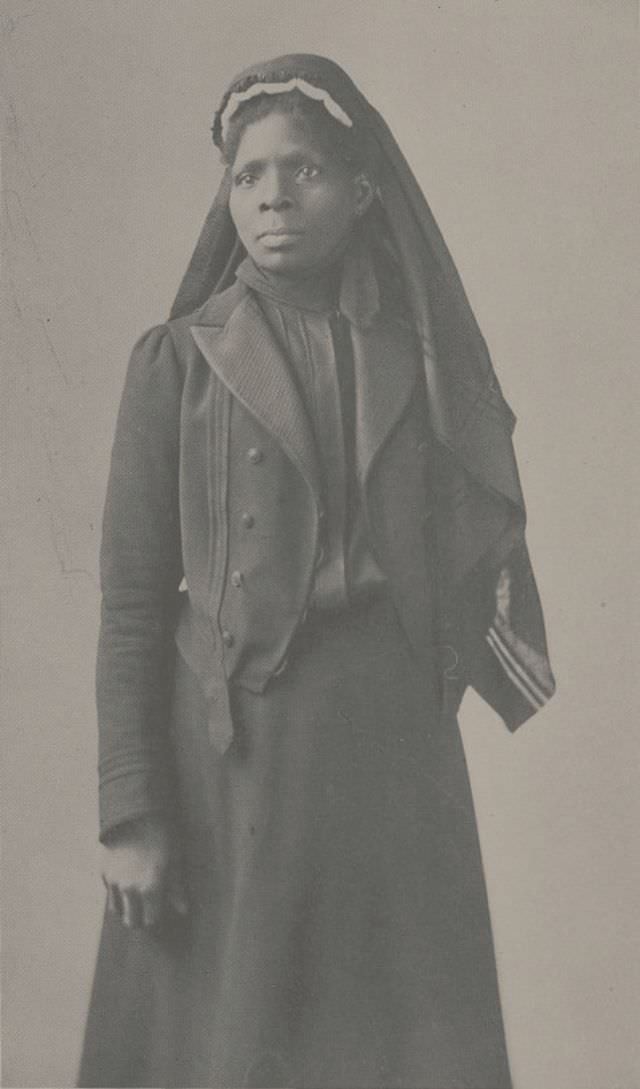
#8 Susie King Taylor, who served more than three years as nurse with the 33rd U.S. Colored Troops Infantry Regiment during the American Civil War, although officially enrolled as a laundress
Serious and composed, Susie King Taylor stands in formal dress with a dark veil draped over her head and shoulders, her gaze turned slightly away from the camera as if caught between the demands of the moment and the weight of memory. The studio-style backdrop offers few distractions, drawing attention to her face and posture—quietly…
-
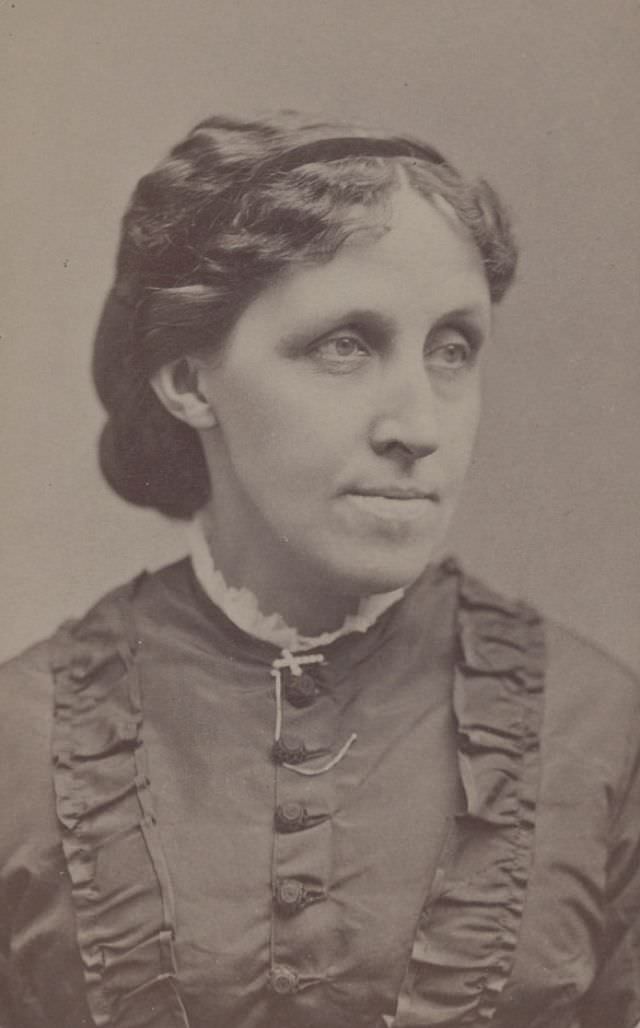
#24 Louisa May Alcott, writer, abolitionist, and Civil War nurse
A steady, thoughtful gaze meets the viewer in this studio portrait of Louisa May Alcott, her hair neatly swept back and her dress fastened high at the throat with a simple ribbon. The soft lighting and plain backdrop draw attention to her expression rather than any distraction, suggesting a person accustomed to observation, reflection, and…
-
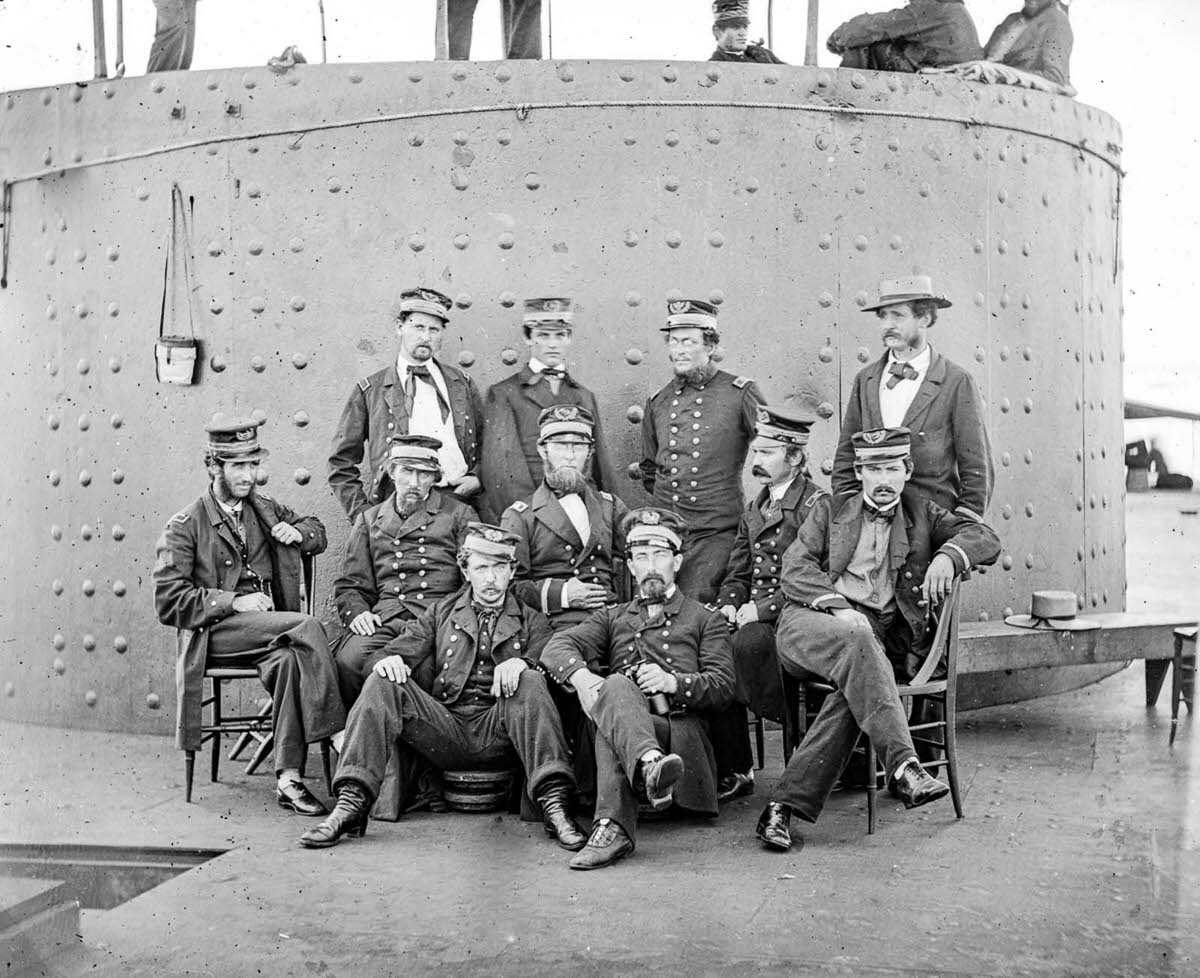
#9 Officers on the deck of a Monitor-class gunboat, 1864.
Riveted iron rises behind a cluster of uniformed men, its curved wall dwarfing them and hinting at the armored engineering that defined the Monitor-class gunboat. The officers pose on the open deck with a mix of formality and fatigue—caps pulled low, coats buttoned, boots planted wide—while the ship’s turret-like structure, studded with bolts, becomes the…
-
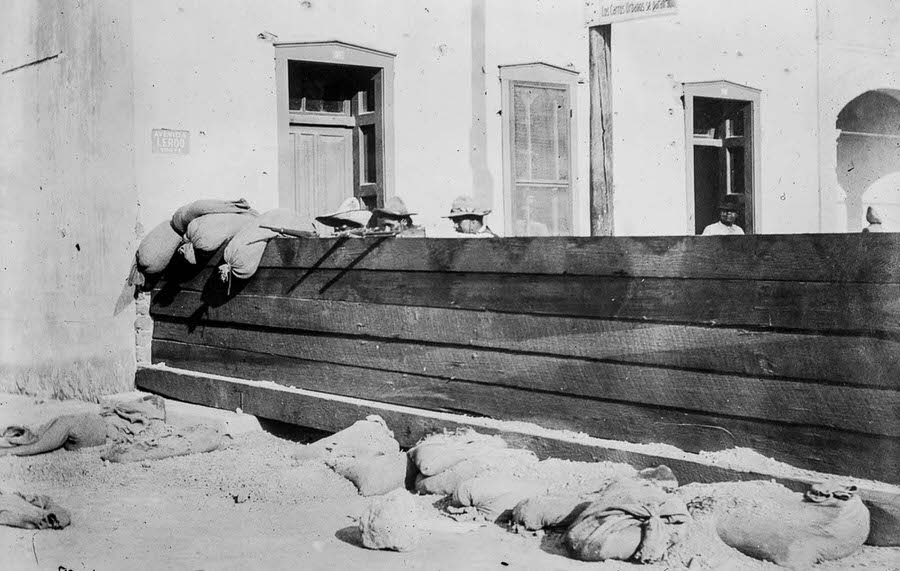
#9 A federal barricade in Ciudad Juarez captured by rebels.
Hard timber planks form a makeshift wall across the street, braced with sandbags piled high in the dust, turning an ordinary stretch of Ciudad Juarez into a fortified position. Behind the barricade, helmeted figures keep low, their faces mostly hidden as they peer over the rough boards, while a plain stucco façade with shuttered windows…
-
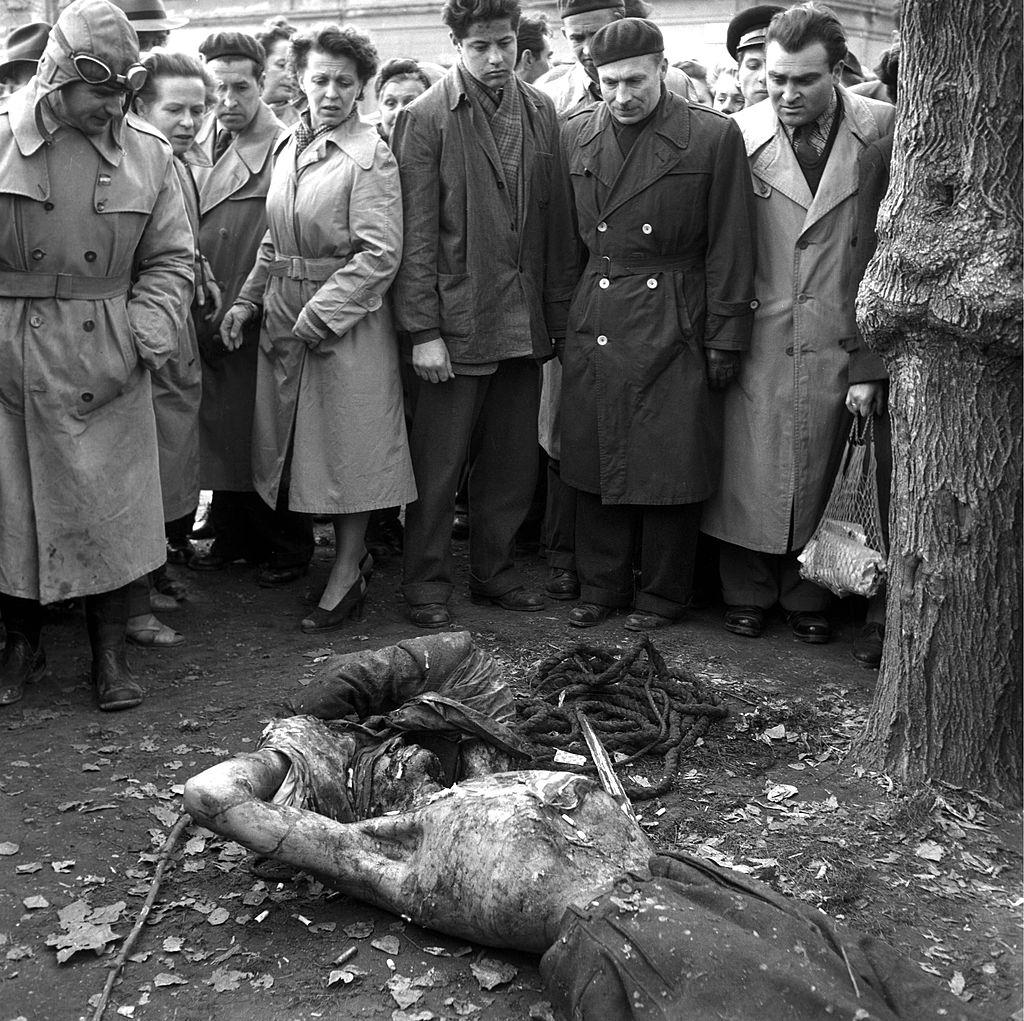
#3 People looking at the deceased body, 1956.
A tight ring of onlookers crowds the edge of an outdoor scene, their faces drawn and uneasy as they stare downward. Coats are buttoned against the chill, hats pulled low, and one man’s goggles and heavy trench hint at the working lives and practical gear of the era. The camera frames the group at close…
-
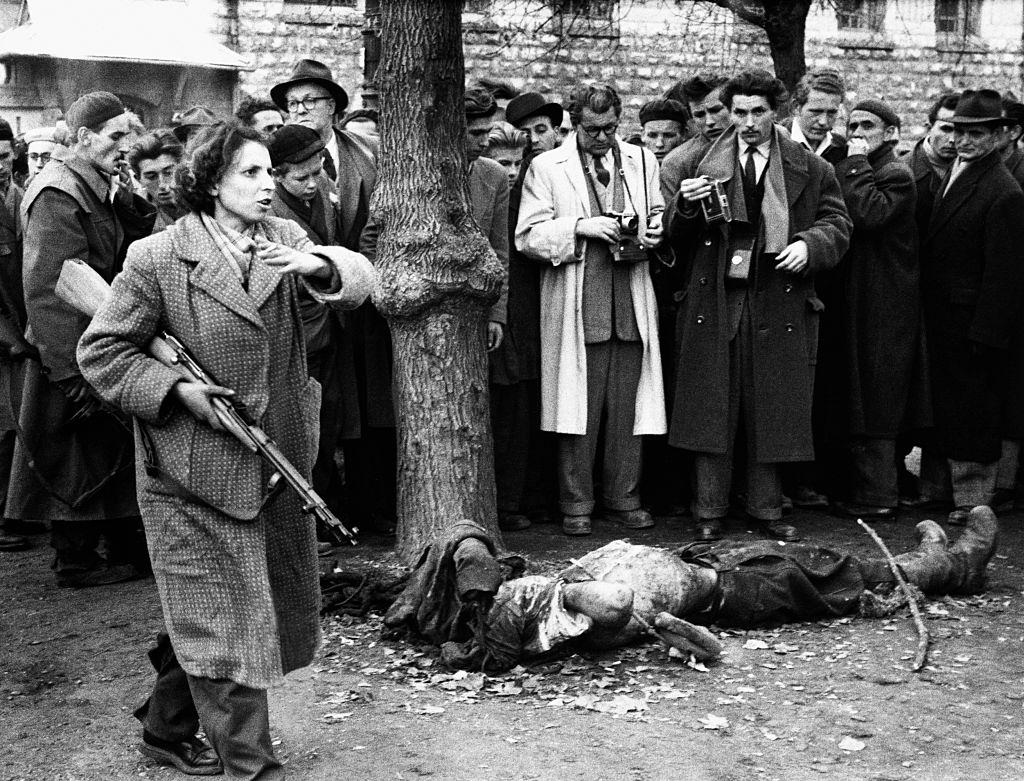
#19 A female Hungarian resistance fighter during the Hungarian Revolution of 1956.
Tension radiates from the street scene as a young woman in a patterned coat moves forward with a rifle held close, her face set in concentration. Behind her, a dense crowd of men in caps and overcoats presses in, watching with a mix of worry and curiosity; a couple raise cameras as if compelled to…
-
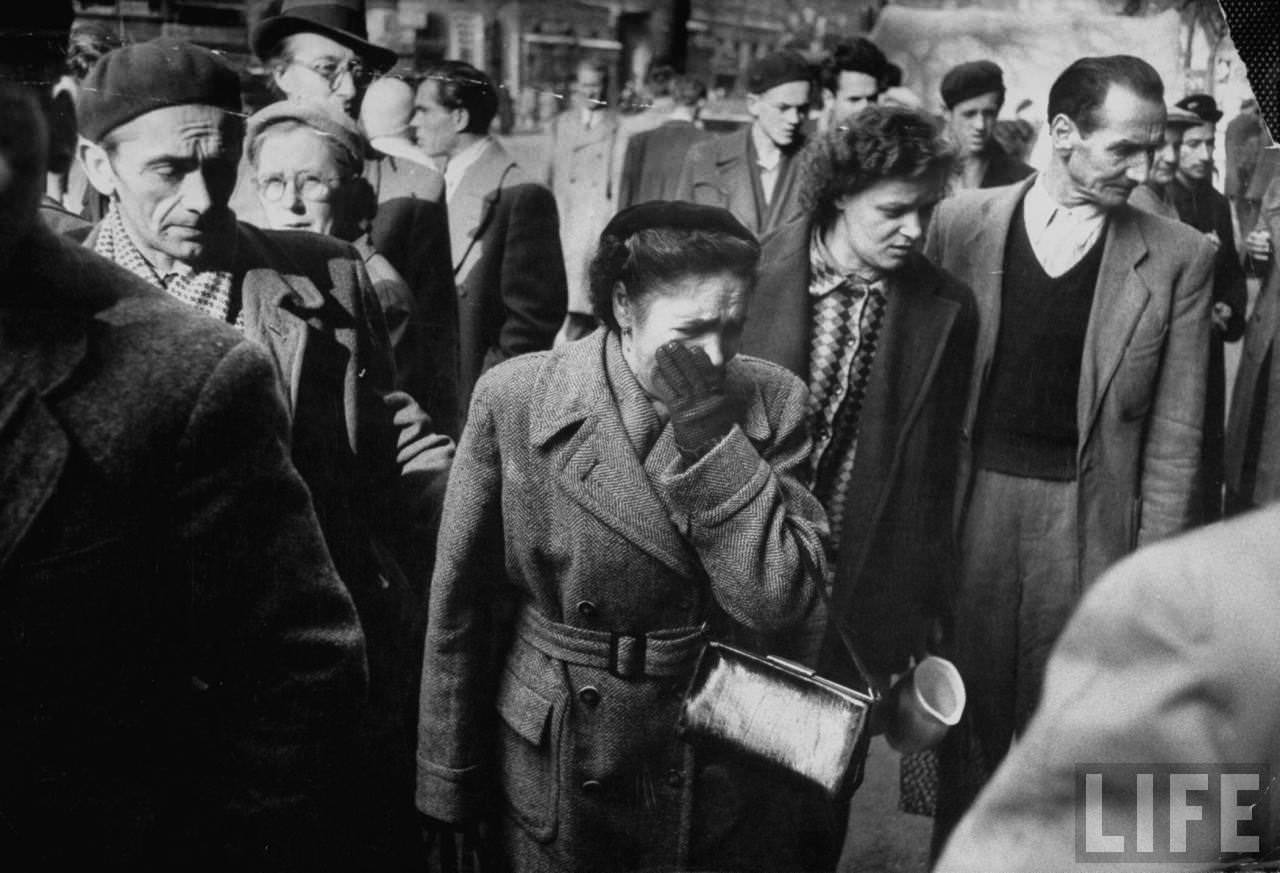
#35 Hungarian patriot grimacing during revolution against Soviet-backed regime.
A tight knot of civilians fills the street, their coats and hats blending into a single, restless mass as they push forward through the smoke and confusion of revolt. At the center, a face twists with strain—half grimace, half grief—while those nearby glance sideways, wary and exhausted, as if every sound might signal another burst…
-
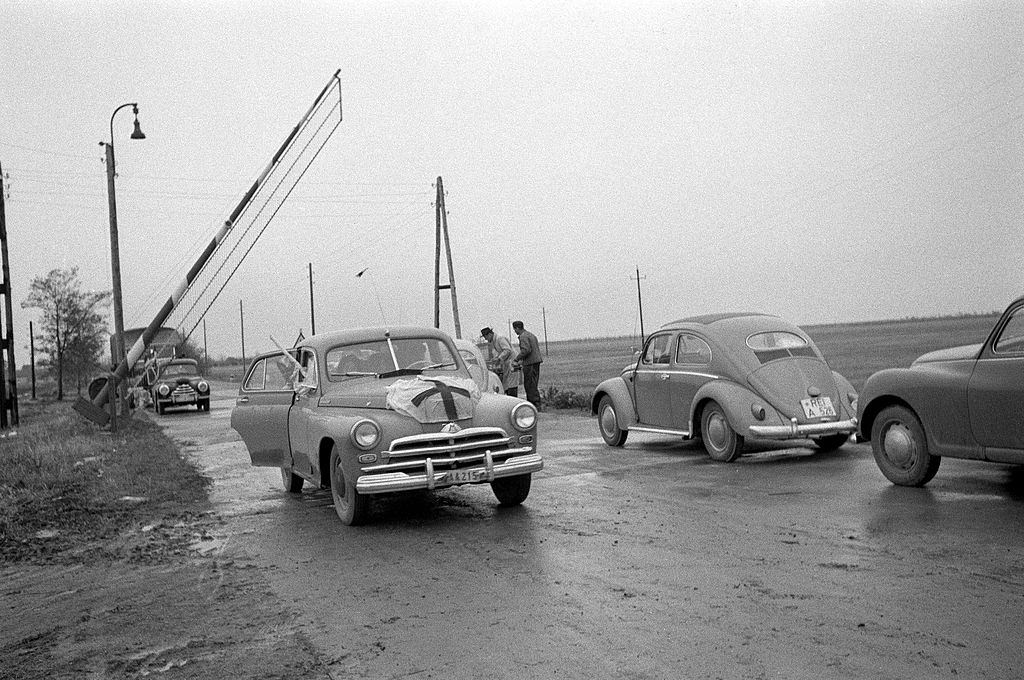
#51 Thousands of refugees flee toward the Austrian border, Red Cross in Gyor, Hungary on October 23, 1956.
Along a flat country road outside Győr, Hungary, cars pause beneath raised barriers as people cluster at the roadside, caught between movement and uncertainty. A cloth marked with the Red Cross is draped over the hood of one vehicle, turning an ordinary automobile into a signal of aid amid emergency. The open doors, muddy verge,…
-
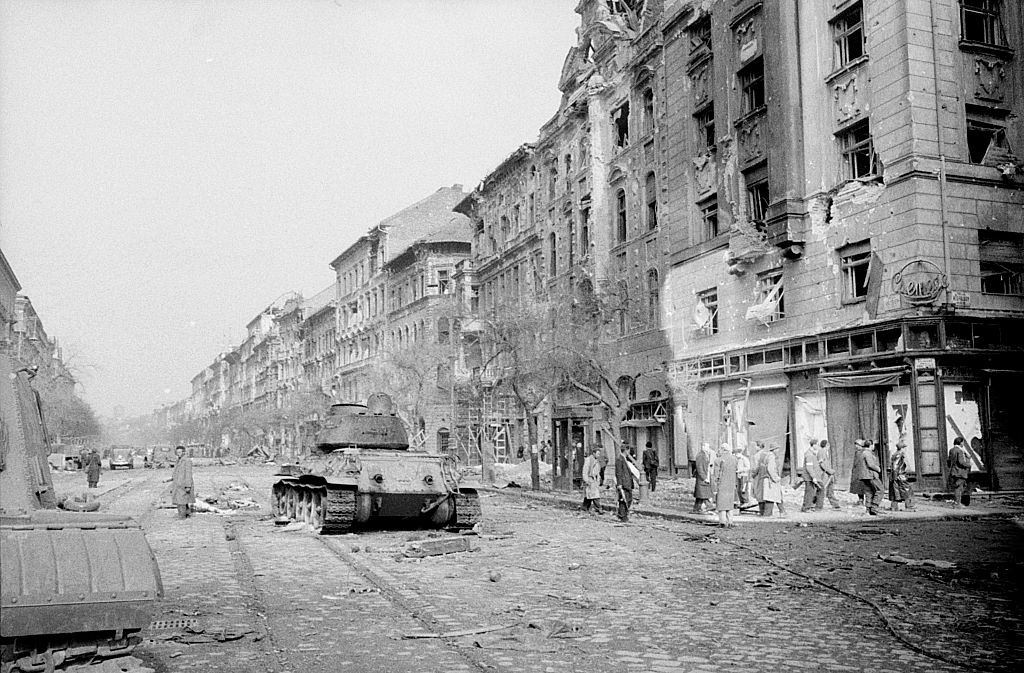
#67 A panzer standing in a street of the capital destroyed by the fights.
A lone panzer sits heavy in the middle of a broad cobbled street, its tracks surrounded by scattered rubble and the quiet geometry of tramlines. The boulevard stretches into the distance under a pale sky, pulling the eye past broken pavement and abandoned debris. Even without gunfire in the frame, the armored vehicle reads as…
-
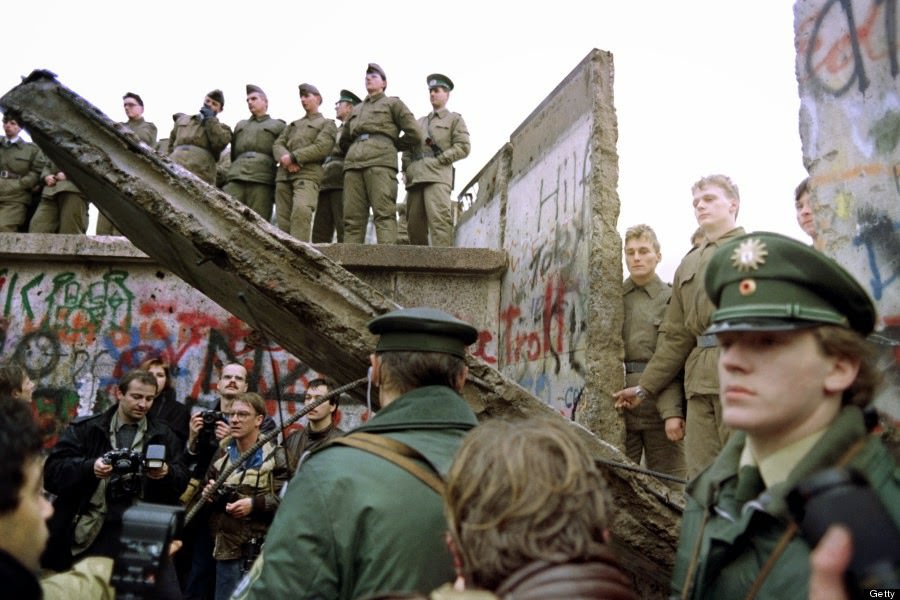
#8 Two West German policemen prevent people from approaching as East German Vopos stand on and near a fallen portion of the Berlin Wall 11 November 1989.
Perched along a jagged, newly fallen slab of concrete, East German border policemen—Vopos—stand watch as if the old order might still be steadied by posture alone. Below them, the Berlin Wall’s torn edge angles downward, its rebar and fractured surface turning a once-impenetrable barrier into a chaotic ramp. Fresh graffiti and paint marks compete with…