Category: Colorization
See history come to life with colorized photographs of the past. From wars to daily life, these restored images bridge time with emotion and realism.
Each colorized photo revives forgotten stories and gives a fresh perspective on iconic historical moments.
-
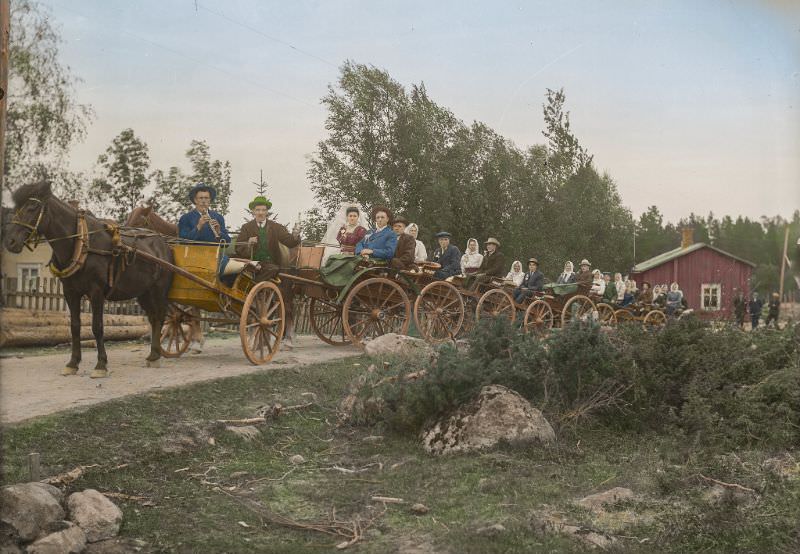
#3 A traditional wedding cortege in the Swedish speaking area of Ostrobothnia in Finland on the way to church, 1913
Along a country road in Ostrobothnia’s Swedish-speaking communities, a wedding cortege rolls toward church in 1913, the procession stretched out in a rhythmic line of horse-drawn carts. The lead wagon sits high on wooden wheels, its bright paint and tidy harness catching the eye, while drivers and guests ride close together, dressed for a day…
-
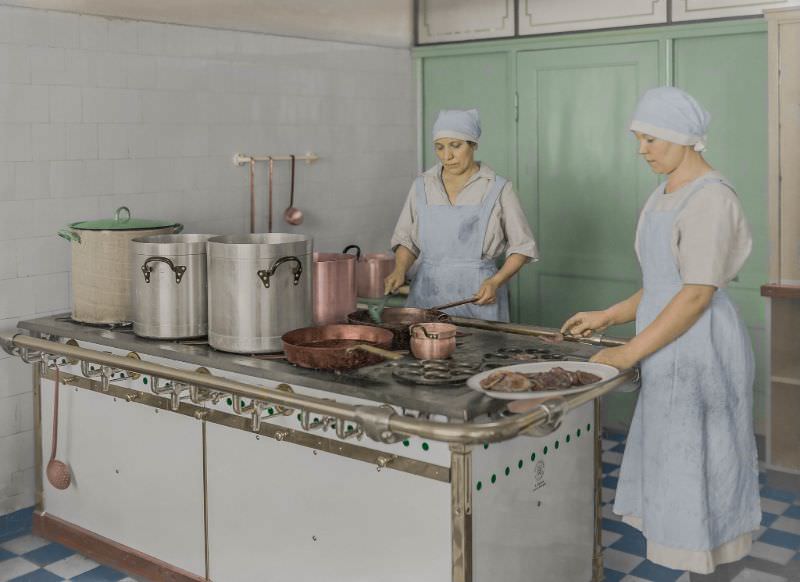
#19 A modern kitchen of the then newly opened Elanto co-operative restaurant in Helsinki at Viipuri street 4, 1930
Freshly scrubbed tiles, pale green cabinetry, and a blue-and-white floor set the tone for a workplace designed to look modern and efficient. In the then newly opened Elanto co-operative restaurant at Viipuri street 4 in Helsinki, the kitchen reads like a statement of progress: clean surfaces, orderly storage, and a layout built for speed. The…
-
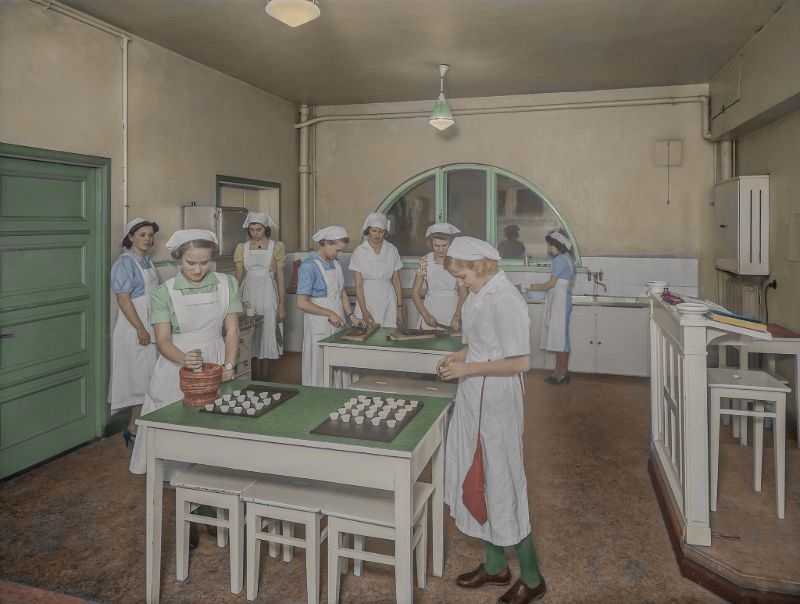
#35 Girls from the private school Privata Svenska Flickskolan, Finland at a cooking lesson, 1930s
Aprons tied and caps neatly in place, a group of students from Privata Svenska Flickskolan in Finland gathers around sturdy worktables for a cooking lesson in the 1930s. The colorized scene brings out the calm order of the room: green-painted doors and tabletops, pale walls, and bright white uniforms that emphasize cleanliness and discipline. Trays…
-
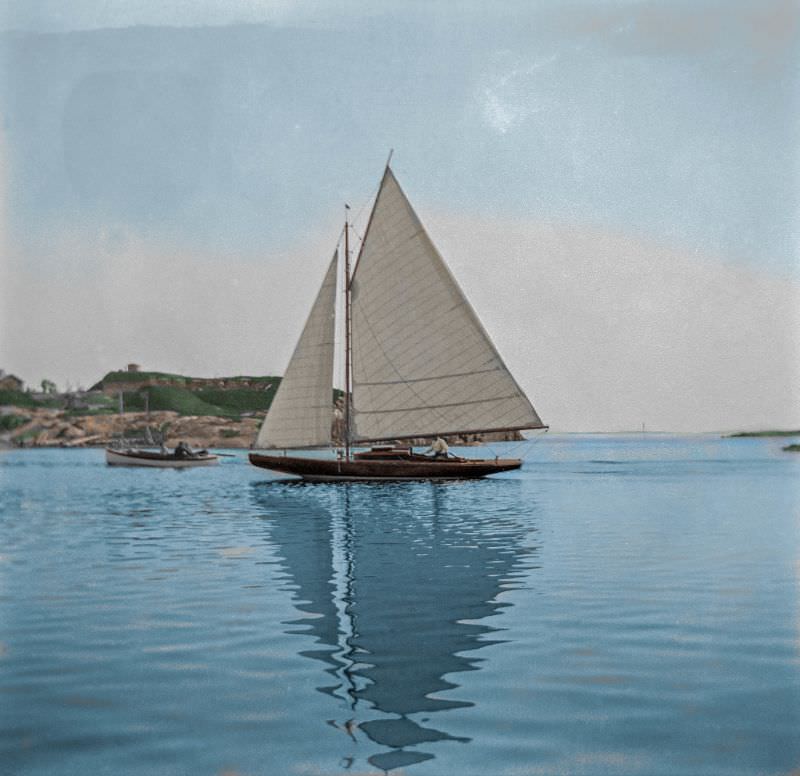
#51 Summer sailing in Helsinki, 1930s.
Soft summer light spreads across Helsinki’s coastal waters as a slender sailboat glides in near-perfect calm, its pale sails catching just enough breeze to move without hurry. The colorization brings out the gentle blues of the sea and sky, while the hull sits low and steady, mirrored in long ripples that stretch beneath it. Even…
-
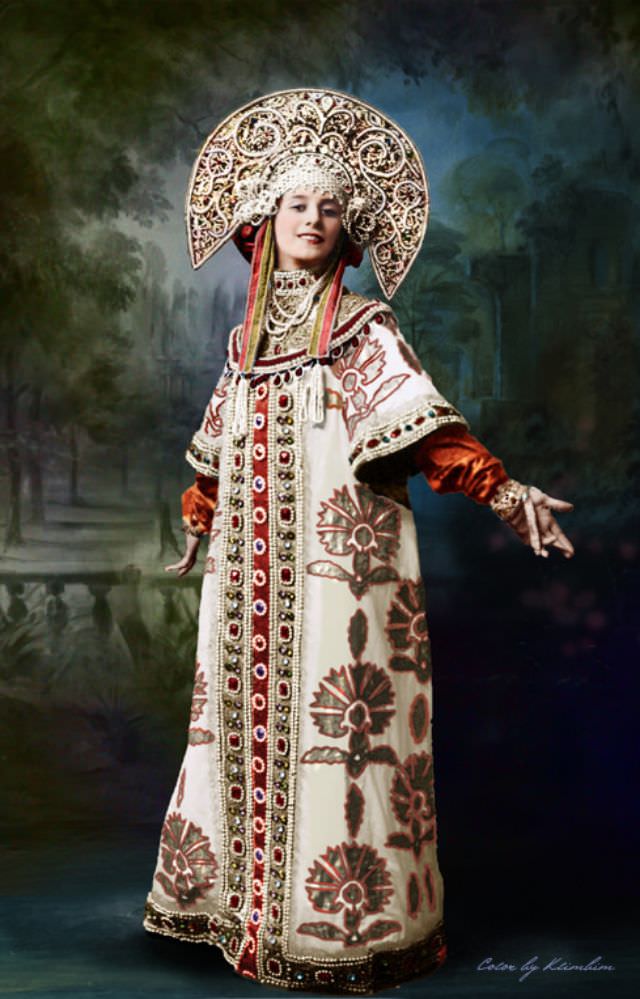
#11 Anna Pavlova, 1900s
Radiant in a richly ornamented costume, Anna Pavlova stands poised with arms gently extended, her expression calm and self-assured. The elaborate headdress—arched like filigreed lace—frames her face, while jeweled trim and embroidered motifs run in vertical bands down the length of her gown. Set against a softly painted studio backdrop, the composition turns a theatrical…
-
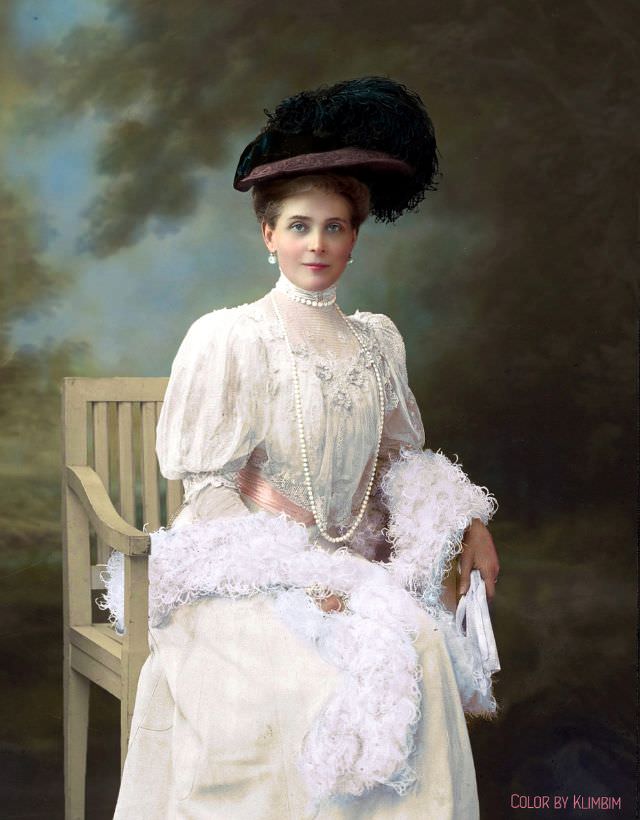
#27 Princess Zenaida Youssoupoff, mid-1900s
Elegance takes center stage in this colorized portrait of Princess Zenaida Youssoupoff, presented with the poised confidence of high society. Seated beside a simple chair against a softly painted studio backdrop, she meets the viewer’s gaze with a calm, composed expression that feels intimate despite the formal setting.
-
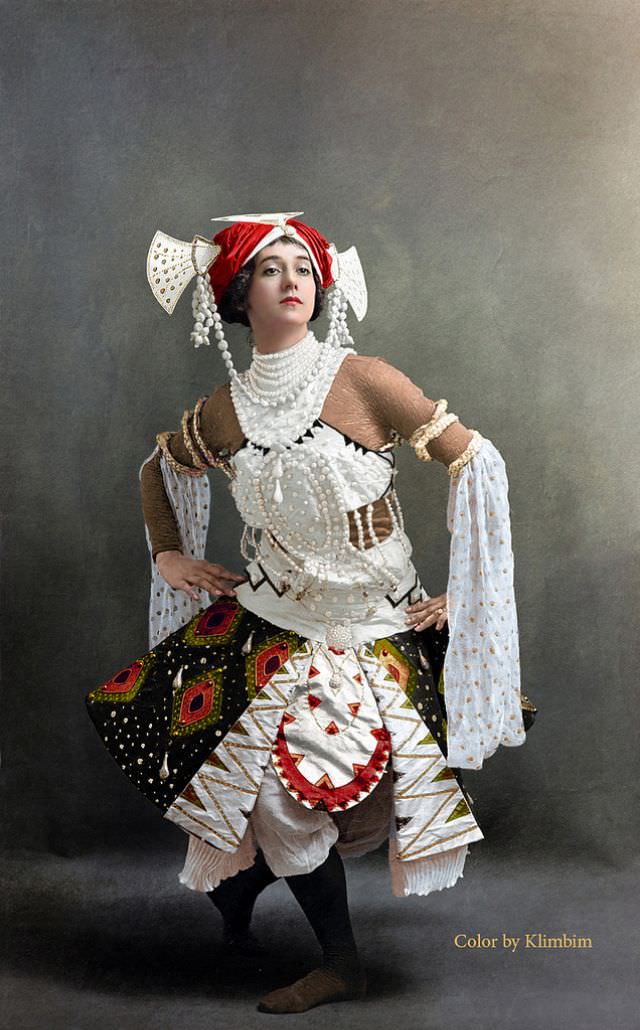
#43 Tamara Karsavina as the Fiancee in the Blue God, 1912
Tamara Karsavina poses with a dancer’s poise and a character’s confidence, embodying the Fiancée from *The Blue God* in 1912. The colorization draws the eye to her bright red head covering and the crisp white of layered beadwork, while her lifted chin and hands-on-hips stance suggest a moment held between ceremony and performance. Against a…
-
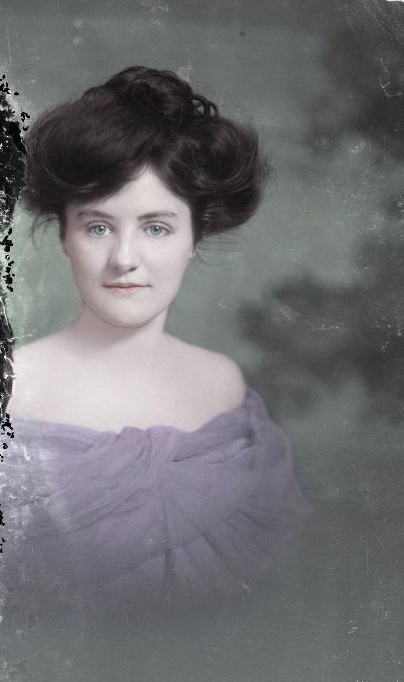
#12 Unidentified woman
Soft colorization gives this portrait an almost painterly calm, drawing the eye first to the woman’s steady gaze and then to the dramatic sweep of her dark, voluminous hair. The off-the-shoulder wrap in muted violet tones adds a gentle formality, suggesting a studio sitting meant to flatter while still feeling intimate. Even with age marks…
-
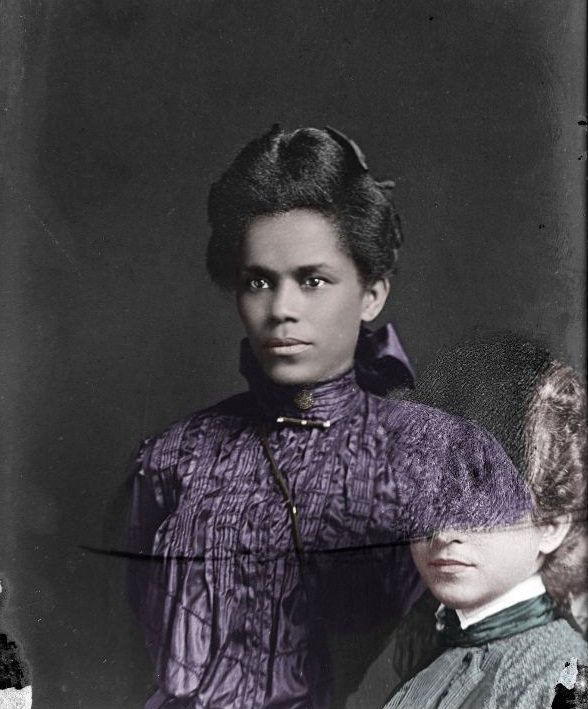
#28 Lampton, Miss Photobomb
Poised and unsmiling, Miss Lampton stands before a plain studio backdrop, her gaze meeting the camera with an intensity that still feels immediate. The colorization draws you straight to the rich purple sheen of her high-collared dress and the carefully arranged hair that frames her face, small details that speak to both fashion and self-presentation…
-
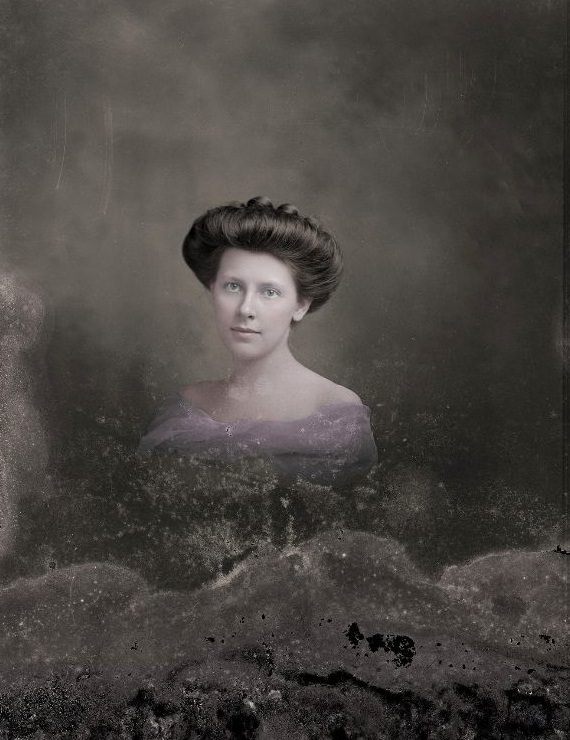
#44 Smith, L.M
Against a soft studio backdrop, the portrait titled “Smith, L.M” centers on a young woman posed in a classic head-and-shoulders composition, her gaze calm and direct. The carefully arranged, high coiffure and the off-the-shoulder neckline hint at a formal sitting, the kind families once commissioned to mark milestones and preserve identity for future generations. Even…