Category: Cover Art
Dive into a gallery of vintage cover art from books, magazines, and albums. Discover how graphic design and illustration reflected the moods of their times.
These covers capture the essence of cultural evolution — from bold propaganda to elegant minimalism.
-
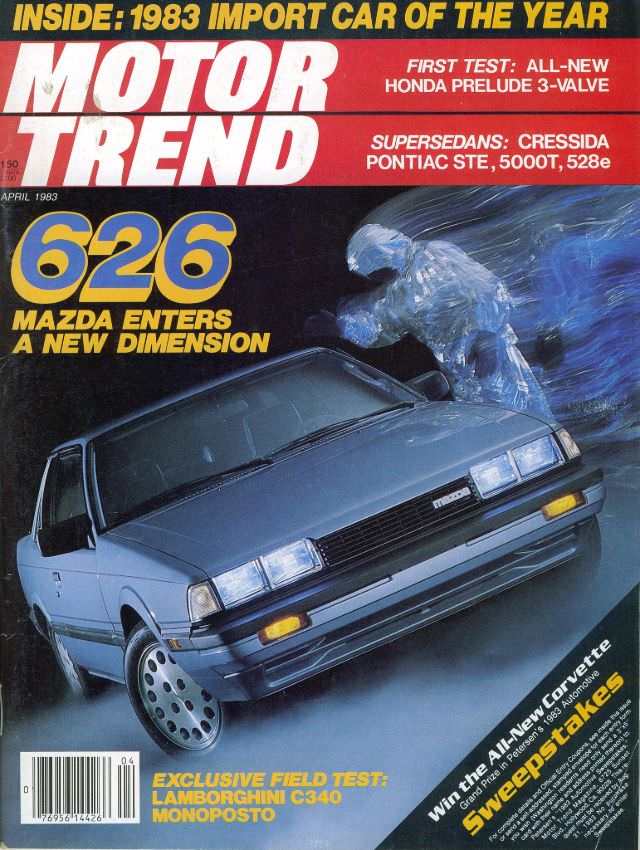
#14 Motor Trend, April 1983
Motor Trend’s April 1983 cover leans hard into early-’80s futurism, with bold typography and a dramatic, almost sci‑fi illustration framing a sleek Mazda 626 in motion. The layout is classic newsstand persuasion: oversized model designation, bright contrasting colors, and a low, aggressive angle that makes the sedan look longer, wider, and more technologically advanced than…
-
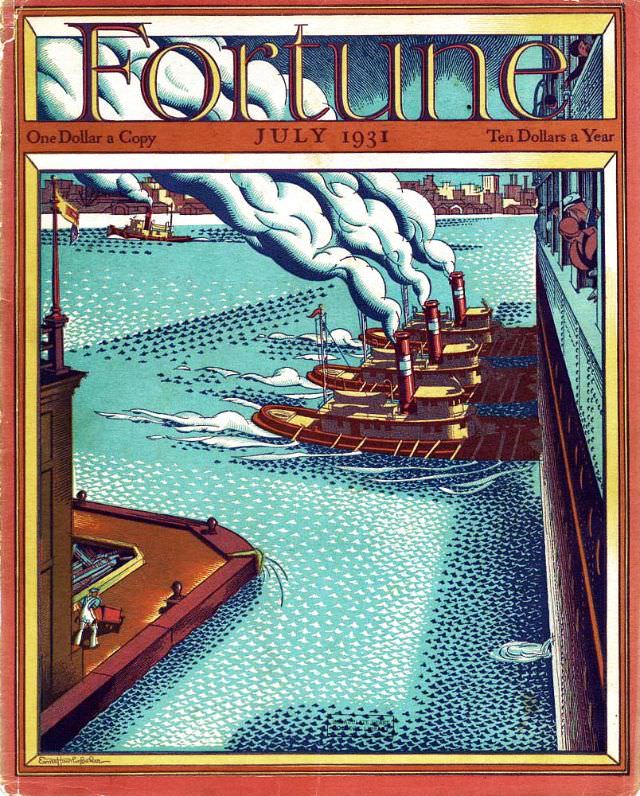
#3 Cover of Fortune Magazine, July 1931
Bold Art Deco lettering crowns the July 1931 cover of *Fortune* magazine, framing a bustling waterfront rendered in crisp, graphic color. The scene looks down a narrow channel where steam-powered tugboats churn the water into patterned wakes, their funnels stacking thick plumes of smoke that arc across the sky. Along the margins, dock walls and…
-

#19 Cover of Fortune magazine, January 1937
Bold “Fortune” lettering crowns the January 1937 cover, framed by the magazine’s unmistakably modern design language. The price line—“One Dollar a Copy” and “Ten Dollars a Year”—sits like a period bookmark, anchoring the artwork in an era when print culture and business journalism carried real prestige. Even before you read a single article, the cover…
-
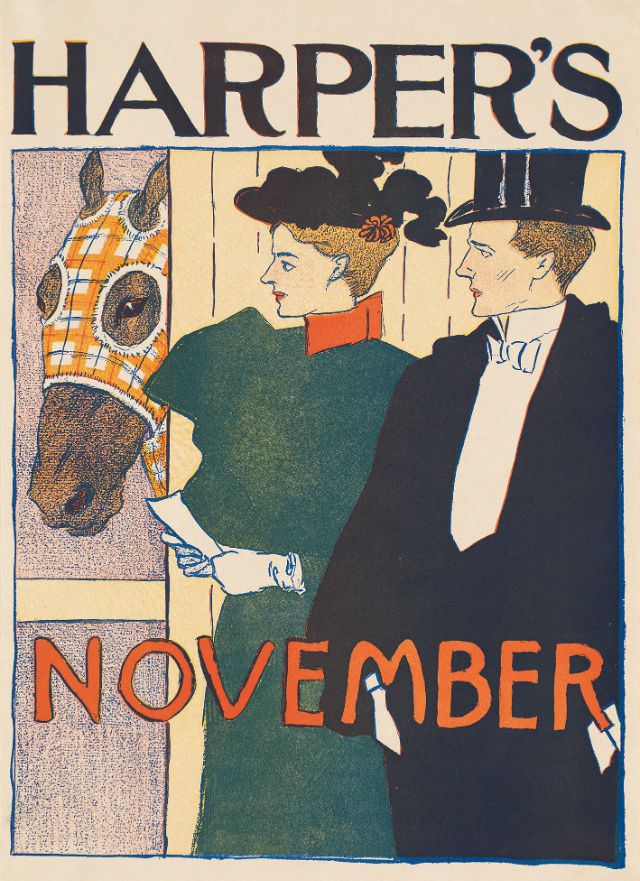
#13 A man and woman look at a horse, Harper’s November, 1895
Bold lettering for HARPER’S crowns the scene, framing an illustrated moment of quiet appraisal: a man and a woman turned toward a horse that leans in from the left edge of the cover. The animal’s head is fitted with a patterned blanket or hood, its large eye rendered with the same graphic clarity as the…
-

#29 A woman stands holding an umbrella, Harper’s July, 1896
Bold lettering announces “HARPER’S JULY” beside the profile of a stylish woman, rendered in a clean, poster-like illustration that reads instantly as magazine cover art. She turns her head to the left with calm poise, her silhouette framed by a wide hat trimmed with feathers and a high, dark collar that sharpens the elegant line…
-
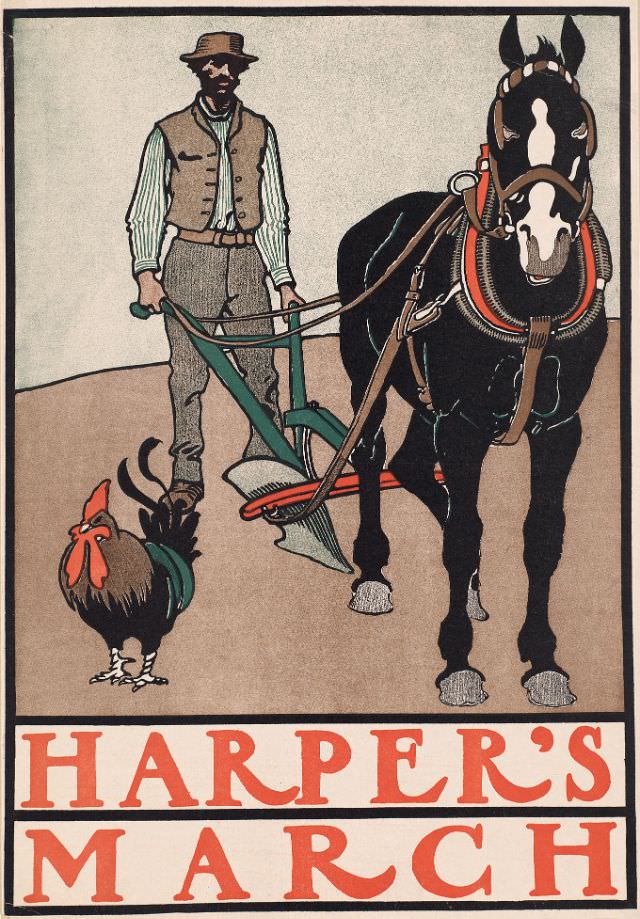
#45 A man holds a plough hooked to a horse, Harper’s March, 1899
Rendered like a turn-of-the-century poster, this Harper’s March 1899 cover art places a working man beside a harnessed horse, his hands steady on the plough handles as if pausing between furrows. The composition is bold and clean, with broad fields of color and crisp outlines that give the scene an emblematic, almost iconic feel—more than…
-

#16 Ingrid Bergman and Roberto Rossellini on the Italian island of Stromboli, Picture Post, May 14th, 1949
Bold red masthead and crisp monochrome portraiture announce this as a classic Picture Post cover, dated May 14th, 1949. Ingrid Bergman sits in the foreground with a patterned headscarf and open-collared blouse, her profile lifted toward the light, while Roberto Rossellini—glasses catching a faint glare—leans just behind her, scarf wrapped close. The composition feels both…
-

#32 Petula Clark, Picture Post, June 11th, 1955
Petula Clark appears on the cover of *Picture Post* for the week ending June 11th, 1955, posed with a poised, direct gaze that feels both inviting and self-assured. The styling is unmistakably mid-century: a soft, pale fuzzy top, neat short hair, and polished makeup that reads well even at newsstand distance. Bold red cover design…
-
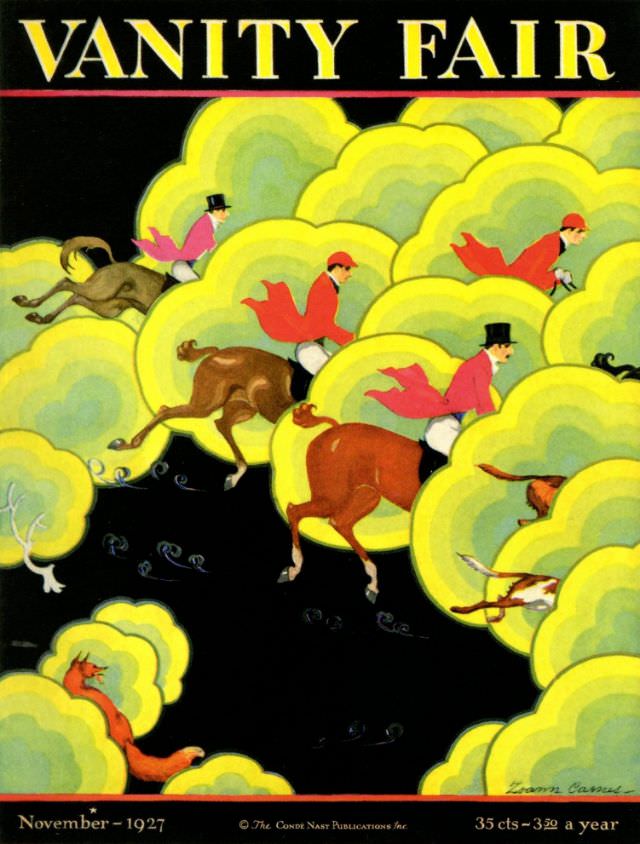
#13 Vanity Fair cover, November 1927
Bold lettering crowns the November 1927 Vanity Fair cover, setting the stage for a playful rush of riders and horses cutting through a sea of stylized, yellow-green treetops. Scarlet coats and black top hats pop against the dark ground below, while swirling brushwork suggests speed, breath, and the thrill of the chase. The composition reads…
-

#29 Vanity Fair cover, June 1933
Bold block letters spelling “VANITY FAIR” dominate the top of this June 1933 cover, while a vast golden wall surges diagonally across the page like a man‑made cliff. Under a heavy, dark sky, small figures press their hands and faces to the masonry, turning the composition into a visual argument about scale—individuals rendered almost toy-like…