Category: Cover Art
Dive into a gallery of vintage cover art from books, magazines, and albums. Discover how graphic design and illustration reflected the moods of their times.
These covers capture the essence of cultural evolution — from bold propaganda to elegant minimalism.
-
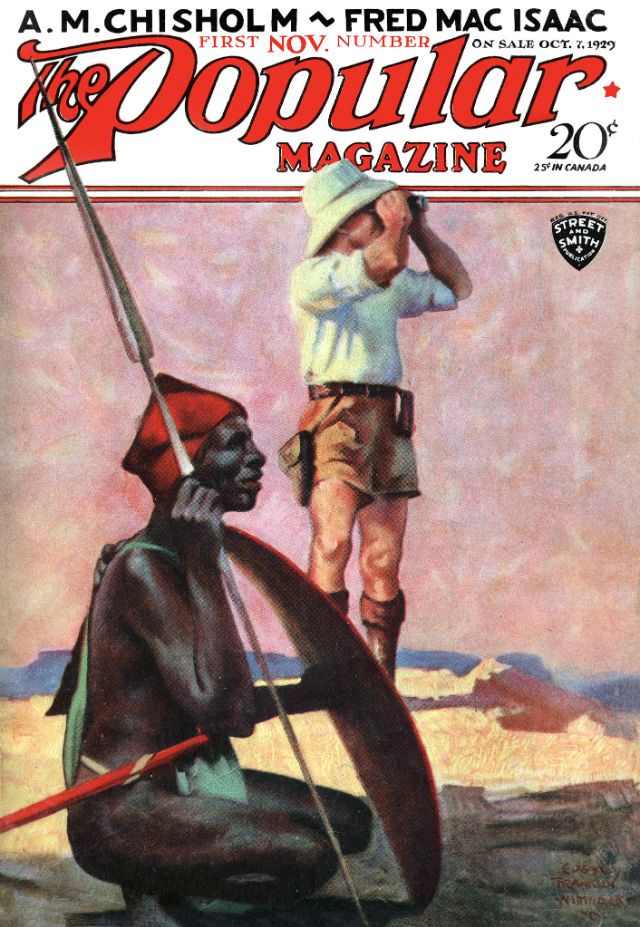
#45 Popular magazine cover, November 1, 1929
Bold typography announces “The Popular Magazine” across the top, with the issue marked “First Nov. Number” and priced at 20 cents (25 cents in Canada). The masthead also credits A. M. Chisholm and Fred MacIsaac, while a small badge on the right advertises “Street & Smith,” signaling the era’s bustling world of mass-market publishing. As…
-
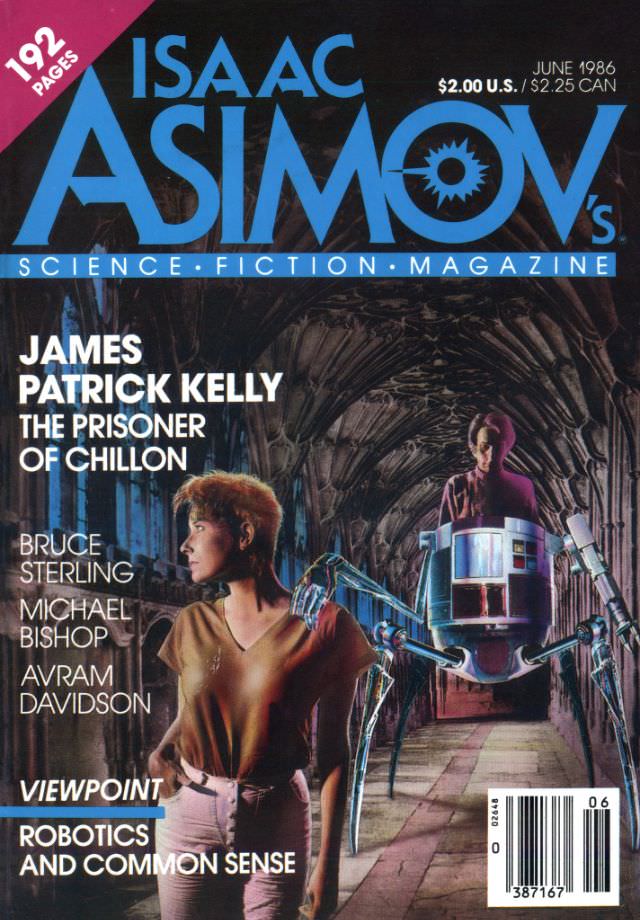
#16 Asimov’s Science Fiction cover, June 1986
Bold cyan lettering announces *Isaac Asimov’s Science Fiction Magazine* while the June 1986 cover locks you into a moody, cathedral-like interior of ribbed stone arches and shadowed corridors. A red “192 pages” burst, the U.S./Canadian cover price, and the crisp masthead typography instantly place the piece in the late print-era heyday of science fiction magazines,…
-

#32 Asimov’s Science Fiction cover, May 1989
May 1989 arrives in loud, confident type: “ISAAC ASIMOV’s” splashed across the top, with “Science Fiction” beneath and the corner boast of “192 pages.” The cover layout is pure late-20th-century magazine design—bold branding, clear pricing, and a roster of featured writers set in blocks along the left and bottom, including Charles Sheffield, George Alec Effinger,…
-
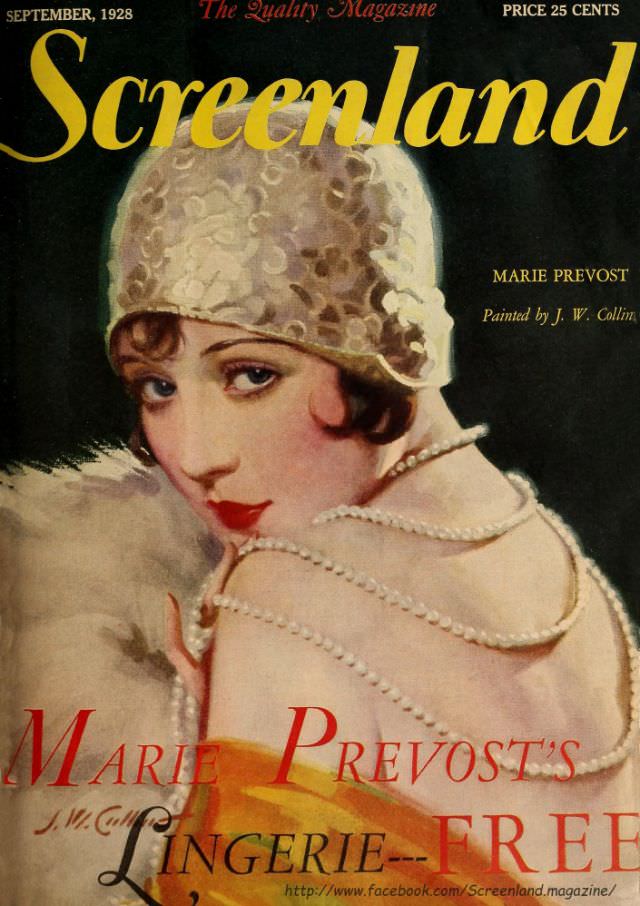
#13 Screenland magazine cover, September 1928
Bold gold lettering spells out “Screenland” across the top of this September 1928 magazine cover, with “Price 25 Cents” tucked into the corner—small details that instantly place it in the heyday of fan magazines. The central illustration frames a glamorous figure in a beaded cloche and trailing pearls, glancing back over one shoulder with carefully…
-

#29 Screenland magazine cover, June 1936
Bold red lettering spells out SCREENLAND across the top of this June 1936 cover, crowned by the tagline “The Smart Screen Magazine” and a 15c price that instantly places it in the everyday world of Depression-era newsstands. A glamorous, color-printed portrait fills a circular frame: glossy dark waves, vivid lipstick, and a soft, fur-trimmed hat…
-

#10 The Ugly Truth About Yugoslavian Album Art in the 1970s and 1980s #10 Cover Art
Leopard print, a posed pin‑up stance, and a pristine white car hood set the tone for this piece of Yugoslav album cover art—an aesthetic that aimed for glamour but often landed in something closer to awkward spectacle. The composition leans hard on bold red lettering (“jo‑jo,” “parodije,” and the large title “CAJKA”), with the performer’s…
-

#26 The Ugly Truth About Yugoslavian Album Art in the 1970s and 1980s #26 Cover Art
Oversized lettering shouts the performer’s name across a hazy studio backdrop, while a neatly posed singer in a light suit smiles straight at the viewer. The design leans hard on contrast—warm reds and oranges above, cool blues behind—creating that unmistakable Yugoslav record-shelf look where typography did the heavy lifting. Even without knowing the exact year,…
-
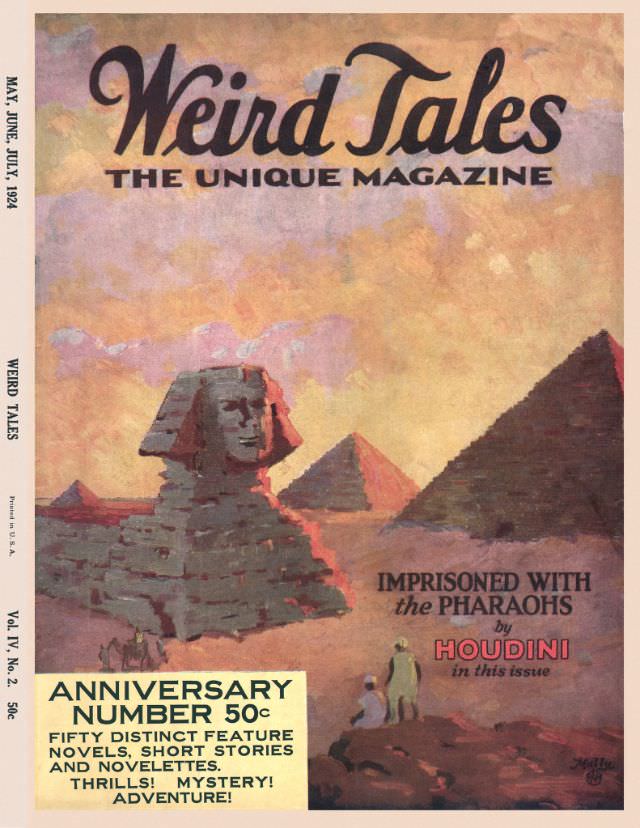
#2 Weird Tales cover, May 1924
Weird Tales splashes across the top in bold, curling lettering, setting the stage for a desert scene where the Sphinx rises from sandy tones and distant pyramids sit under a warm, hazy sky. The palette leans into sunset oranges and dusty browns, giving the cover a dreamlike atmosphere that fits the magazine’s promise of uncanny…
-
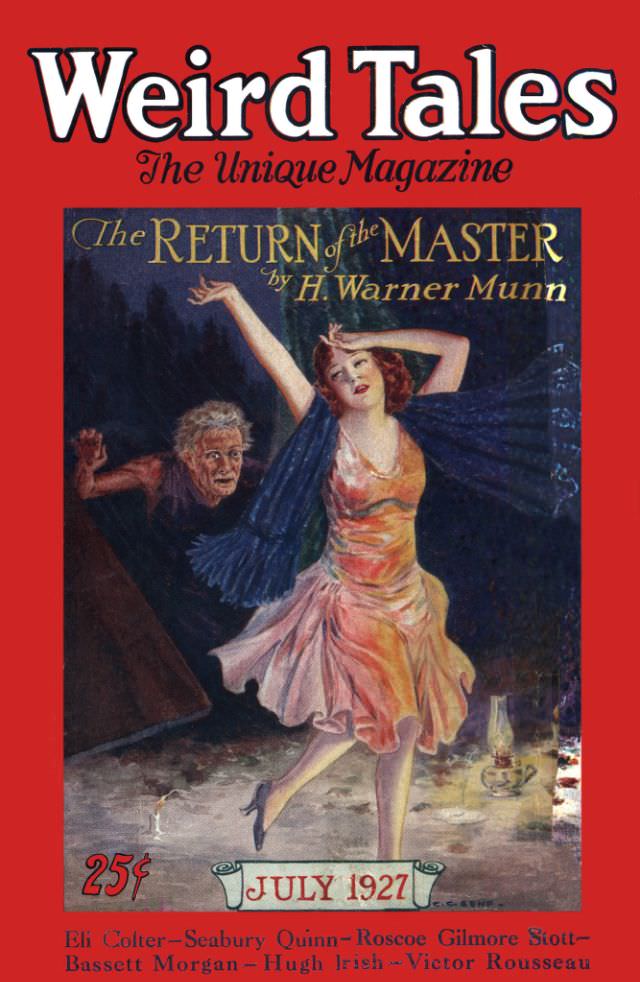
#18 Weird Tales cover, July 1927
Weird Tales splashes across the top in bold letters, staking its claim as “The Unique Magazine” and pulling the reader straight into the pulp imagination of July 1927. The cover centers on a dramatic scene: a woman in a bright, swirling dress strikes a dance-like pose as shadow and menace gather around her, while an…
-
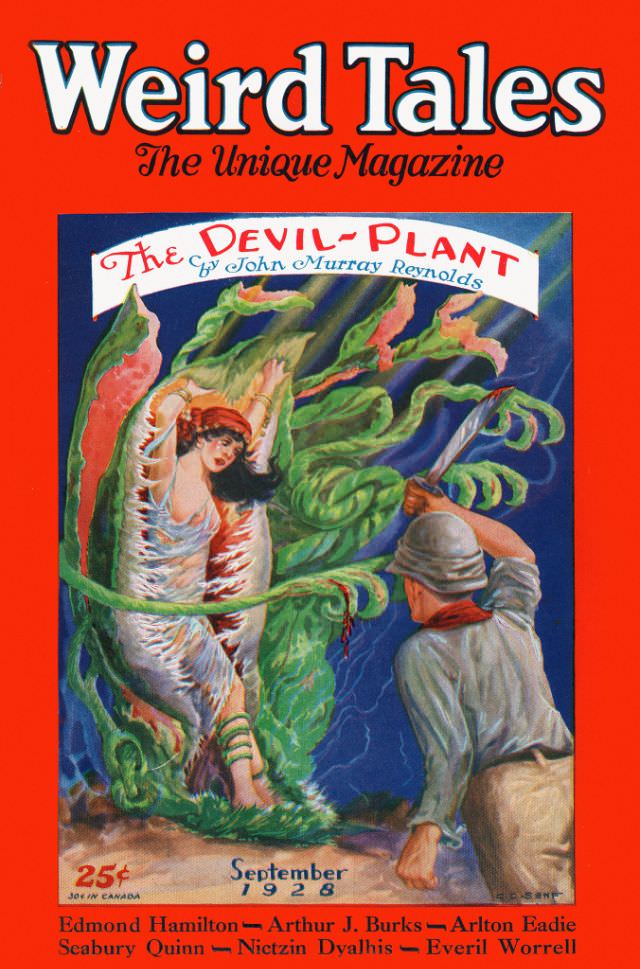
#34 Weird Tales cover, September 1928
Weird Tales splashes across the top in bold lettering, with the proud tagline “The Unique Magazine” announcing exactly what readers were meant to expect from pulp fiction in 1928. Below, a dramatic illustration titled “The Devil-Plant” (credited to John Murray Reynolds) throws the viewer into a moment of peril: a woman in a torn white…